


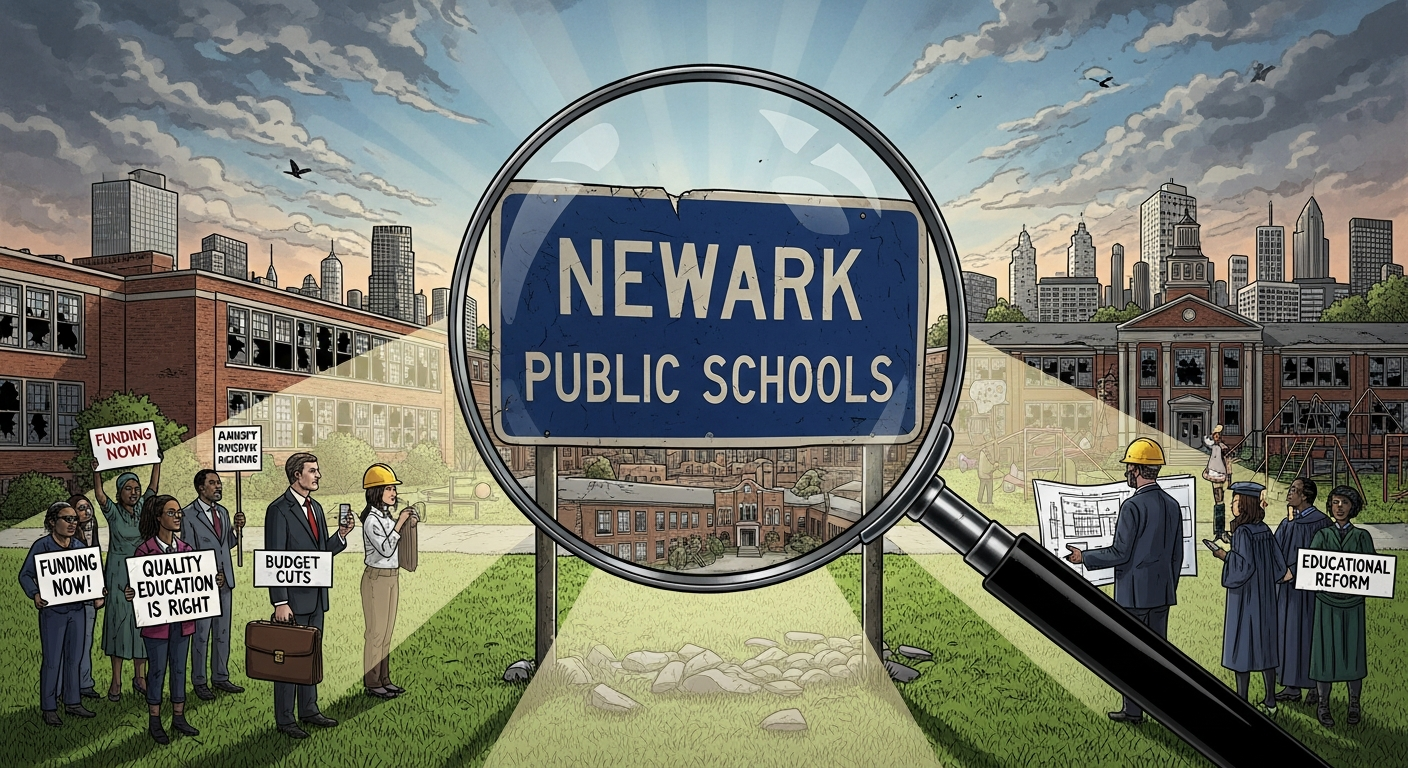
Three Republican legislators from New Jersey have formally urged federal authorities to investigate the allocation of nearly $287 million in COVID-19 relief funds by Newark Public Schools. The lawmakers expressed significant concerns that oversight of these substantial federal allocations has been insufficient and that the intended aid may not have effectively reached the students most in need.
In a letter dispatched on Thursday to U.S. Education Secretary Linda McMahon, Sen. Parker Space (R) and Assemblymembers Dawn Fantasia (R) and Michael Inganamort (R) specifically requested “an immediate federal review, and, if warranted, a referral for investigation into the use of COVID‑19 relief funds by Newark Public Schools.” Their appeal comes amidst public reporting that, according to the lawmakers, “raises serious concerns about misuse, misrepresentation, and a lack of oversight involving federal dollars intended to address student learning loss.”
The funds in question originate from the federal Elementary and Secondary School Emergency Relief (ESSER) program. This initiative was established to provide critical financial support to school districts nationwide, helping them recover from the widespread disruptions caused by the pandemic, compensate for learning loss experienced by students, and offer targeted assistance to students deemed to be at the highest risk.
The New Jersey legislators highlighted several specific discrepancies and questionable expenditures. One primary concern involves the district's tutoring support program. Newark Public Schools reportedly identified 15,803 students as needing tutoring, yet only 1,938 of them—approximately 12 percent of the identified total—actually received the promised support. This stark difference between identified need and actual service delivery raised immediate red flags for the demanding lawmakers.
Further drawing criticism was a $1.4 million literacy consultant contract, also funded with ESSER dollars. The legislators pointed out that the consultant “was not certified in New Jersey” and that her proposal contained “basic errors.” Despite these apparent deficiencies, her contract was approved over those submitted by more established and presumably qualified organizations. Nearly a year after its approval, the work specified in the contract had reportedly not yet commenced. The lawmakers further underscored their concerns by highlighting a "measurable collapse" in fourth-grade reading proficiency at a school where this particular consultant had previously been engaged, suggesting a potential pattern of ineffectiveness.
Superintendent Roger León of Newark Public Schools has vigorously defended the district's financial management and educational outcomes. He asserted that independent audits have consistently awarded Newark schools top ratings. León dismissed the critics' claims as “lies” and labeled their actions as “politically motivated fishing expeditions.” In support of his defense, the Superintendent cited rising test scores, improved graduation rates, and recent accolades as evidence of ongoing progress within the district, as reported by the New Jersey Globe.
The Newark Board of Education recently moved forward with its $1.677 billion budget for fiscal year 2026-27. This budget includes significant investments in facilities and various programs, which are supported by a modest increase in local property taxes.
However, critics argue that the identified oversight gaps extend beyond the COVID relief funds. They point to other instances of questionable spending, including allocations for catering services, museum programs, and proposed artificial intelligence security systems, suggesting a broader pattern of financial management issues within the district.
The Republican lawmakers emphasized that federal scrutiny is essential to ensure accountability for how taxpayer dollars are spent. In their letter, they stated, "Federal funds intended to help at-risk students recover cannot be approved, allocated, and left unaccounted for while outcomes worsen." They stressed that proper oversight is not merely a bureaucratic formality but a critical mechanism to prevent the misuse of public funds and to guarantee that federal investments genuinely reach the students and communities they are intended to support.
The importance of vigilance in managing pandemic relief funds has been underscored by previous incidents of misuse. For example, in 2023, a man from Sussex County, New Jersey, received a three-year prison sentence for defrauding multiple financial institutions and illegally obtaining over $2 million in COVID-19 relief funding, which had been earmarked for small businesses impacted by the pandemic. Lawmakers maintain that a similar level of diligence is imperative for school funding to protect students, taxpayers, and uphold public trust.
As the federal Department of Education reviews the letter from the New Jersey legislators, Newark Public Schools faces heightened scrutiny regarding its financial management practices and the overall effectiveness of its pandemic response programs. This situation highlights broader questions about transparency, accountability, and resource allocation within large urban school districts.

