

⚡ BREAKING NEWS
Sponsor Advertisement
White House Ballroom Project Gains Approval Amid Legal Battle
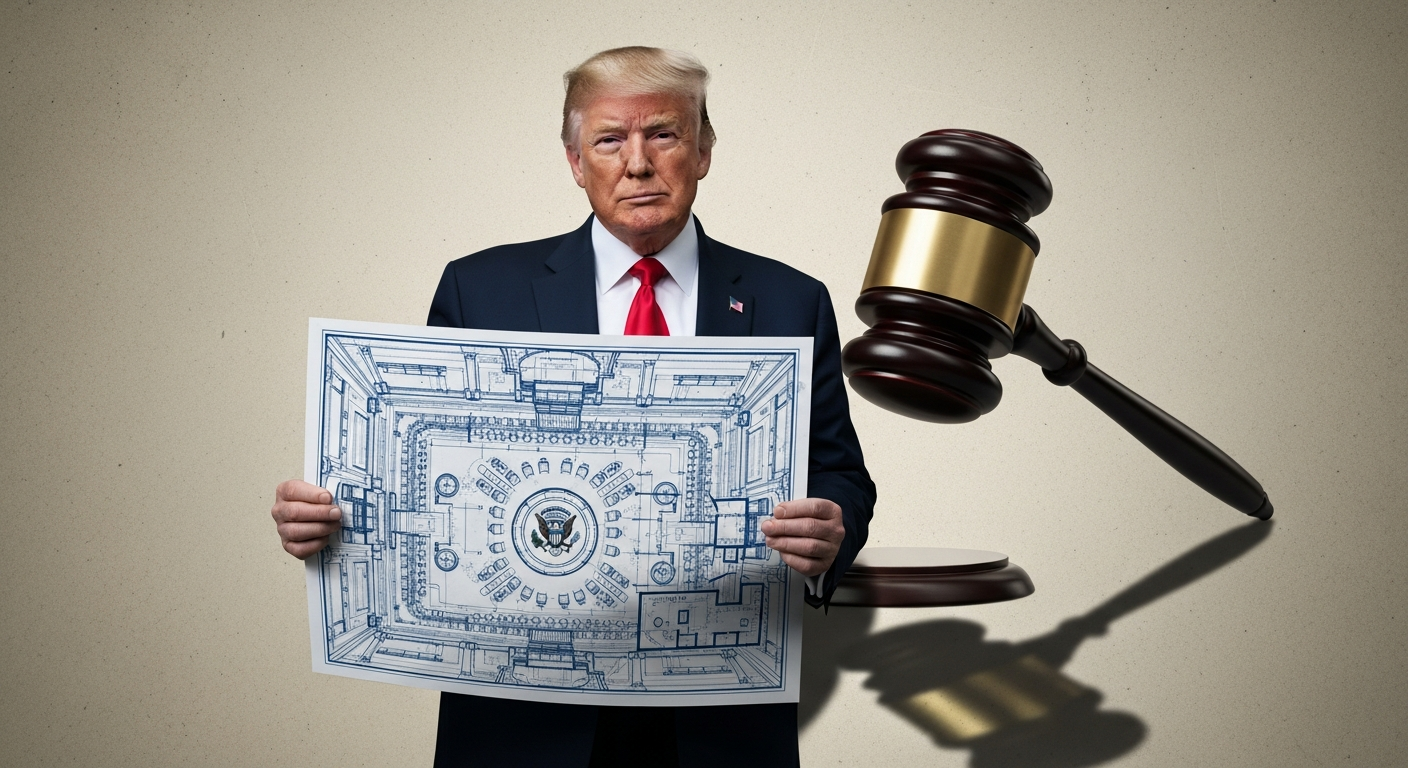
AI-generated image for: White House Ballroom Project Gains Approval Amid Legal Battle

White House Ballroom Project Gains Approval Amid Legal Battle

The National Capital Planning Commission has approved President Donald Trump's White House ballroom project, despite an earlier federal court ruling halting construction and ongoing legal challenges regarding its scale and approval process.

The National Capital Planning Commission (NCPC) voted to approve President Donald Trump's White House ballroom project in a near-unanimous decision this week, moving the controversial plan forward despite ongoing legal challenges and criticism over its scale. The approval marks a significant step for the administration, even as a federal court ruling earlier in the week ordered a halt to construction within two weeks.

"I believe that in time, this ballroom will be considered a national treasure." — Will Scharf, NCPC Chair

U.S. District Judge Richard Leon issued the ruling, stating that the project likely requires congressional approval before proceeding. Judge Leon found no existing law granting the President authority to make such major structural changes to the White House without legislative consent. He also indicated that the legal challenge, brought by preservation groups, is likely to succeed. Despite this judicial intervention, the NCPC proceeded with its vote, with only one member voting against the project and two voting present.

Concerns surrounding the ballroom's size and impact on the historic White House grounds have been a central point of contention. Designs indicate the structure would extend significantly into the South Lawn, drawing objections from architects, preservationists, and other critics who argue it would fundamentally alter the historic character of the complex.

During the NCPC meeting, Chair Will Scharf defended the project, drawing parallels to past White House expansions that faced similar opposition. Scharf cited historical additions like the West Wing and the briefing room, which were initially met with resistance but are now considered integral parts of the White House. "I believe that in time, this ballroom will be considered a national treasure," Scharf stated, expressing confidence in the project's long-term value.

However, not all commissioners shared this view. Washington, D.C. City Council Chairman Phil Mendelson cast the lone dissenting vote, criticizing the ballroom's excessive scale and the pace of the approval process. "It’s just too large," Mendelson commented, reflecting concerns about the proposed structure's footprint. Two additional members chose to vote "present," indicating a lack of full endorsement for the plan.

The project has also faced scrutiny regarding its approval process. According to reports, President Trump appointed multiple allies and staff members to key oversight bodies, including both the National Capital Planning Commission and the Commission of Fine Arts. Critics suggest these appointments may have expedited the proposal's advancement and could expose the project to further legal challenges. Some groups have already indicated their intention to file additional lawsuits.

The legal battle remains far from resolution. Judge Leon's ruling permits limited construction to continue only if it is directly related to national security, leaving the broader project in limbo. The judge also noted that the President could seek approval from Congress at any time. However, President Trump has explicitly stated his disinterest in pursuing congressional authorization, dismissing the idea from the Oval Office.

Despite the ongoing legal and political hurdles, the administration has continued to refine design plans for the ballroom. New renderings show adjustments to earlier proposals, including the removal of certain controversial features that had previously drawn criticism. The future of the White House ballroom project hinges on the outcome of the continuing legal proceedings and the administration's willingness to navigate the complex web of approvals and public sentiment.

Advertisement

The Flipside: Different Perspectives

Progressive View

Progressive critics of the White House ballroom project raise significant concerns about democratic process, executive overreach, and the preservation of national heritage. The federal court ruling that halted construction, citing the likely need for congressional approval, highlights the importance of checks and balances and the constitutional role of the legislative branch in approving major structural changes to federal property. Bypassing Congress is seen as an attempt to circumvent democratic accountability and consolidate power.

The appointments of administration allies to key oversight commissions, which then approved the project, raises questions about potential conflicts of interest and the integrity of the approval process. Progressives emphasize that the White House, as a cherished national landmark, should be protected from alterations that could diminish its historical character or public accessibility, especially when such changes are driven by a single administration's preferences. The scale of the proposed ballroom, extending significantly into the South Lawn, is viewed as an insensitive encroachment on a historic landscape. This perspective prioritizes systemic adherence to rules, transparent governance, and the collective stewardship of national treasures over individual presidential prerogative.

Conservative View

From a conservative perspective, the approval of the White House ballroom project underscores the President's executive authority and his administration's commitment to modernizing essential national facilities. Proponents argue that a sitting President has the prerogative to ensure the White House remains a functional and impressive venue for diplomatic and domestic events. The National Capital Planning Commission's near-unanimous vote, even amidst judicial challenges, signals a recognition of the project's practical necessity and historical precedent for White House expansions.

Conservatives often emphasize efficiency and decisive leadership in governance. The administration's efforts to fast-track the project, including appointments to oversight bodies, can be viewed as an attempt to overcome bureaucratic inertia and deliver on a vision for improving a national asset. The argument that similar historical expansions, like the West Wing, faced initial resistance but became indispensable, resonates with a desire to move forward rather than be stalled by preservationist concerns. The focus is on the President's ability to act decisively in managing federal property and ensuring the White House can adequately serve its role as a global symbol and center of government, without undue legislative interference in what is perceived as an executive function.

Common Ground

Despite divergent views on the White House ballroom project, both conservative and progressive perspectives share common ground regarding the significance of the White House itself. There is a universal acknowledgment that the White House serves as an indispensable symbol of American democracy and a vital venue for both national and international affairs. Both sides recognize the need for the President to have functional and appropriate spaces to conduct the duties of the office, host dignitaries, and represent the nation effectively on the global stage.

Furthermore, there is likely shared agreement on the importance of thoughtful planning for any significant federal construction project. While they may disagree on the *process* or *extent* of oversight, both conservatives and progressives would likely agree that public funds and national heritage sites warrant careful consideration and expert input. The debate, at its core, reflects a shared value for the institution of the presidency and the historical integrity of its seat, even if the methods for achieving optimal functionality and preservation are subject to differing interpretations and priorities.