


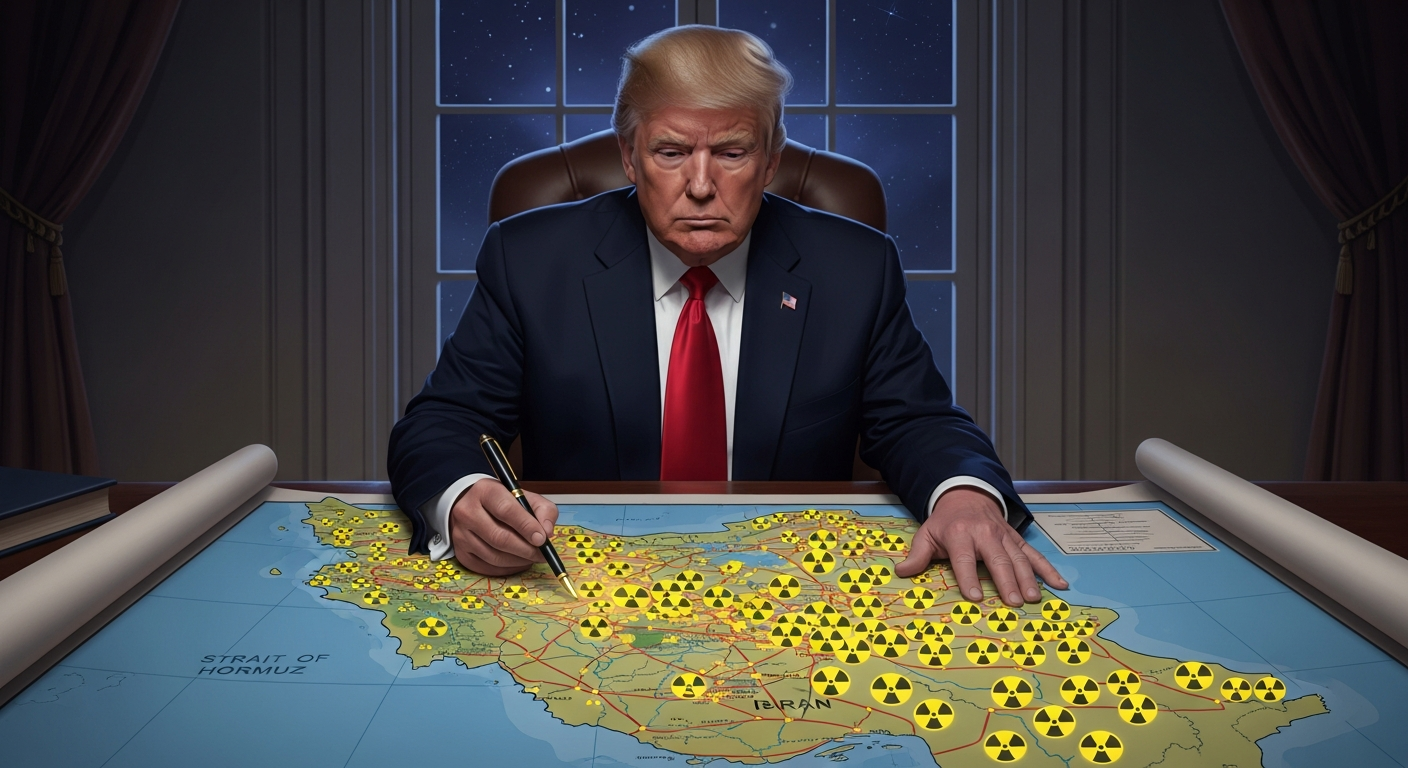
U.S. officials have drafted a detailed plan for a significant military operation aimed at seizing nearly 1,000 pounds of highly enriched uranium from Iranian territory, a move that could substantially escalate and prolong the ongoing conflict. This proposed mission, discussed behind closed doors, is described by some as one of the most complex special operations in modern military history, potentially requiring hundreds, or even thousands, of American troops on the ground for an extended period.
"This would be one of, if not the largest, most complicated special operations in history. It’s a major risk to the force." — Mick Mulroy, Retired CIA and Marine Officer
The plan contrasts with President Donald Trump's previous statements indicating that the war would conclude "very shortly," with warnings of hitting Iran "extremely hard" within "two to three weeks" if necessary. However, the proposed uranium seizure operation is projected to take weeks to complete, even if all aspects proceed as planned, thereby extending the timeline of U.S. military engagement in the region.
The operation would involve deploying elite units, such as Navy SEALs and Army Rangers, deep within Iranian territory. Their primary objective would be to secure identified nuclear sites, creating a perimeter for follow-on forces. Once these sites are secured, military engineers would move in to establish makeshift airstrips capable of handling heavy excavation equipment. This infrastructure would be critical for transporting specialized machinery needed to penetrate reinforced concrete and rubble, much of which is a result of previous U.S. and Israeli strikes.
A significant challenge and danger highlighted in the plan is the nature of the uranium itself. Much of the target material is reportedly buried and highly radioactive, necessitating that troops involved in its handling wear extensive protective gear. Even with such precautions, personnel would remain exposed to potential Iranian attacks throughout the extraction and transportation process. The establishment of a temporary U.S. base within hostile territory would also require constant resupply lines for food, fuel, and equipment, further increasing the sustained exposure of American forces to enemy fire.
Retired CIA and Marine officer Mick Mulroy commented on the proposed mission, stating, "This would be one of, if not the largest, most complicated special operations in history. It’s a major risk to the force." His assessment underscores the inherent dangers and logistical complexities associated with such an undertaking. The timeline alone, stretching to weeks for completion, signals the gravity and scale of the proposed operation.
White House Press Secretary Karoline Leavitt addressed the reports, clarifying that the existence of such planning does not signify a final decision by President Trump. "It’s the job of the Pentagon to make preparations in order to give the Commander in Chief maximum optionality," Leavitt stated. "It does not mean the President has made a decision." This statement suggests that while the option is being developed, it remains one of several potential courses of action under consideration by the administration to address the Iranian nuclear threat.
The administration views the mission as a potential means to permanently neutralize Iran's nuclear capabilities, thereby eliminating a significant perceived threat to regional and global security. However, the immense logistical requirements, the inherent dangers to U.S. personnel, and the potential for a prolonged conflict represent substantial considerations for President Trump and his advisors as they weigh the strategic implications of such an audacious operation. The situation remains fluid as military planners continue to refine options for the Commander in Chief.

