

⚡ BREAKING NEWS
Swalwell Faces New Allegations Over Nanny's Immigration Status Appeals Court Allows Trump Administration Access to Social Security Data US Arrests Iranian Nationals Linked to Regime Officials FBI Documents Reveal Pre-Jan. 6 Violence Warnings <p><strong>Fairside News is evolving.</strong> As we approach our one-year anniversary, we’re expanding into real-time breaking news powered by global RSS feeds, while enhancing our platform with richer visuals—now featured in nearly 80% of articles—and improved AI-driven workflows.</p> <p>What began as timely reporting has grown into a faster, more dynamic news source, with readership approaching 700,000 article views. Stay informed with clear, fact-based coverage and perspectives from both sides of the aisle.</p>
Sponsor Advertisement
Trump Faces MAGA Backlash Over Iran War Comments
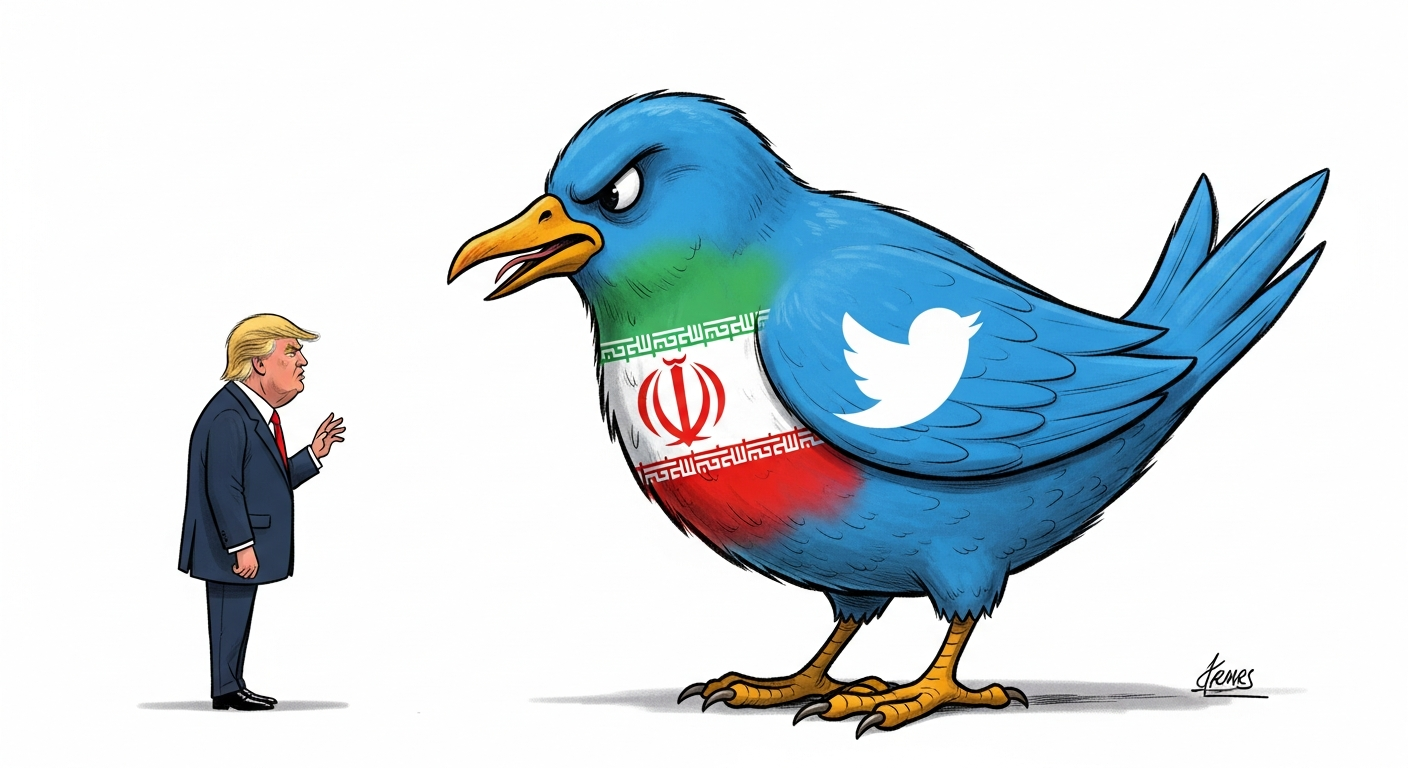
AI-generated image for: Trump Faces MAGA Backlash Over Iran War Comments

Trump Faces MAGA Backlash Over Iran War Comments

President Donald Trump faces criticism from prominent conservative media figures after publicly targeting them, deepening internal divisions within the MAGA movement over his administration's Iran policy.

President Donald Trump is facing significant backlash from influential conservative media figures following a recent series of public remarks where he criticized them for their stance on his administration's Iran policy. The dispute, which unfolded primarily on social media platforms, underscores a growing rift within the MAGA movement, particularly concerning foreign policy and military intervention.

The controversy ignited after President Trump posted a lengthy message on Truth Social, where he labeled several prominent conservative commentators, including Candace Owens, Tucker Carlson, Megyn Kelly, and Alex Jones, as "low IQ" and "stupid people." He accused these individuals of undermining his agenda and effectively siding with Iran by questioning his strategic approach to the conflict. "They’re stupid people, they know it, their families know it, and everyone else knows it, too!" President Trump wrote in his post, asserting his critics lacked understanding of the situation.

This public condemnation from the President comes amidst escalating tensions surrounding the Iran war, a conflict that has increasingly divided the "America First" base. Many of the targeted commentators have previously argued that military engagement in Iran deviates from President Trump's campaign promises of non-interventionism and prioritizing domestic issues. They have suggested that the President might have been influenced by external pressures in his decision-making regarding the conflict.

The response from figures who have historically been staunch allies of President Trump was immediate and sharply critical. Candace Owens, a conservative commentator, quickly posted on X, stating, "It may be time to put Grandpa up in a home," signaling the personal nature of the escalating feud. Alex Jones, the host of Infowars, declared an end to his support for the President. "I have made it very clear that I no longer support Trump," Jones stated, adding that "the new Trump is a rotting husk of the old Trump," indicating a profound disillusionment.

Further amplifying the dissent, former Representative Marjorie Taylor Greene (R-GA), another previously vocal supporter, openly criticized President Trump. "President Trump has gone mad as he wages war against Iran," Greene wrote, emphasizing her view that "we NEVER changed, Trump did," implying a betrayal of the movement's core tenets. Reports also described Tim Pool, a podcaster and commentator known for his large online following, as "apoplectic" over President Trump's social media post.

Even within circles that continue to back President Trump, some acknowledged the strategic misstep. Influencer Mike Cernovich characterized the President's rant as an "unforced error" and cautioned that it constituted "bad politics" to attack figures who had been instrumental in mobilizing support for him during the 2024 election cycle. Cernovich's comments highlight concerns about alienating a crucial segment of the President's base.

Despite the widespread condemnation, President Trump doubled down on his criticisms in subsequent remarks, insisting that those challenging his foreign policy decisions do not accurately represent the broader MAGA movement. He asserted his ability to regain their support if he chose to do so, writing, "These people have no idea how to do that, BUT I DO." The President also reportedly mocked the individuals personally, referencing past controversies associated with each of them in an attempt to discredit their criticisms, according to the Daily Mail.

The clash is particularly significant given the pivotal roles Candace Owens, Tucker Carlson, Megyn Kelly, and Alex Jones played in rallying support for President Trump during his 2024 campaign. Their platforms reach millions of viewers and listeners, making their public dissent a notable challenge to the unity of the President's base. While Owens, Jones, Greene, and Pool have responded, Carlson and Kelly are reportedly expected to address the situation on their respective shows in the coming days, which could further shape the narrative.

This internal conflict highlights the complexities of maintaining cohesion within a broad political movement, especially when policy disagreements emerge among key influencers. The dispute over the Iran war and the President's subsequent targeting of his critics signal a potentially widening fissure within the MAGA movement, with implications for future political dynamics and the President's foreign policy agenda.

Advertisement

The Flipside: Different Perspectives

Progressive View

Progressives often view internal political conflicts through the lens of power dynamics, systemic issues, and the impact on collective well-being. From this perspective, the public spat between President Trump and his former allies highlights the inherent tensions within any political movement, especially one built on populist appeal. The policy disagreement over the Iran war is particularly salient for progressives, who generally advocate for diplomatic solutions, de-escalation, and humanitarian considerations over military intervention. The potential for a costly and destabilizing conflict in Iran raises concerns about human rights, refugee crises, and the diversion of resources from pressing domestic needs such as healthcare, education, and climate action. The public airing of grievances, while seemingly personal, can be seen as a symptom of broader structural issues within the political system, where even powerful figures can clash over the direction of national policy. Progressives might also interpret the President's rhetoric as an attempt to suppress dissent and consolidate power, rather than engage in constructive dialogue, which further underscores concerns about democratic health and accountability.

Conservative View

From a conservative perspective, the dispute between President Trump and prominent MAGA influencers centers on fundamental principles of limited government, fiscal responsibility, and a non-interventionist foreign policy, often encapsulated by the "America First" doctrine. Many conservatives, particularly those aligned with the libertarian wing, express deep skepticism about foreign military entanglements, viewing them as costly in terms of both American lives and taxpayer dollars. The criticism leveled at President Trump by figures like Alex Jones and Marjorie Taylor Greene suggests a belief that his administration's Iran policy deviates from these core conservative tenets. They argue that engaging in a protracted conflict with Iran represents an overreach of governmental power and a misallocation of resources that should instead be focused on domestic issues. The influencers, in this view, are exercising their individual liberty and free speech to hold a leader accountable for what they perceive as a betrayal of campaign promises, reinforcing the idea that no political figure is above scrutiny, even from within their own base. This internal challenge underscores a commitment to principles over personal loyalty, a hallmark of principled conservative thought.

Common Ground

Despite the heated rhetoric and ideological differences, areas of common ground can be identified in the ongoing debate surrounding President Trump's Iran policy and the resulting internal MAGA divisions. Both conservative non-interventionists and many progressives share a fundamental skepticism about foreign military interventions, particularly those perceived as open-ended or lacking clear strategic objectives. There is often bipartisan agreement on the need for careful consideration of the economic and human costs of war, with a shared desire to avoid unnecessary casualties and financial burdens on taxpayers. Furthermore, the importance of public debate and accountability, even when challenging a sitting president, is a shared democratic principle. While their reasons may differ, both sides can agree on the importance of robust discussion regarding foreign policy decisions, the need for transparency, and ensuring that any military action genuinely serves the national interest without undue influence. This shared concern for thoughtful foreign policy and fiscal prudence offers a potential avenue for constructive dialogue, even amidst sharp disagreements.