


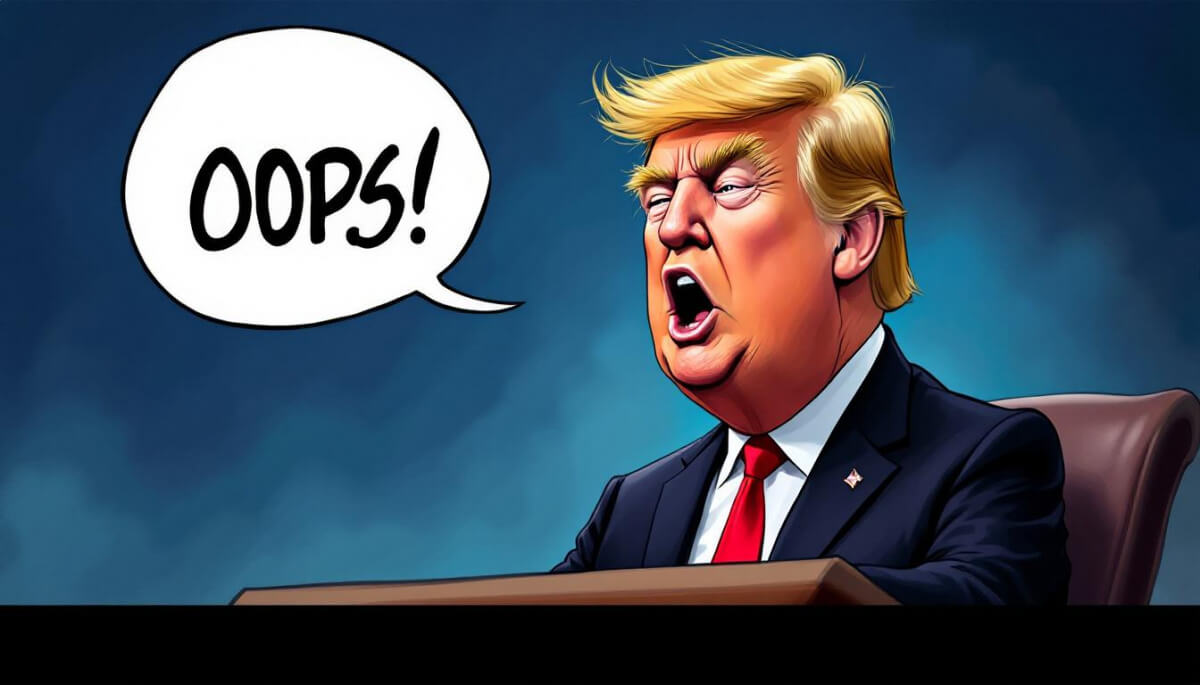
President Donald Trump publicly disclosed Monday that Representative Neal Dunn, a Florida Republican, had received a terminal heart diagnosis with a projected lifespan until June, an announcement made during a luncheon with the Kennedy Center Board of Members at the White House. House Speaker Mike Johnson, seated beside President Trump, confirmed the severity of the diagnosis but indicated that the information had not been publicly shared prior to the President's remarks.
"He would be dead by June." — President Donald Trump
The unexpected revelation came as President Trump discussed the Republican Party's narrow majority in the House of Representatives, a margin he described as presenting "serious challenges." He noted the impact of legislative absences or deaths on the slim majority, stating, "We had it up to four, and then we had a death. And the death is very bad when you have a majority of two or three." This context set the stage for him to recount the story of an unnamed lawmaker facing grave illness.
President Trump then turned to Speaker Johnson, asking whether to reveal the congressman's identity. Johnson proceeded to identify the individual as Rep. Neal Dunn, confirming that the congressman had "real health challenges" and a "pretty grim diagnosis" but had continued his work in Congress. President Trump pressed Johnson for more details, to which Johnson replied, "I think it was a terminal diagnosis." President Trump then stated, "He would be dead by June," a pronouncement that prompted Speaker Johnson to respond, "Okay, that wasn't public."
Representative Neal Dunn, 73, serves Florida’s 2nd Congressional District, a reliably Republican area in the state's Panhandle. A urologist and former Army surgeon, Dunn was first elected to Congress in 2016. President Trump expressed both personal and political concern over Dunn's condition, stating, "It was bad because I liked him. Number two, it was bad because I needed his vote."
Upon learning of Dunn's dire health situation, President Trump said he mobilized his White House medical team. "White House doctors are incredible, and they’ve helped me with other people," President Trump remarked. Speaker Johnson corroborated the swift action, explaining, "Within a number of hours they took him to emergency surgery and the man has a new lease on life." Dunn received his treatment at Walter Reed National Military Medical Center, located just outside Washington, D.C.
President Trump detailed the medical procedure, noting, "It was a long operation. They gave him more stents and more everything that you can have." Speaker Johnson described Dunn's recovery as remarkable, saying, "He acts like he’s 30 years younger. We thought we’d seen a ghost." Johnson further stated that he had spoken with Dunn over the weekend, finding him "encouraged and thankful" for the intervention.
According to President Trump, Dunn had personally conveyed to him that he was "terminal" with a "really bad heart" and that doctors had initially said "there’s nothing they can do." President Trump also recounted Dunn's reported commitment to his political duties, stating that Dunn had told Johnson, "However long I live I’m gonna be voting for you."
In January, prior to this public disclosure, Representative Dunn had announced his decision not to seek re-election after five terms in Congress. At the time, Fox News reported that Dunn's statement indicated a desire to "pass the torch to new conservative leaders, return home to Panama City, and spend more precious time with my family and our beloved grandchildren." Dunn is married to his wife, Leah, and they have three sons and five grandchildren. He holds senior positions in Congress, serving as vice chair of the Energy and Commerce Committee and as a member of the Select Committee on the Strategic Competition Between the United States and the Chinese Communist Party. The incident underscores the delicate balance between public and private information, particularly for elected officials, and the profound impact of health crises on individuals and the political landscape.

