


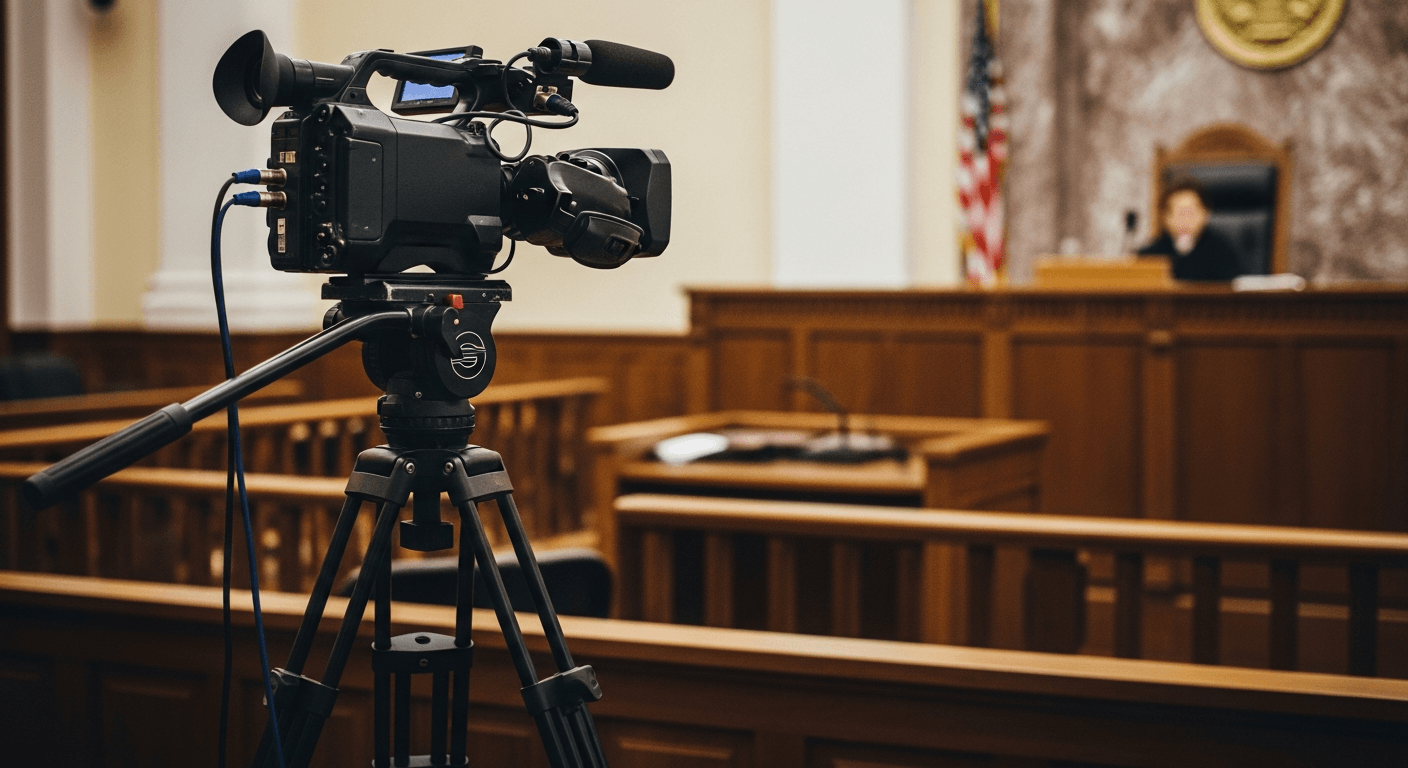
PROVO, UTAH – A Utah judge on Friday, March 13, 2026, delivered a setback to the defense team of Tyler James Robinson, clearing the way for electronic media, including cameras and microphones, to remain inside the courtroom for a pivotal April 17 hearing. The hearing is part of the capital murder case stemming from the assassination of Turning Point USA founder Charlie Kirk.
"In balance, the defendant has not provided a sufficient basis for the court to find that the interests favoring closure outweigh the interest favoring an open proceeding and the presumptive right to access." — Judge Tony Graf Jr., Fourth Judicial District Court
Fourth Judicial District Court Judge Tony Graf Jr. issued the ruling during a pretrial hearing held in Provo, Utah. Judge Graf ruled against motions filed by Robinson’s lawyers that sought to exclude cameras during the April 17 hearing and to limit public access to certain documents in the case. The ruling was broadcast live on Utah television stations and their respective websites, reflecting the high public interest in the proceedings.
"In balance, the defendant has not provided a sufficient basis for the court to find that the interests favoring closure outweigh the interest favoring an open proceeding and the presumptive right to access," Judge Graf stated during the hearing. The upcoming April 17 hearing is expected to delve into the merits of whether cameras should be permitted in the courtroom for Robinson’s legal proceedings moving forward, beyond just the preliminary stage.
Defense attorney Michael Burt stated that the motion to prevent electronic coverage stems from significant concerns over potential prejudicial pretrial publicity. The defense argued that such restrictions are crucial to help ensure Robinson receives an impartial jury and, ultimately, a fair trial. CBS News reported that Robinson’s defense team highlighted that the April 17 hearing would involve discussions about prejudicial pretrial publicity, including the review of evidence not yet formally admitted, personal opinions about guilt, and public statements that would otherwise be deemed inadmissible in court. Burt expressed to the court that revisiting such material in open court could "reinflicting a wound" to Robinson’s constitutional rights.
To support their arguments, defense attorney Burt cited the 1965 U.S. Supreme Court case, *Estes v. Texas*, in which the Court ruled 5-4 that televising a courtroom proceeding over a defendant’s objection violated the constitutional right to a fair trial. However, Judge Graf immediately challenged this precedent, directing Burt’s attention to *Chandler v. Florida*, a 1981 U.S. Supreme Court case. In *Chandler*, the Court ruled that the mere presence of cameras was not inherently prejudicial to a defendant’s right to a fair trial, effectively modifying the *Estes* precedent. "You cite Estes, but Estes was overruled by Chandler," Judge Graf informed Burt. The judge further instructed Robinson’s defense to file a redacted version of their motion to exclude cameras by March 30.
Prosecutor Christopher Ballard dismissed the defense’s arguments, asserting that careful questioning during jury selection and strategic tools, such as expanding the jury pool, are sufficient measures to ensure that any defendant receives a fair trial, even with media presence. "So just saying that this is a content tornado or there’s been a barrage of media coverage doesn’t necessarily mean that there is going to be prejudice to the defendant," Ballard contended. He also clarified that prosecutors were not representing the media’s interests and noted that both the defense and prosecution had been subject to unfavorable media reports at various points in the past.
Tyler James Robinson faces serious charges in connection with Kirk’s death, including aggravated murder and multiple counts of witness tampering and obstruction of justice, totaling seven counts, six of which are felonies. Utah County Attorney Jeff Gray has publicly stated that his office intends to seek the death penalty if Robinson is convicted of murder.
Charlie Kirk, the founder of Turning Point USA, was fatally shot on September 10, 2025. The incident occurred while he was speaking at an outdoor campus debate at Utah Valley University in Orem, Utah, an event attended by approximately 3,000 people. Kirk was struck in the neck by a single bullet fired by a gunman positioned on the roof of a building located about 142 yards away. Robinson was apprehended two days after the shooting in Washington City, and prosecutors have stated that DNA evidence links him to the killing.

