

⚡ BREAKING NEWS
Swalwell Faces New Allegations Over Nanny's Immigration Status Appeals Court Allows Trump Administration Access to Social Security Data US Arrests Iranian Nationals Linked to Regime Officials FBI Documents Reveal Pre-Jan. 6 Violence Warnings <p><strong>Fairside News is evolving.</strong> As we approach our one-year anniversary, we’re expanding into real-time breaking news powered by global RSS feeds, while enhancing our platform with richer visuals—now featured in nearly 80% of articles—and improved AI-driven workflows.</p> <p>What began as timely reporting has grown into a faster, more dynamic news source, with readership approaching 700,000 article views. Stay informed with clear, fact-based coverage and perspectives from both sides of the aisle.</p>
Sponsor Advertisement
Pope Leo XIV Meets Axelrod, Obama Meeting Speculation Mounts
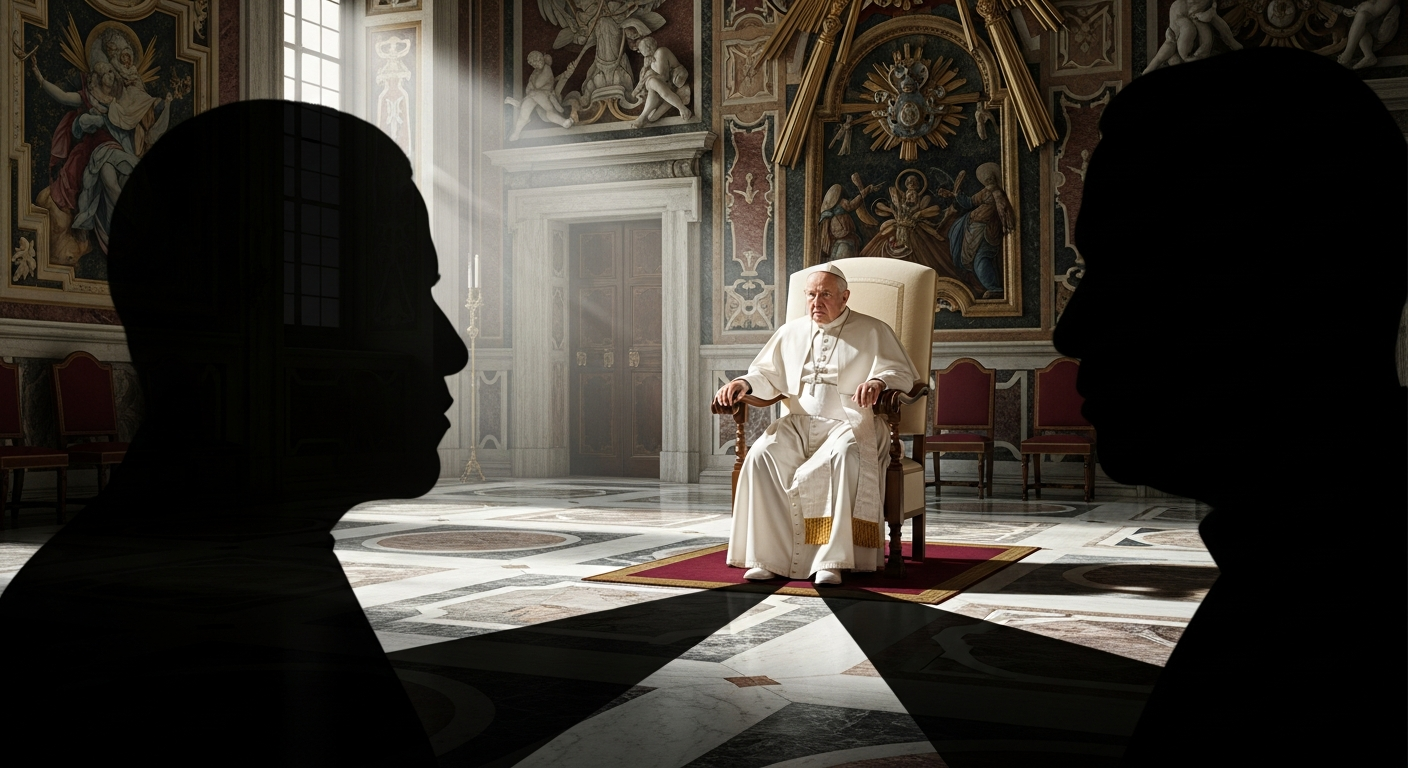
AI-generated image for: Pope Leo XIV Meets Axelrod, Obama Meeting Speculation Mounts

Pope Leo XIV Meets Axelrod, Obama Meeting Speculation Mounts

Pope Leo XIV recently met with Democratic strategist David Axelrod at the Vatican, fueling speculation about a potential future meeting with Barack Obama.

Vatican City – Pope Leo XIV held a private meeting with long-time Democratic strategist David Axelrod this week at the Vatican, an encounter that has ignited widespread speculation regarding a potential future meeting between the pontiff and Barack Obama. While officials did not disclose the specifics of their discussion, Axelrod's significant role in Obama's political career, including his successful 2008 presidential campaign, has placed the meeting under an intense spotlight.

"The person who I have not yet met… is the new pope." — Barack Obama, Podcast Appearance

The timing of Axelrod's visit has particularly fueled questions about whether it could serve as a precursor to a direct meeting between Pope Leo XIV and Obama. Obama has openly expressed his interest in such an encounter, stating in a February podcast appearance, "The person who I have not yet met… is the new pope," and specifically noting their shared connections to Chicago. Pope Leo XIV, like Obama, has deep ties to the city, having been born there and raised in the nearby suburb of Dolton, Illinois. This shared background adds a layer of intrigue to the possibility of a high-profile meeting.

Christopher Hale, an author who studies the Pope's role in American politics, described Axelrod's meeting as unexpected. Speaking to CBS News, Hale remarked, "We’re not 100% sure that this is connected… but the timing is auspicious," suggesting the visit could be an initial step toward facilitating a meeting with Obama. The Vatican has not publicly commented on whether such a meeting is being arranged.

Pope Leo XIV has been actively engaged in global affairs since his papacy began, frequently addressing pressing international issues. In his recent Easter message, the pontiff delivered a strong call for the rejection of violence and an earnest pursuit of peace, warning against the continued escalation of conflicts without resolution. These remarks resonate in a period marked by elevated global tensions, including ongoing conflicts involving the United States.

Despite the growing anticipation for a potential Papal visit to the United States, Vatican officials have indicated that travel to the U.S. is not expected in 2026, primarily due to the upcoming election cycle. This suggests that any future meeting between Pope Leo XIV and Obama would likely need to occur overseas, possibly at the Vatican or another international location.

Several American political figures have already had audiences with Pope Leo XIV. Illinois Governor JB Pritzker, for instance, visited the Vatican in November, accompanied by a delegation of local officials. Notably, President Donald Trump has not yet met Pope Leo XIV. Analysts highlight the Pope's keen awareness of how political meetings are perceived, especially given his American heritage. Hale commented on this, stating, "He’s not disconnected from reality," and emphasizing that the pontiff closely monitors U.S. media and political developments.

The meeting between Pope Leo XIV and David Axelrod has generated considerable discussion across various platforms. A social media post from an account named "Publius" (@OcrazioCornPop) on April 9, 2026, shared a report claiming that Pope Leo XIV was 30 minutes late to a meeting with Italian Olympic officials due to his private huddle with Axelrod, whom the post described as Barack Obama's "chief strategist." The tweet characterized the event as the "CHICAGO DEMOCRAT MACHINE" getting "strategy sessions" from Axelrod at the Vatican, framing the encounter in a highly partisan light.

For now, Axelrod's visit has created more questions than definitive answers regarding future papal engagements with American political leaders. However, with Obama having openly expressed his desire to meet the Pope and the establishment of connections through figures like Axelrod, the possibility of a high-profile meeting remains a significant point of interest for both religious and political observers worldwide.

Advertisement

The Flipside: Different Perspectives

Progressive View

Progressives might view Pope Leo XIV's meeting with David Axelrod as a constructive step in engaging with influential figures to advance shared humanitarian goals and address global challenges. From this perspective, the Pope's active role in speaking out against violence and advocating for peace aligns with progressive values of social justice and collective well-being. Engaging with strategists like Axelrod, who have experience in large-scale social movements and policy implementation, could be seen as a pragmatic approach to explore avenues for collaboration on issues such as poverty, climate change, or conflict resolution. Progressives often emphasize the systemic context of global problems and believe that powerful institutions, including religious ones, have a moral imperative to use their influence for positive societal change. The Pope's shared Chicago roots with Obama might also be viewed as a positive sign of cultural understanding and a willingness to connect on a human level, fostering dialogue that could lead to meaningful action on issues of equity and justice.

Conservative View

From a conservative perspective, the meeting between Pope Leo XIV and a prominent Democratic strategist like David Axelrod raises concerns about the potential for the papacy to be perceived as aligning with a particular political faction. Conservatives often advocate for a clear separation between religious authority and partisan politics, emphasizing that spiritual leaders should maintain neutrality to effectively guide all people, regardless of their political affiliations. The involvement of a political operative, particularly one so closely identified with a specific party and past administration, could be seen as compromising the Pope's universal spiritual role. There is a concern that such encounters might politicize the Vatican and dilute its moral authority by drawing it into the complexities of secular political maneuvering. Furthermore, some conservatives might view this as part of a broader trend where religious institutions are increasingly engaging in social and political issues, potentially at the expense of their primary spiritual mission. They might argue that the Church's focus should remain on doctrine, faith, and moral guidance rather than strategic political consultations, especially when President Donald Trump has not yet met the pontiff.

Common Ground

Despite differing political interpretations, both conservative and progressive viewpoints can find common ground in the shared desire for peace and humanitarian well-being, as articulated by Pope Leo XIV in his Easter message. There is bipartisan agreement on the importance of addressing global conflicts and the suffering they cause. Both sides value the role of dialogue in resolving disputes and promoting understanding across divides. While approaches may differ, the fundamental goal of a more peaceful and just world is a universally recognized aspiration. Furthermore, there is a shared appreciation for the cultural and diplomatic significance of the Vatican as a global institution. Regardless of political leanings, many acknowledge the Pope's unique position to inspire moral reflection and encourage ethical leadership on the world stage. Both conservatives and progressives can agree that open communication between religious leaders and influential figures is important for fostering understanding, even if the specific topics or perceived implications of those meetings are subject to different interpretations.