


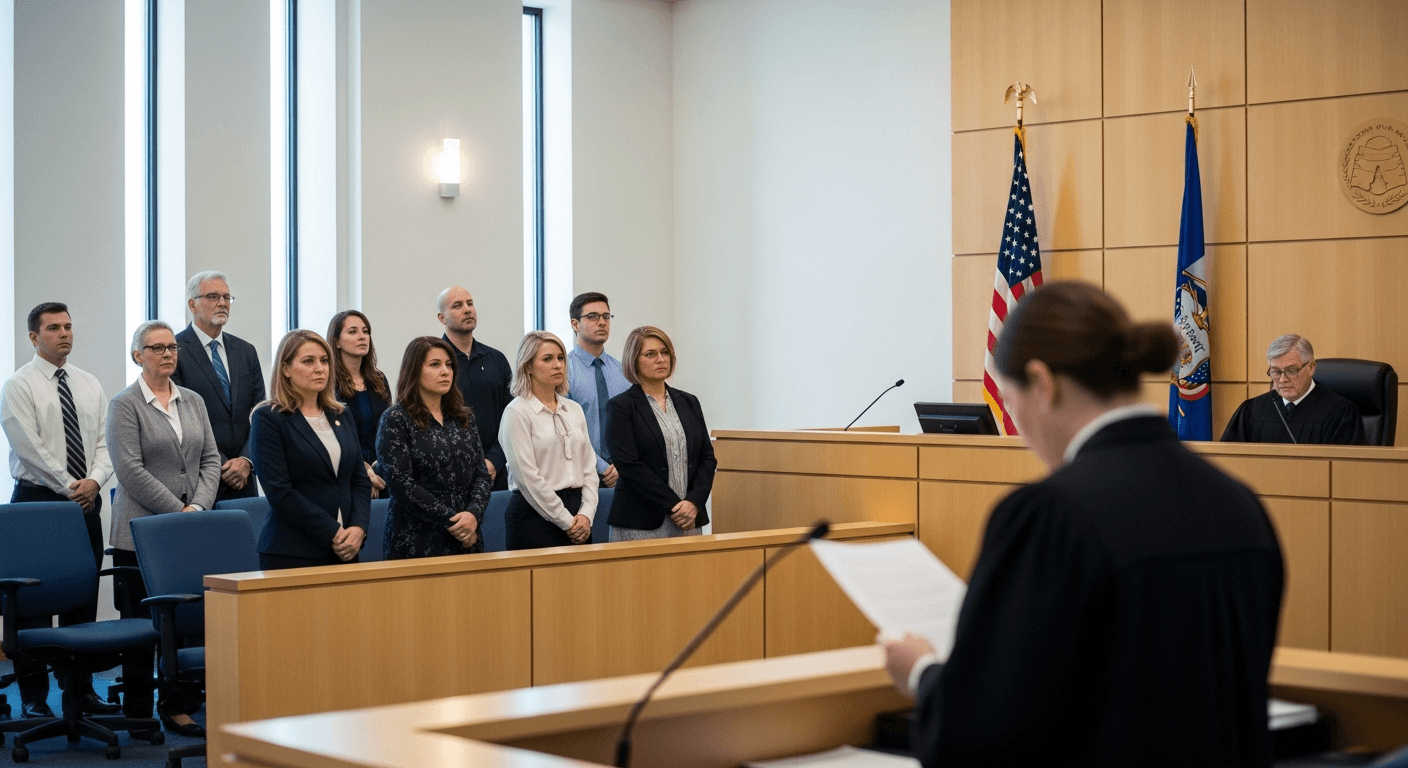
A Utah jury delivered a unanimous verdict Monday, finding Kouri Richins, a 35-year-old mother of three and author, guilty on all five felony counts related to the 2022 death of her husband, Eric Richins. The charges included aggravated murder, aggravated attempted murder, two counts of insurance fraud, and forgery. The decision, reached after only three hours of deliberation by a jury of six men and six women at the Summit County Courthouse in Park City, Utah, now means Richins could face life behind bars without the possibility of parole.
"The first minute is not the sound of a wife becoming a widow… the first minute is the sound of a wife becoming a black widow." — Summit County Prosecutor Brad Bloodworth
Judge Richard Mrazik read each count aloud in the courtroom, prompting a visible gasp from Richins as the first guilty verdict was announced. She kept her head bowed throughout the reading, shaking and taking deep breaths, though no tears were observed. Eric Richins’s family and friends, who had attended every day of the emotional trial, held onto one another as the verdict was delivered. His sister, Amy, quietly wiped tears, while his mother, Lisa Darden, sat with a stoic expression.
Eric Richins, a 39-year-old businessman and father, was found dead in the early morning hours of March 4, 2022, at the family’s home in Kamas, Utah. Kouri Richins had told authorities she discovered her husband cold in bed after returning to their bedroom. Earlier that night, she informed investigators, the couple had celebrated her closing of a deal on a $2.9 million mansion in Midway with homemade Moscow Mule cocktails and a lemon drop shot. An autopsy later determined Eric Richins died from a fentanyl overdose, with the amount in his system exceeding five times the established lethal threshold.
Prosecutors alleged that Kouri Richins had attempted to poison her husband previously on Valentine’s Day 2022. On that occasion, she allegedly placed fentanyl in a sandwich she left for him in his truck, accompanied by a love note. Eric Richins became ill following this incident and reportedly told friends he suspected his wife was attempting to poison him. According to trial testimony, after this failed attempt, Richins allegedly contacted her drug source and specifically requested a more potent form of fentanyl, referring to it as “the Michael Jackson stuff.”
A key witness for the prosecution was housekeeper Carmen Lauber, who testified that she sold drugs to Richins on four separate occasions around the time of Eric’s death, including the fentanyl prosecutors claimed was used in the fatal poisoning. Cell phone records presented at trial showed extensive communication between Richins and Lauber, with approximately 800 text messages exchanged in the three months leading up to Eric’s death, averaging 10 to 11 per day. Graphics shown to jurors illustrated a clear pattern: Richins would contact Lauber, who would then contact a drug dealer named Robert Crozier, with intense communication between the two women coinciding with exchanges between Lauber and Crozier. Cell tower data further placed Lauber and Crozier’s phones at the same locations during these windows, indicating in-person drug exchanges.
The prosecution presented a strong financial motive for the murder. At the time of her husband’s death, Kouri Richins was reportedly carrying approximately $7.5 million in debt owed to over 20 payday loan and high-interest lenders, and her real estate business was in financial collapse. She was also engaged in an extramarital affair with Robert Josh Grossmann, a handyman and military veteran. Text messages shown in court revealed Richins expressing hopes of being with Grossmann and discussing plans for a luxury Caribbean resort vacation within days of Eric’s death.
Under the terms of a prenuptial agreement, Richins would have received nothing from Eric’s successful stonemasonry business in the event of a divorce. However, his death, she apparently believed, would alter that equation. Unbeknownst to Richins, Eric had taken steps to protect his assets, transferring them into a trust designated for his young sons, with his sister named as trustee. He had also reportedly worked to remove Richins from his life insurance policies and his will prior to his death.
Grossmann testified during the trial, breaking down in tears while confronting the romantic text messages he had sent to Richins. He further testified that in the days following Eric’s death, Richins had asked him what it felt like to kill someone. Investigators also recovered internet searches from Richins’s phone and browser history, including queries such as “women utah prison,” “how to delete cell phone data,” and “if someone is poisoned, what goes down on the death certificate as.” Prosecutors stated Richins had attempted to wipe her phone and internet activity before her arrest.
For more than a year after her husband’s death, Richins publicly presented herself as a grieving widow. She authored a children’s picture book titled *Are You With Me?* about coping with loss and promoted it on a local Utah television program. She was arrested in May 2023 and subsequently charged with murder.
In closing arguments, Summit County Prosecutor Brad Bloodworth characterized Richins as a "black widow" driven by financial greed and an extramarital affair. He highlighted that during the 911 call played in court, Richins delayed beginning CPR for nearly six minutes after a dispatcher instructed her to do so. “The first minute is not the sound of a wife becoming a widow… the first minute is the sound of a wife becoming a black widow,” Bloodworth told the jury. He added, “The morning Eric died, she had a plan on how to spend Eric’s money, not realizing it was trust money.”
Defense attorney Wendy Lewis argued that Richins was wrongly targeted because Eric’s family and their private investigator had prematurely concluded her guilt. Lewis contended that the investigation was careless, law enforcement overlooked relevant leads, and Richins was judged for her grieving process rather than for committing a crime. “They want you to look at a woman during the worst moment of her life and to judge her. There is no wrong way to grieve,” Lewis told the jury. The defense called no witnesses.
Richins is scheduled to be sentenced on May 13 and faces a maximum penalty of life in prison without the possibility of parole. She also faces a separate civil case concerning Eric’s estate and additional pending financial charges.

