


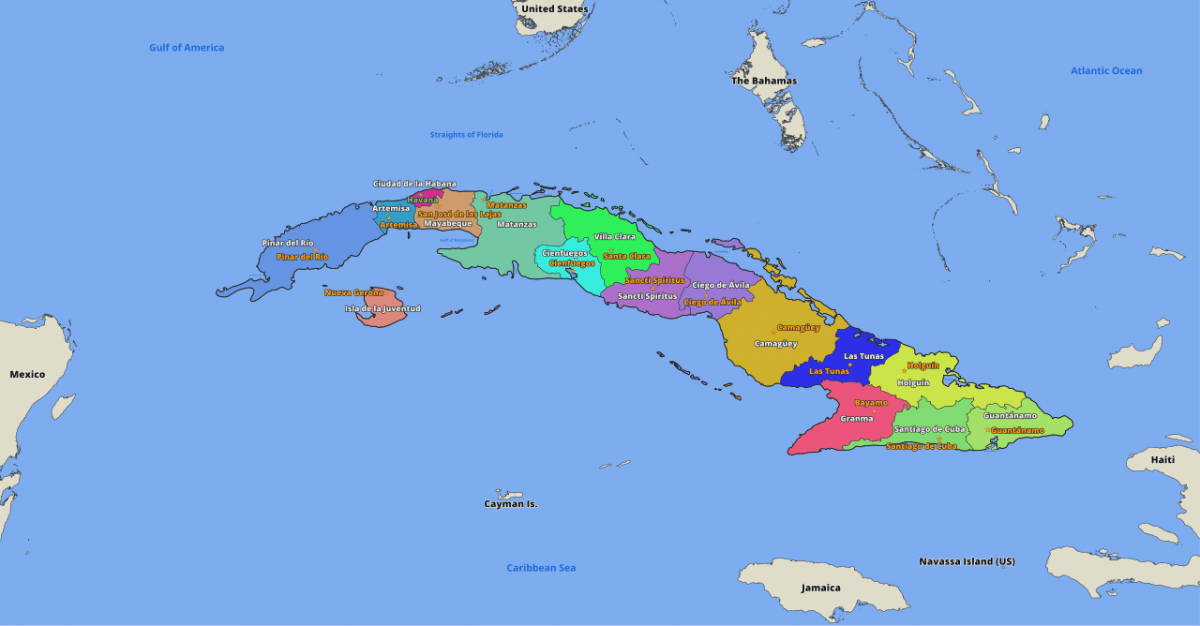
Cuban President Miguel Díaz-Canel confirmed on Friday that his government is engaged in discussions with the United States, following recent remarks by President Donald Trump suggesting the possibility of a "friendly takeover" of the economically struggling island nation. The confirmation signals a potential shift in the long-strained relationship between Washington and Havana, occurring amidst a deepening economic crisis in Cuba.
"These talks have been aimed at finding solutions through dialogue to the bilateral differences we have between the two nations." — Miguel Díaz-Canel, Cuban President
In a televised statement, President Díaz-Canel acknowledged the ongoing negotiations, stating that both countries are attempting to resolve longstanding differences through diplomatic dialogue. "These talks have been aimed at finding solutions through dialogue to the bilateral differences we have between the two nations," Díaz-Canel said. He further emphasized that these discussions are proceeding "on the basis of equality and respect for both countries’ political systems, sovereignty, and self-determination."
President Trump had earlier this week publicly floated the idea of the United States taking a more direct role in Cuba’s future, stating, "It may be a friendly takeover. It may not be a friendly takeover. It wouldn’t matter because they’re really in — they’re down to, as they say, fumes. They have no energy. They have no money. They’re in deep trouble on a humanitarian basis." President Trump had previously raised a similar prospect last month, suggesting the United States could "very well end up having a friendly takeover of Cuba after many, many years."
These comments from President Trump coincide with a severe economic downturn in Cuba. During a subsequent press conference, President Díaz-Canel disclosed that the country has not received any fuel shipments for three months, leading to an unstable electrical grid and widespread power outages. This critical situation has been exacerbated in recent months by actions taken by the Trump administration, including the cessation of discounted Venezuelan oil shipments that had historically provided crucial support to Cuba's economy. The cut-off followed a U.S. raid on Caracas earlier this year that resulted in the collapse of Venezuelan leader Nicolás Maduro’s government, a close ally and key oil provider to Havana. President Trump has also threatened to impose tariffs on countries that sell oil to Cuba, intensifying the economic pressure on the communist government.
In a move that appeared to be a gesture aimed at easing tensions, Cuban authorities released 51 political prisoners shortly before President Díaz-Canel’s confirmation of the talks. This development follows several other recent indications of ongoing diplomatic engagement between the two nations. Secretary of State Marco Rubio reportedly met with Raúl Guillermo Rodríguez Castro, the grandson of former Cuban leader Raúl Castro, in February during a conference in the Caribbean. This meeting sparked speculation about the existence of back-channel negotiations. Furthermore, the U.S. Treasury Department recently announced a policy allowing Venezuelan oil to be sold to Cuba under specific conditions. This policy mandates that the oil must benefit Cuba’s private sector rather than its state-controlled economy, a requirement that, according to the New York Post, could potentially force reforms and weaken the power of Cuba’s ruling Communist Party.
Cuba's economy has faced challenges for decades, but the current crisis is widely regarded as one of the most severe in years, marked by persistent power outages, food shortages, and general economic instability, fueling growing frustration among the Cuban population. President Trump has asserted that deeper U.S. involvement could help stabilize the situation and benefit Cuban Americans who sought refuge from the island during decades of communist rule.
Cuba has operated as a single-party communist state for over six decades, a system established after Fidel Castro seized power in 1959, overthrowing the then U.S.-backed government. Fidel Castro remained the dominant political figure for decades, eventually transferring power to his brother Raúl in 2008, who subsequently handed the presidency to Miguel Díaz-Canel in 2019. The current diplomatic overtures represent a significant moment in the complex and often contentious history between the two nations.

