
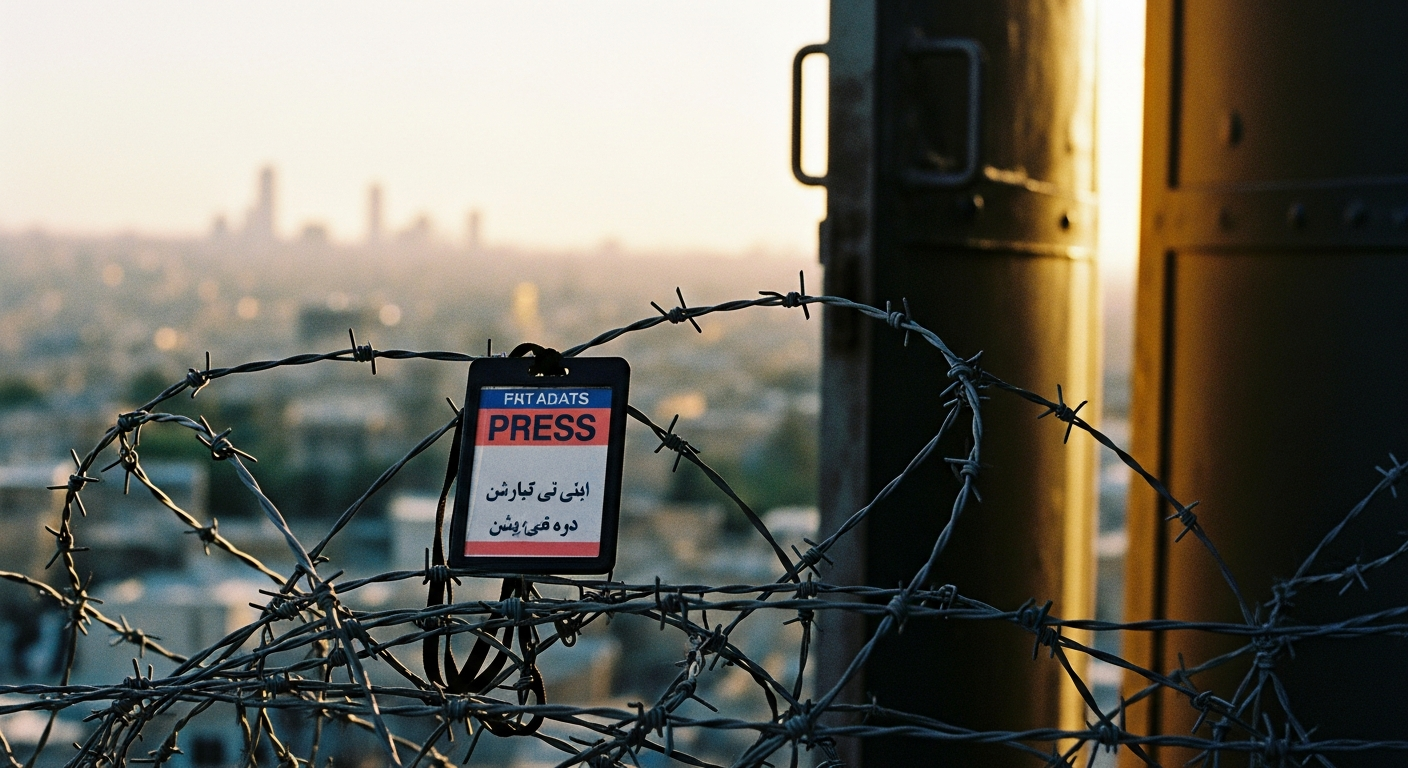
American journalist Shelly Kittleson was freed on April 7 in Baghdad, Iraq, after being held captive for one week by Kata’ib Hezbollah, an Iranian-backed militant organization. Her release was confirmed by two Iraqi government sources and a separate source directly familiar with the matter, bringing an end to a tense period following her abduction on March 31.
"she was doing what she had always done." — Kiran Nazish, Founder and Director, Coalition for Women in Journalism.
Kittleson's kidnapping occurred on a Tuesday in Baghdad when fighters from the militia seized her. Multiple sources indicated that her abduction was not a random act, revealing that Kata’ib Hezbollah maintained a list of American journalists targeted for abduction, and Kittleson's name was on it. The group publicly announced her release through its official Telegram channel, stating that she would be freed under a single, non-negotiable condition: Kittleson must exit Iraq without delay. Her precise whereabouts immediately following her release were not disclosed.
Iraqi authorities played a pivotal role in securing Kittleson's freedom, striking a deal with the militant group. Two militia officials, who spoke anonymously to The Associated Press, confirmed that the agreement involved the release of detained members of Kata’ib Hezbollah by Iraqi authorities in exchange for Kittleson's liberty. Prior to the conclusion of these negotiations, Kata’ib Hezbollah had circulated a video of Kittleson. The undated footage, lasting just over two and a half minutes, showed her speaking directly into the camera, dressed in a pink sweater and green blazer. The location where the video was filmed remains undetermined.
The U.S. government had been aware of a specific threat against Kittleson. Alex Plitsas, a CNN national security analyst who served as Kittleson’s official point of contact in the United States, informed CBS News that American officials had explicitly warned Kittleson that Kata’ib Hezbollah was allegedly pursuing a campaign to kidnap or kill female journalists. These warnings were not isolated incidents. A U.S. official told CBS News that Kittleson received multiple alerts regarding the danger directed at her, with the most recent warning arriving on the very night before militants abducted her from the streets of Baghdad.
Despite these repeated warnings, Kittleson proceeded with her plans to travel to Iraq. Kiran Nazish, founder and director of the Coalition for Women in Journalism, spoke with CBS News, explaining that Kittleson had arranged to stay with a family in Iraq who had personally assured her of her safety, telling her they "would keep her safe." Kittleson herself confirmed in a text exchange with Nazish that she had received official advice against making the trip. Yet, Nazish recounted, Kittleson pressed forward, stating "she was doing what she had always done."
Nazish described Kittleson as a journalist who had built a career reporting from some of the world's most perilous regions. Kittleson had previously reported from both Iraq and Syria on multiple occasions, possessing what Nazish characterized as "experience reporting on the ground in difficult circumstances." When not on assignment in conflict zones, Kittleson resides in Rome and has spent considerable time in Istanbul, indicating a long-standing engagement with international reporting. A senior administration official confirmed to Fox News that U.S. officials worked with the Iraqi government to secure her release.
The successful negotiation highlights the complex challenges involved in securing the release of individuals held captive by militant groups in volatile regions. It also underscores the inherent dangers faced by journalists who report from conflict zones, even when explicit warnings about their safety have been issued. The incident comes as international organizations continue to advocate for press freedom and the protection of journalists worldwide.