
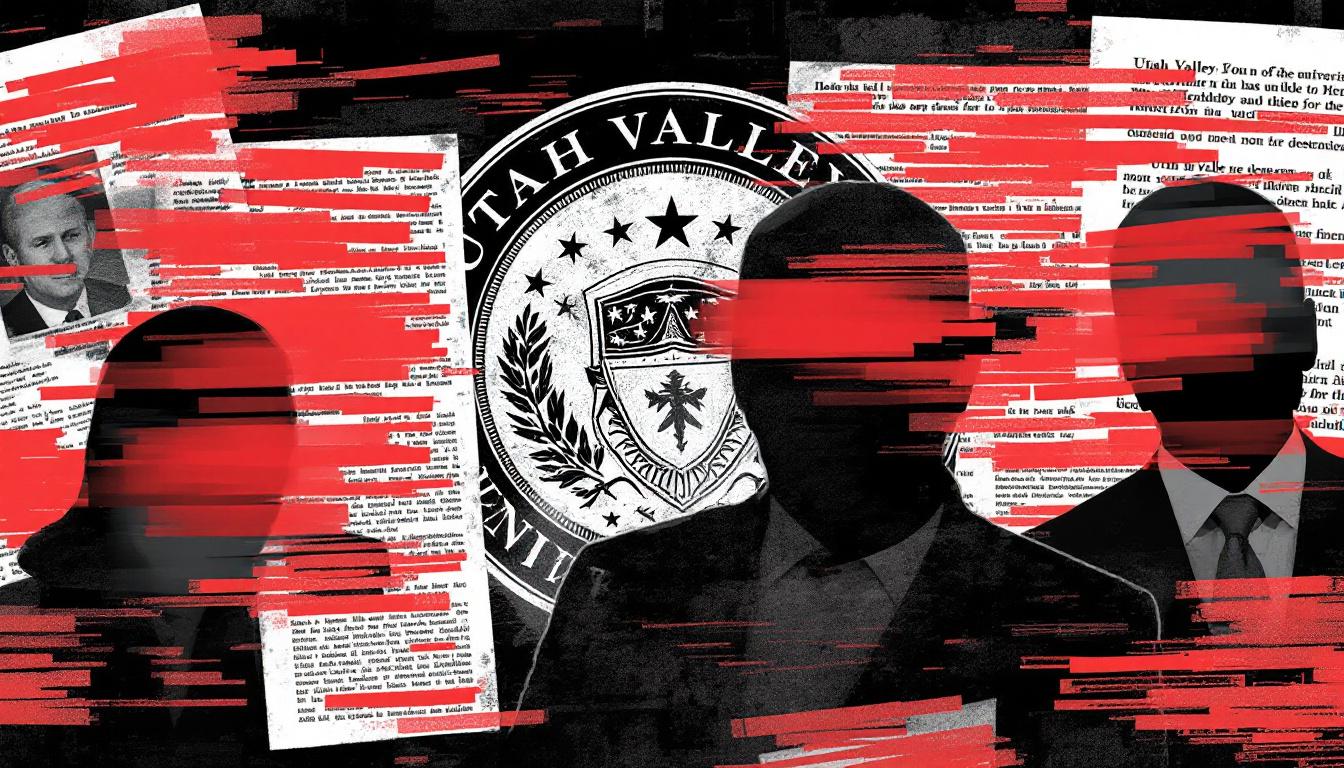
Utah Valley University (UVU) in Orem has provided heavily censored documents in response to a public records request concerning the September 10 assassination of conservative commentator Charlie Kirk. The Daily Caller News Foundation (DCNF) sought personal communications from UVU Police Chief Jeff Long regarding the incident but received files with extensive redactions and was denied other records altogether, raising questions about transparency.
"He comes back and his last correspondence was, ‘I got you covered,'” Harpole recounted. “What else am I to do when a command-level person from an accredited police department says, ‘I’ve got this area’?”" — Brian Harpole, Charlie Kirk's Private Security Team Lead
Charlie Kirk, founder of Turning Point USA, was fatally shot while debating political ideas with students outdoors on the UVU campus. Authorities later identified 22-year-old Tyler Robinson as the assailant. Robinson allegedly climbed to the rooftop of the Losee Center and fired a single fatal shot before evading capture for 33 hours. His parents ultimately persuaded him to surrender after the FBI released photographs. Prosecutors have indicated that Robinson's family heard him express contempt for Kirk's political positions following the start of a relationship with a transgender roommate, who is expected to testify at trial.
The DCNF's request for records related to Chief Long yielded fifty documents described as "riddled with blacked-out names, chopped sentences, and gaps." UVU justified the extensive redactions and the withholding of additional records by citing numerous legal exemptions. These included protections against jeopardizing the security of public property, buildings, or systems; safeguarding the life or safety of an individual; and upholding personal and educational privacy protections. Nine specific redactions were attributed to a Utah state law that shields active law enforcement investigations and protects a defendant's right to a fair trial. Additionally, two exemptions covered attorney-client communications. The university also confirmed the existence of other relevant records but declined to release them.
Even photographs related to post-shooting campus renovations, including images of a large American flag installed at the university, arrived partially blacked out. The limited visible information from the scrubbed records offers only glimpses into the events surrounding Kirk's death. One email dated September 8 showed an unidentified person receiving clearance for Kirk’s TPUSA chapter to use amplified sound during the campus event. The reply, according to the DCNF, stated, “I don’t see a problem with this, [redacted].” Another email, sent on September 9, the day before the shooting, appeared to reference an attempt to pass a message directly to Kirk, reading, “[Redacted] wants us to get a message to Charlie Kirk,” followed by a phone number. The sender and recipient of this message remain obscured by redactions.
The security arrangements for the event had drawn public criticism long before the records request. UVU reportedly deployed only six campus police officers to manage an outdoor event attended by approximately 3,000 people. There were no metal detectors to screen attendees, nor was there a ticketed entry system to control access to the grounds. Utah Republican State Rep. Ryan Wilcox characterized the situation as "a complete disaster." In response to the outcry, the university launched a formal security review shortly after the incident.
Brian Harpole, who led Kirk’s private security team that night, has made strong allegations against Chief Long. Speaking on a podcast in November, Harpole stated that he had specifically flagged a vulnerability to Long prior to the event: the accessible rooftop of UVU’s Sorenson Center, located directly across from where Robinson ultimately took his shot. Harpole believed that officers positioned there could have potentially spotted the gunman. He recounted Long's text message assurance: "He comes back and his last correspondence was, ‘I got you covered.'" Harpole further criticized Long's public silence, stating, "Why this hadn’t come out and why he won’t stand up like a man and admit this, I don’t know, but he’s watching a bunch of men lose their careers and he’s okay with it."
Chief Long addressed reporters on the day of the shooting, acknowledging shortcomings in preventing Kirk's death. "We train for these things, and you think you have things covered and — you know, these things, unfortunately, they happen," he said. "You try to get your bases covered and unfortunately, today, we didn’t. And because of that, we had this tragic incident."
The university's resistance to releasing records is not an isolated incident. FOX13, a local television station, also submitted a records request seeking UVU’s security plan for the TPUSA event but was refused on the same grounds of legal exemptions. FOX13 appealed the decision. In February, Tyler Robinson’s legal team went to court to argue that these records should remain undisclosed, further complicating efforts to gain a full understanding of the security protocols and communications leading up to the fatal shooting.