
A U.S. District Court judge has affirmed the felony conviction of Hannah C. Dugan, a former Wisconsin state judge, who was found guilty of obstructing a federal proceeding by assisting an individual subject to an immigration warrant in evading federal agents. U.S. District Judge Lynn Adelman issued the ruling on April 6, rejecting Dugan's motion that sought either an acquittal or a new trial following her conviction in December.
Dugan, who previously served as a Milwaukee County judge, was indicted after an incident on April 18, 2025, at the Milwaukee County Courthouse. On that date, agents from U.S. Immigration and Customs Enforcement (ICE), along with other federal agencies, arrived at the courthouse to execute an administrative immigration warrant for Eduardo Flores-Ruiz, a Mexican national. Flores-Ruiz was also noted to have a prior removal order and was described by federal officials as a "violent suspect."
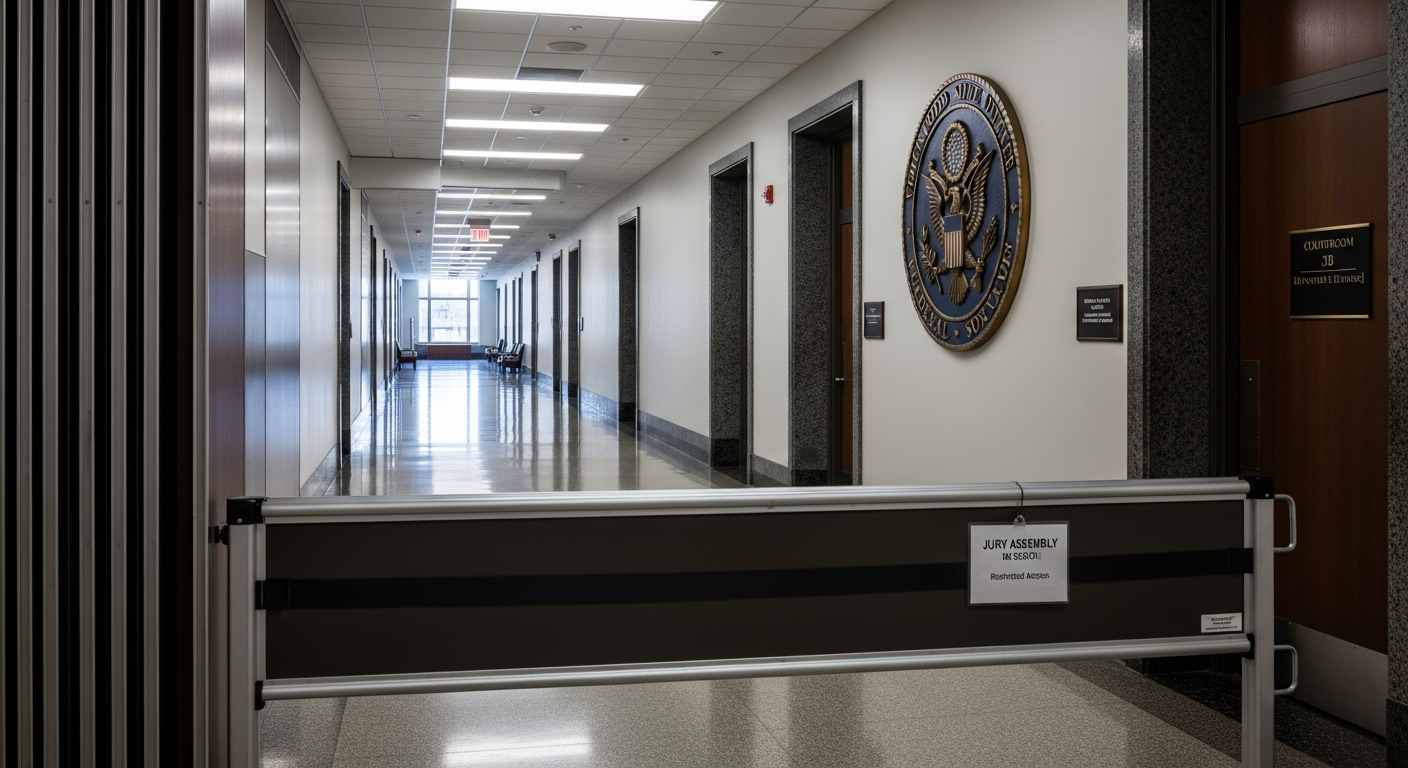
According to evidence presented during the trial, Dugan became aware of the federal agents' presence within the courthouse. Prosecutors argued that she then confronted the agents in a public hallway, an action they contended served as a diversion. Subsequently, Dugan directed Flores-Ruiz and his attorney to exit the building through a restricted-access door, typically reserved for jurors. Flores-Ruiz attempted to flee on foot once outside the courthouse but was apprehended by federal agents after a brief chase. He was subsequently deported in November 2025.
In her post-conviction motions, Dugan argued that federal prosecutors had not presented sufficient evidence to support the jury's verdict, that the jury had received improper instructions during the trial, and that the federal obstruction statute was applied too broadly to her conduct. Judge Adelman, however, determined that federal prosecutors had indeed presented sufficient evidence at trial to uphold the jury's findings that Dugan took deliberate steps to interfere with federal officials. The court also dismissed Dugan’s claims regarding improper jury instructions and the scope of the obstruction statute’s application.
Dugan's defense team had argued during her trial that her actions fell within the scope of her authority as a sitting judge and that she was entitled to immunity for official acts performed in her judicial capacity. This argument was rejected by the court. The ruling reinforces the boundaries of judicial authority, particularly concerning interactions with federal law enforcement activities within court premises.
The case has drawn attention to the interplay between state judicial authority and federal immigration enforcement. Critics of Dugan's actions emphasized the importance of upholding the rule of law and ensuring that judicial officials do not impede federal operations. Supporters, conversely, raised questions about the presence of federal immigration agents in courthouses and the role of judges in protecting individuals' rights within the judicial system.
Dugan has not yet been sentenced, but the felony conviction carries a maximum penalty of up to five years in federal prison. The forthcoming sentencing will conclude a legal process that has highlighted the complexities of jurisdiction, judicial conduct, and immigration enforcement in the United States. The decision by Judge Adelman to deny Dugan's appeal solidifies the initial jury's verdict, sending a clear message about the accountability of all officials under federal law.