
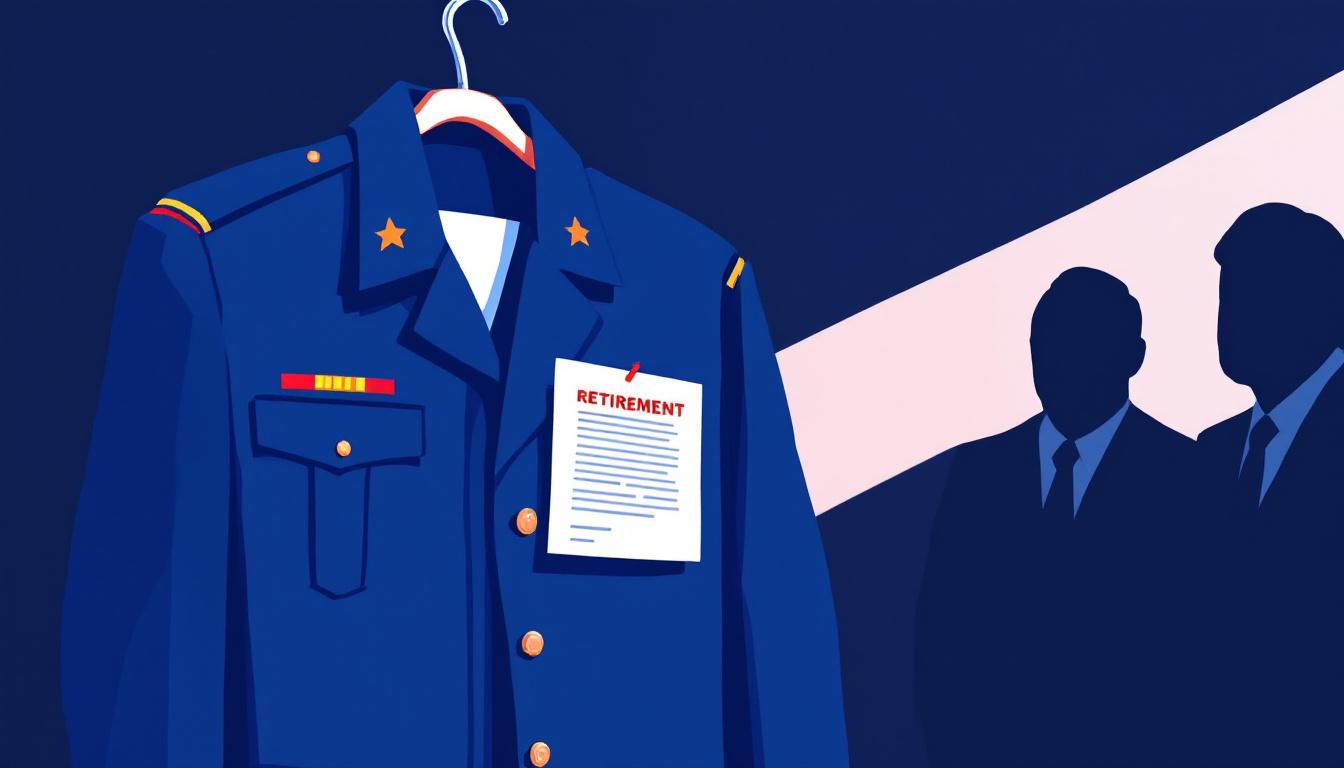
War Secretary Pete Hegseth requested Army Chief of Staff General Randy George to step down and take immediate retirement on April 3, 2026, according to multiple reports and confirmed by a War Department spokesman. The directive came just hours after the removal of Pam Bondi from a separate administrative post, signaling an accelerating pace of leadership changes within President Donald Trump’s administration.
"Defense Secretary Pete Hegseth has asked Army Chief of Staff General Randy George to leave his post and take immediate retirement as the administration seeks a commander who can better implement the president’s vision for the Army." — War Department spokesman
The War Department spokesman explicitly stated the move was intentional, indicating a desire to install a commander better equipped to implement the president's vision for the Army. "Defense Secretary Pete Hegseth has asked Army Chief of Staff General Randy George to leave his post and take immediate retirement as the administration seeks a commander who can better implement the president’s vision for the Army," the spokesman said. Another official reiterated the sentiment, adding, "We are grateful for his service, but it was time for a leadership change in the Army."
General George's role as Army Chief of Staff was significant, placing him as the highest-ranking officer within the Army. In this capacity, he was responsible for critical aspects of military readiness, training protocols, and the overall force structure of the U.S. Army. His duties also included advising top civilian leadership, including the Secretary of War and President Trump, on strategic military matters.
George brought decades of military experience to the position. A graduate of West Point, he pursued a career as an infantry officer, serving in key conflicts such as Operation Desert Shield and Desert Storm early in his career. His extensive service record also included command roles during both the Iraq War and the war in Afghanistan. Prior to his appointment as Chief of Staff, he led major units, including the 4th Infantry Division and I Corps, accumulating a depth of operational and strategic expertise.
Despite his extensive background and service, the administration made clear that experience alone was not the sole determining factor in his continued tenure. Alignment with the administration's leadership priorities and strategic direction has emerged as a crucial criterion for senior military roles. Sources indicated that the goal is to install a leader who will carry out the administration's vision "without hesitation."
General George's departure is not an isolated event but rather part of a discernible pattern of leadership changes under War Secretary Hegseth. He is one of more than a dozen senior military officials who have been removed or replaced during Hegseth’s tenure. Previous high-profile shakeups have included the ouster of Chairman of the Joint Chiefs of Staff General C.Q. Brown, Chief of Naval Operations Admiral Lisa Franchetti, and Air Force Vice Chief of Staff General James Slife. This consistent pattern suggests a broader restructuring of military leadership designed to ensure closer ideological and strategic alignment with the current administration's defense objectives.
In the interim, Christopher LaNeve is expected to step in as acting Army Chief of Staff. Officials described LaNeve as "a battle-tested leader with decades of operational experience" who is trusted to carry out the administration’s vision. His anticipated appointment reflects the administration's stated preference for leaders who are not only experienced but also fully aligned with its strategic outlook.
The timing of this significant military leadership change is also noteworthy, occurring as the United States continues to engage in military operations tied to the ongoing Iran conflict. President Trump recently stated in a national address that many objectives related to the conflict have already been achieved. The shift in Army leadership at this juncture could signify an intent to further refine or accelerate the implementation of the administration's strategic goals in the region and globally. The administration's actions underscore a concerted effort to shape the military's top echelon to ensure a unified and consistent approach to national defense and foreign policy.