


⚡ BREAKING NEWS
Sponsor Advertisement
NYC Mayor's Good Friday Message Sparks Controversy
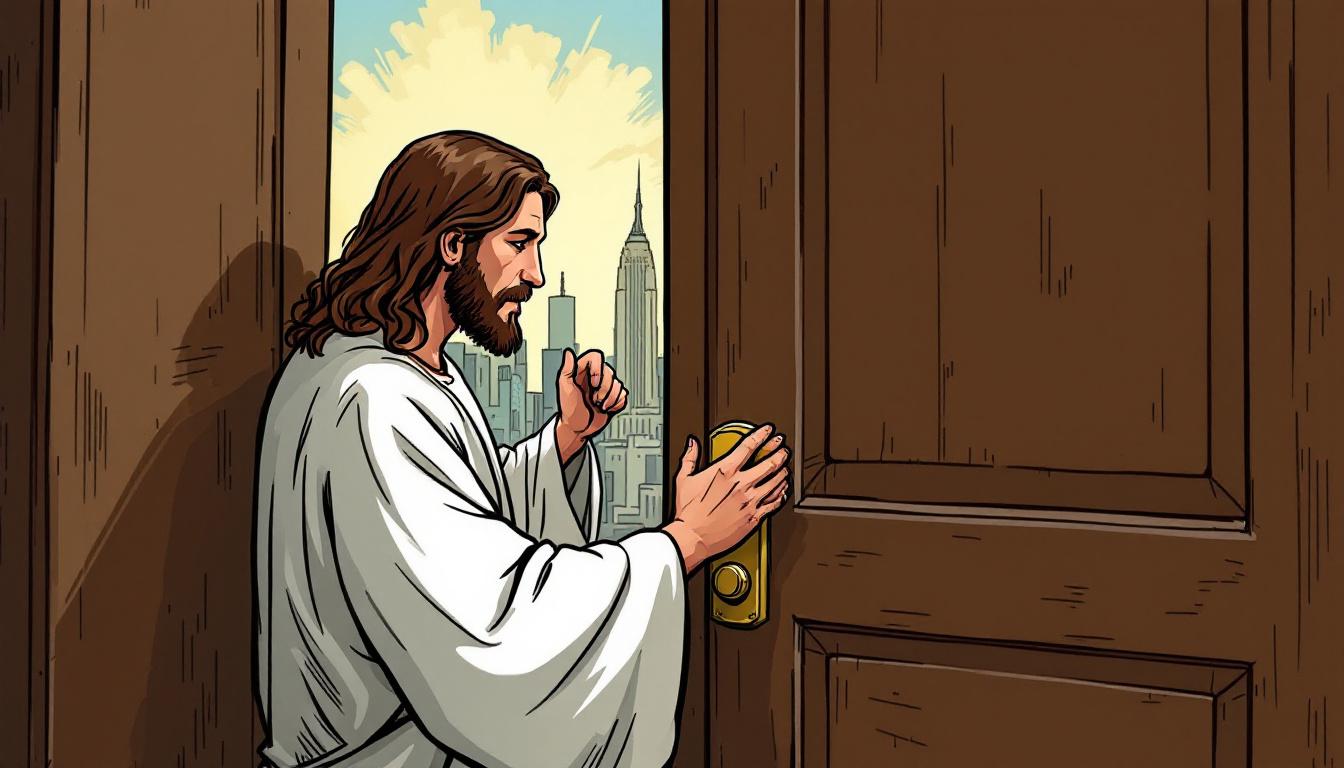
AI-generated image for: NYC Mayor's Good Friday Message Sparks Controversy

NYC Mayor's Good Friday Message Sparks Controversy

New York City Mayor Zohran Mamdani received criticism for a Good Friday message that omitted the name of Jesus Christ, prompting a broader discussion on public acknowledgment of religious holidays.

New York City Mayor Zohran Mamdani faced renewed backlash following a Good Friday message posted on April 3, 2026, which critics contend missed the core religious significance of the Christian holiday. The mayor's social media post focused on general themes of sacrifice and faith, but notably did not explicitly mention Jesus Christ by name, leading to an immediate wave of criticism from various groups.

"Christ is King of America, and we should honor Him accordingly." — Rep. Andy Ogles, U.S. House of Representatives

Good Friday is one of the most sacred days in Christianity, commemorating the crucifixion of Jesus Christ. For millions worldwide, it is a solemn day marked by deep theological reflection on Christ's sacrifice for humanity. Critics argue that omitting the name of Jesus from a message marking this specific day strips it of its fundamental meaning and historical context, diminishing its importance for Christian observers.

In his message, Mayor Mamdani wrote, “Today, on Good Friday, we mark a day of sacrifice. Some New Yorkers will abstain from eating; others will spend hours without speaking.” He continued, “Faith, the Bible tells us, is belief in the things unseen… I wish all those observing Good Friday a blessed day of peace.” This phrasing, while inclusive, was seen by some as an attempt to generalize a distinctively Christian observance into a broader, secular concept of sacrifice and belief, thereby diluting its religious identity.

In stark contrast to Mayor Mamdani's approach, Representative Andy Ogles took the occasion to promote new legislation aimed at formally recognizing the significance of Good Friday on a national level. Ogles emphasized the need for America's institutions to reflect the reverence observed by Christians during Holy Week. "Just as Christians recognize, fast, and reverently participate in the life of Christ during Holy Week, America’s institutions should reflect that same reverence," Ogles stated.

Representative Ogles introduced the proposed "Good Friday Act of 2026," which mandates the lowering of the American flag to half-staff annually on Good Friday and Holy Saturday. This legislative effort, according to Ogles, would serve as "a solemn reminder of Christ, who was crucified for our transgressions against a holy God." He further asserted, "Christ is King of America, and we should honor Him accordingly." This direct and explicit call for national recognition of Christ's role in the holiday stands in sharp opposition to Mayor Mamdani's more generalized message.

The differing responses from Mayor Mamdani and Representative Ogles have fueled a broader political and cultural debate concerning the role of religion in public life and how public officials should acknowledge religious holidays in a diverse society. Mamdani's message was framed in inclusive, general terms about faith and reflection, seemingly aimed at broad appeal across various beliefs. Ogles' statement was explicit, naming Jesus Christ and advocating for a national recognition of the holiday's specific religious significance, rooted in Christian doctrine.

This is not the first instance where Mayor Mamdani's public messaging has drawn controversy. Just days prior to Good Friday, he issued a strong statement for Trans Day of Visibility, affirming "trans, non-binary, and gender-nonconforming people." This message, coupled with the Good Friday post, has led some critics to perceive a double standard in how the mayor addresses different religious and cultural issues, suggesting a preference for certain identity groups over traditional religious observances.

The political tension surrounding Mayor Mamdani has also extended beyond mere messaging. Representative Ogles previously called for an investigation into Mamdani’s past remarks, even suggesting denaturalization proceedings, as reported by Breitbart News. This push was met with sharp backlash from Democratic lawmakers, with Representative Ritchie Torres labeling the proposal "profoundly un-American" and others criticizing it as Islamophobic and anti-immigrant. These prior calls for investigation add another layer to the ongoing political friction.

Despite the mounting criticism, Mayor Mamdani has not indicated any intention to alter his approach. His Good Friday message remains as originally posted, continuing to emphasize unity and general reflection rather than specific religious language or figures. The incident underscores the ongoing challenge for public officials in navigating the complex landscape of religious diversity and public expression in a pluralistic society.


Advertisement

The Flipside: Different Perspectives

Progressive View

Progressives view Mayor Mamdani’s Good Friday message as an attempt to foster inclusivity and respect for the diverse religious and non-religious populations of New York City. In a pluralistic society, public officials must craft messages that resonate with all constituents, avoiding language that might privilege one faith over others. By focusing on universal themes of sacrifice, faith, and peace, Mamdani's message sought to acknowledge the solemnity of the day without alienating individuals of other faiths or no faith, aligning with the principle of separation of church and state. This approach is seen as a responsible way to navigate religious observances in a diverse public sphere, ensuring that government communication is broadly accessible and welcoming.

Conversely, Representative Ogles’ call for legislation to lower the U.S. flag for Good Friday and Holy Saturday is viewed by progressives with concern. Such a proposal is seen as potentially violating the establishment clause of the First Amendment, which prohibits the government from establishing or endorsing a religion. Mandating national recognition of a specific religious figure and holiday through governmental action could be interpreted as privileging Christianity over other faiths, undermining the principle of religious equality. Progressives emphasize that true religious freedom means the government remains neutral on matters of faith, allowing individuals to observe their beliefs privately and communally without state endorsement or imposition. The criticism against Mamdani's previous remarks and the suggestion of denaturalization also raise concerns about xenophobia and anti-immigrant sentiment, which are antithetical to progressive values of social justice and equity.

Conservative View

From a conservative perspective, Mayor Mamdani's omission of Jesus Christ's name from his Good Friday message represents a concerning trend toward secularization and the marginalization of traditional Christian holidays in public discourse. Conservatives often emphasize the historical and cultural significance of Christianity in America, viewing holidays like Good Friday as foundational to the nation's heritage. They argue that a public official, particularly in a city with a significant Christian population, should explicitly acknowledge the central figure of such a sacred day. To do otherwise is seen as an act of political correctness that diminishes religious freedom and the public expression of faith.

Representative Ogles' proposal for the "Good Friday Act of 2026" aligns with conservative principles of recognizing and respecting religious traditions. Lowering the flag on Good Friday and Holy Saturday is viewed as a symbolic act that honors Christ's sacrifice and acknowledges the deeply held beliefs of millions of Americans. This approach is not seen as an establishment of religion but rather as a reflection of the nation's historical reverence and a reaffirmation of religious liberty, allowing public institutions to reflect the values of a significant portion of the citizenry. The contrast between Mamdani's generalized message and Ogles' specific call to honor Christ highlights a perceived cultural battle where traditional religious values are increasingly under pressure from inclusive language that, in this view, strips away specific religious meaning.

Common Ground

Despite the clear differences in approach and philosophy, there are areas of common ground regarding the public observance of holidays. Both sides generally agree on the importance of respecting religious freedom and allowing individuals to practice their faith without government interference. Public officials, regardless of their personal beliefs, are expected to acknowledge significant cultural and religious observances in a manner that fosters peace and unity within their communities. There is also a shared understanding that public discourse should be thoughtful and avoid inflammatory rhetoric, ensuring that debates over religious expression remain constructive.

Furthermore, there is a mutual desire to support the well-being of all citizens. While approaches to achieving this differ, the underlying goal of a harmonious society where diverse groups can coexist is universally valued. Discussions around how to balance inclusive messaging with specific religious recognition can lead to a deeper understanding of community needs. Finding ways to respectfully acknowledge the traditions of various communities, without either diluting their meaning or imposing them on others, remains a shared challenge that requires ongoing dialogue and a commitment to civic respect.