
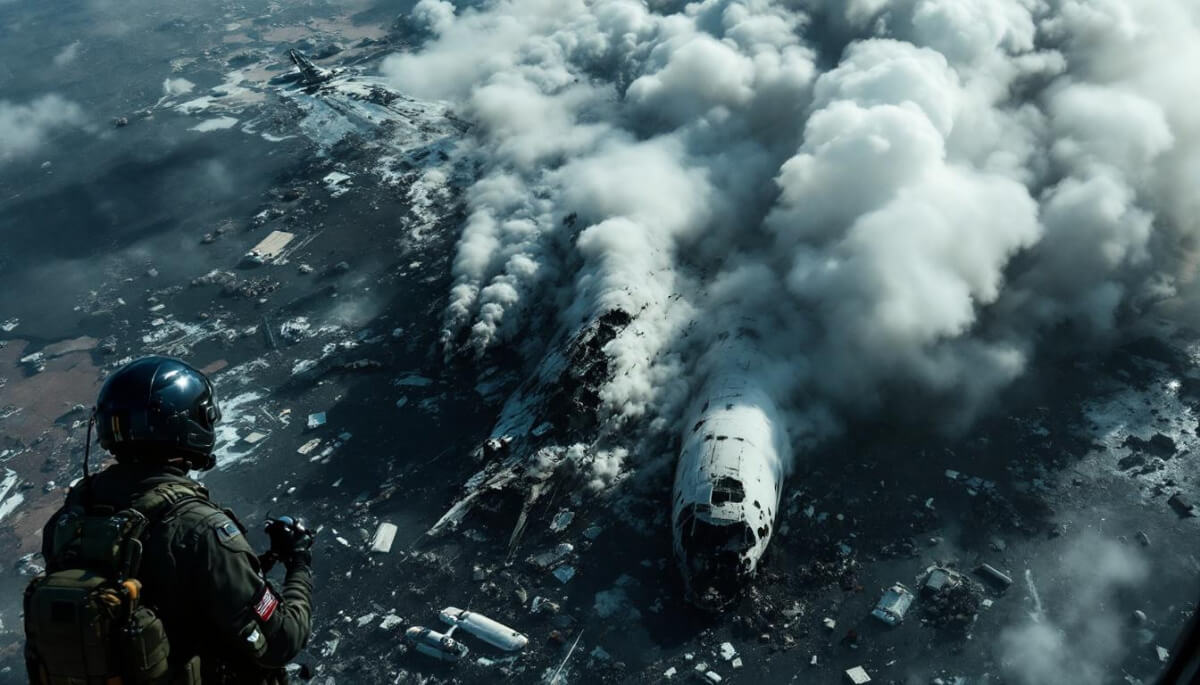
The United States' death toll in the ongoing conflict with Iran has climbed to 13 following the confirmation of six service members' deaths aboard an American refueling aircraft that crashed in western Iraq on Thursday. The incident, which occurred after a collision in what U.S. Central Command described as "friendly airspace," marked a significant loss as the regional conflict continues to expand.
"They’re great people. And, you know, we expect that to happen, unfortunately. Could happen continuous – it could happen again." — President Donald Trump
Military officials confirmed Friday that all six crew members of the Boeing KC-135 Stratotanker were killed. Four crew members were initially reported dead, with subsequent rescue efforts for the remaining two proving unsuccessful. U.S. Central Command further clarified that the second aircraft involved in the collision landed safely, sustaining only minor damage to the tip of its tail. Importantly, officials stated that the deadly incident was not attributed to hostile fire or friendly fire. The identities of the six deceased service members have not yet been publicly released, pending notification of their next of kin.
These six deaths bring the total number of American troops killed in the conflict with Iran to 13. Seven other U.S. service members had previously been killed in earlier engagements, including those affected by a drone strike on a base located in Kuwait. Beyond the fatalities, the Pentagon confirmed this week that 140 service members have sustained injuries since the conflict began. While officials noted that many of these injuries were minor and have since been resolved, the accumulating casualty figures underscore the human cost of the ongoing hostilities.
Defense Secretary Pete Hegseth addressed reporters on Friday, using a significant portion of his briefing to criticize media coverage of the conflict. He dismissed what he termed "fake headlines" and maintained that the United States remained in control of the situation, despite acknowledged instability in the region. Hegseth also declared that the U.S. would deploy the "heaviest" firepower since the war's inception against Iran. He asserted that Iran possesses "no air defenses," "no Air Force," and "no Navy," while insisting that the regime’s missile systems, launchers, and drones were being systematically destroyed.
Despite the Defense Secretary's strong rhetoric, several serious pressure points persist. A key concern is the Strait of Hormuz, a critical global oil shipping route. Reports indicate that average gas prices in the U.S. have risen to $3.60 per gallon, an increase from $2.90 before the conflict began. In response to the escalating situation, officials have informed The Wall Street Journal that Secretary Hegseth approved the deployment of a Marine expeditionary unit to the Strait. This deployment includes the USS Tripoli, a Japan-based amphibious assault ship, along with its attached Marines, which are now reportedly en route to the Middle East. This strategic move suggests that the administration anticipates a deepening of the crisis rather than a de-escalation.
Meanwhile, Iran continues to project defiance. Iran’s security chief, Ali Larijani, was reportedly seen marching with crowds in Tehran on the last day of Ramadan. During the event, Larijani publicly taunted President Trump, stating that the American president "didn’t realize" that Iran is "mature and determined." Further reports indicated fresh attacks elsewhere in the region, with Iran allegedly launching new strikes on Dubai’s International Finance Centre, resulting in explosions and visible smoke over the city’s skyline.
President Donald Trump had previously acknowledged the potential for more American casualties in the conflict during a call with a media outlet. Speaking of the fallen troops, President Trump stated, "They’re great people." He added, "And, you know, we expect that to happen, unfortunately. Could happen continuous – it could happen again." This statement is likely to draw increased scrutiny following the recent deaths of six more U.S. troops in Iraq. With casualties mounting, gas prices climbing, and additional military assets being deployed to the region, the conflict's costs continue to escalate.