


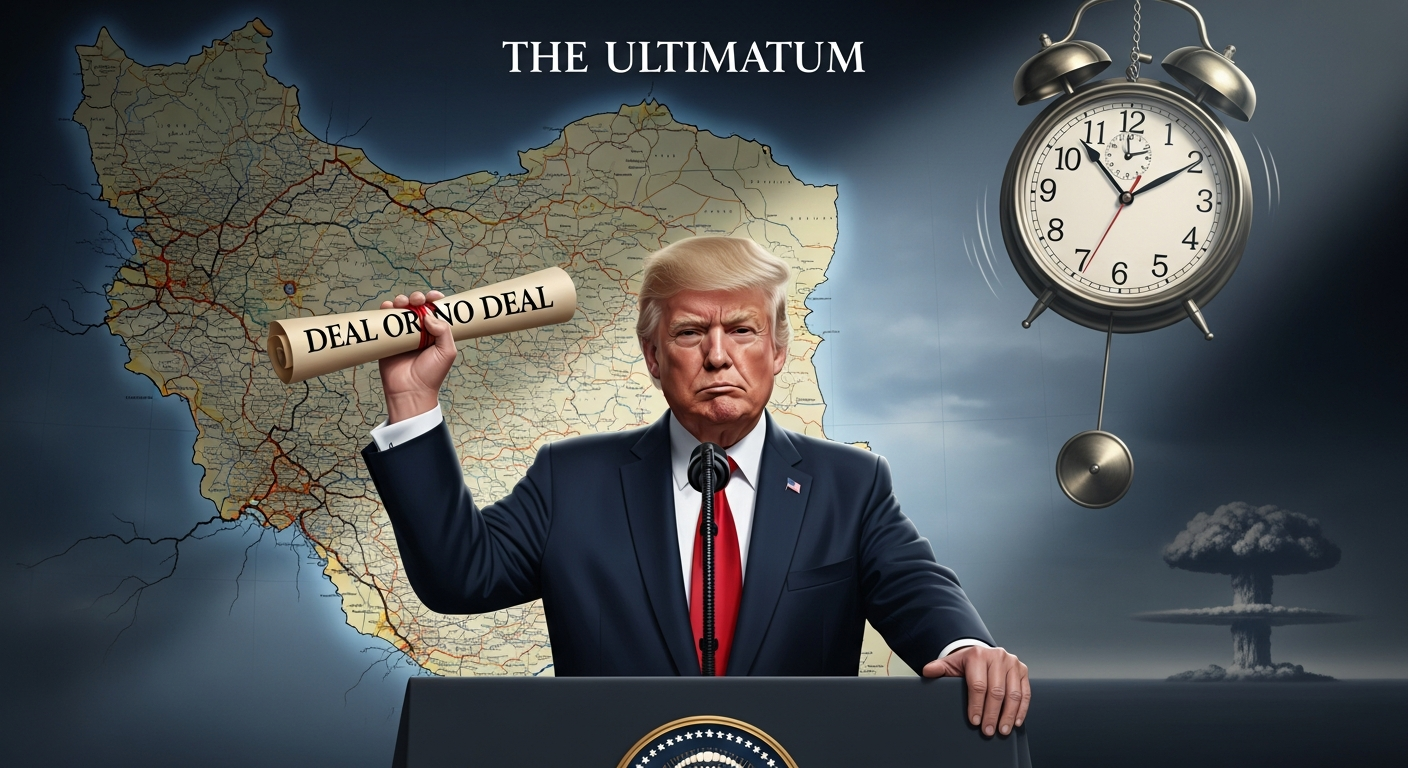
President Donald Trump has issued a stark warning to Iran, giving its leadership approximately 24 hours to move towards a comprehensive deal or face the prospect of renewed military action. This ultimatum was delivered as delicate peace talks, currently taking place in Pakistan, teeter on the brink of collapse, with both the United States and Iran reportedly entrenched in their core demands. Vice President J.D. Vance has been dispatched to Pakistan to engage with Iranian officials, but progress appears to be stalled.
"We’re loading up the ships with the best ammunition, the best weapons ever made. And if we don’t have a deal, we will be using them, and we will be using them very effectively." — President Donald Trump
Speaking to the New York Post, President Trump underscored the urgency of the situation, stating, “We’re going to find out in about 24 hours. We’re going to know soon.” This declaration signals an imminent decision point in the protracted diplomatic efforts. The President's message represents the latest escalation in his administration's strategy, which has frequently employed pressure tactics and public ultimatums in international negotiations.
President Trump also articulated the potential consequences should negotiations fail, warning of significant military preparations. “We’re loading up the ships with the best ammunition, the best weapons ever made,” he stated, adding, “And if we don’t have a deal, we will be using them, and we will be using them very effectively.” This statement underscores the administration's readiness to consider military options if diplomatic solutions are not reached within the specified timeframe.
The negotiations, spearheaded by Vice President Vance, are focused on several critical sticking points that highlight the wide gap between the two nations. The United States is demanding that Iran cease its enriched uranium stockpile and ensure the full reopening of the Strait of Hormuz to global shipping, a vital artery for international trade, as reported by the Daily Mail. Conversely, Iran is pressing for immediate relief from sanctions, continued sovereignty over the Strait of Hormuz, and financial compensation for what it describes as wartime damage.
Iranian Parliament Speaker Mohammad Baqer Qalibaf has publicly indicated that progress in the talks has stalled. He suggested that negotiations should not proceed until previously discussed conditions are met. These conditions include a ceasefire between Israel and Lebanon and the release of Iranian assets that have been frozen by the United States. These demands add layers of complexity to an already challenging diplomatic landscape, linking the bilateral U.S.-Iran discussions to broader regional stability issues.
The situation has been further complicated by heightened regional tensions. President Trump recently engaged in a tense telephone call with Israeli Prime Minister Benjamin Netanyahu, during which he urged Netanyahu to scale back military operations in Lebanon. U.S. officials expressed concerns that continued Israeli strikes could potentially derail the already fragile negotiations with Iran. Following this call, Prime Minister Netanyahu reportedly agreed to engage in talks with Lebanese officials, a move widely interpreted as an effort to stabilize the volatile regional situation. Despite this, the ceasefire in the region remains precarious, and any renewed escalation could swiftly collapse the ongoing negotiations before a comprehensive deal can be achieved.
Domestically, public reaction to President Trump’s approach and the potential deal has been mixed. A recent poll indicated that 33% of voters perceive a potential deal as a favorable outcome, while 18% view it negatively. A significant portion, 28%, expressed neutrality, and another 20% remained unsure. These varied sentiments reflect the complexity of public opinion on foreign policy matters with far-reaching implications.
Adding to the domestic pressure, rising gas prices have become a significant concern for American consumers. The national average has reportedly climbed to approximately $4.10 per gallon, a surge attributed in part to disruptions tied to the Strait of Hormuz. This increase in fuel costs has contributed to growing frustration among voters and has placed additional strain on the President’s approval ratings.
Despite these challenges and mixed public reception, President Trump has continued to reinforce his strategic stance. In a post on Truth Social, he asserted that Iran "has no cards" and is only able to sustain itself by leveraging global shipping routes. "The only reason they are alive today is to negotiate," Trump wrote, signaling his belief in the effectiveness of his pressure-based strategy. With the clock ticking on the 24-hour ultimatum, the upcoming period is poised to be critical. Failure to reach an agreement risks further escalation, potentially deepening U.S. involvement in regional conflicts.

