


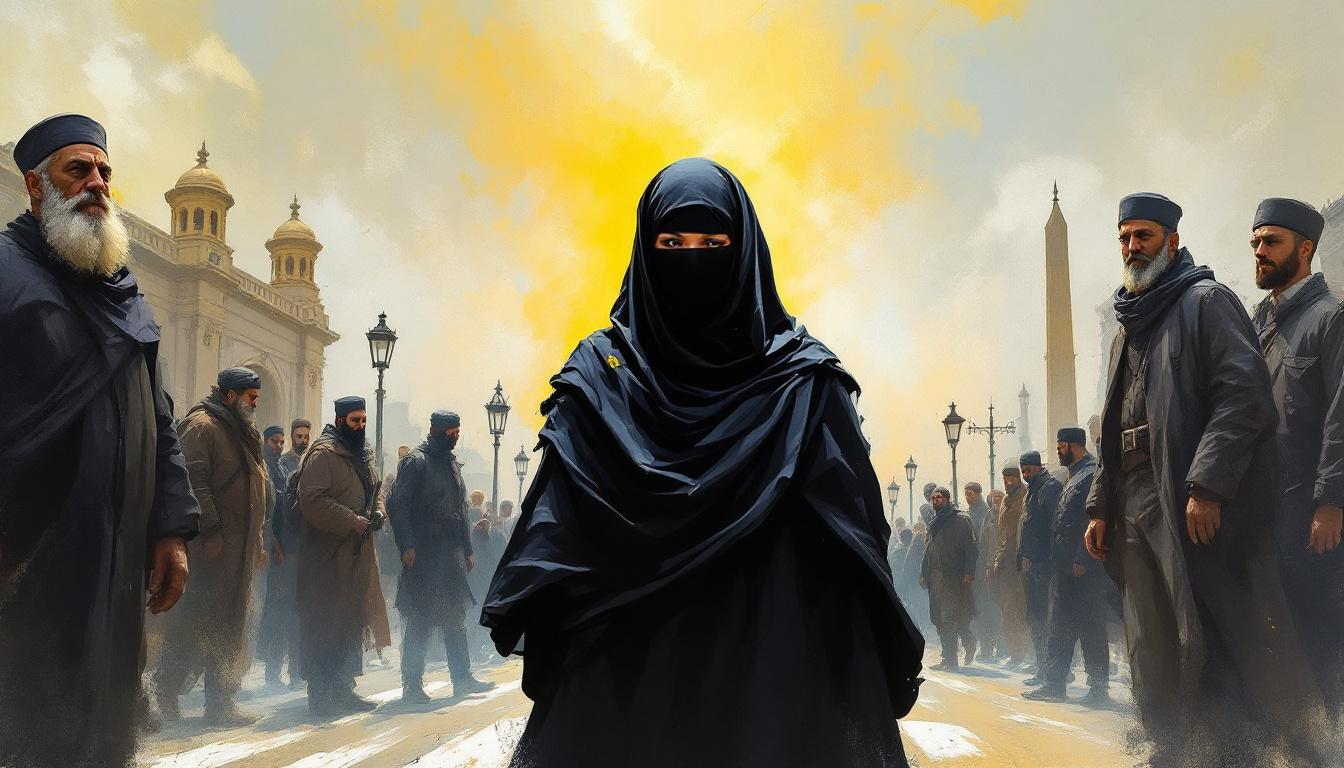
House Speaker Mike Johnson (R-LA) recently brought attention to the potential conflict between Sharia law and the United States Constitution, emphasizing that such principles are fundamentally at odds with the nation's foundational legal framework. Speaking during the House Republican Conference’s three-day policy retreat held in Doral, Florida, Speaker Johnson indicated that public concern regarding this issue reflects a broader national sentiment about various legal and cultural threats currently facing the country.
"There’s significant energy and widespread concern that efforts to impose Sharia law in America represent a serious problem. This is not about individuals as Muslims. It is about those who seek to implement a system in conflict with U.S. law." — Speaker Mike Johnson, House Speaker
“There’s significant energy and widespread concern that efforts to impose Sharia law in America represent a serious problem,” Johnson told reporters. He clarified the scope of his concerns, stating, “This is not about individuals as Muslims. It is about those who seek to implement a system in conflict with U.S. law.” His remarks aimed to distinguish between personal religious belief and the potential imposition of a legal system that would challenge constitutional governance.
The Speaker's comments followed a period of controversy involving Rep. Andy Ogles (R-TN). Resist the Mainstream had previously reported on social media posts made by the congressman, which included the statement, “Muslims don’t belong in American society. Pluralism is a lie.” Rep. Ogles later defended his position, writing, “My statements wouldn’t even be newsworthy if directed at Christians. Please spare me your moral outrage. Christ is King.” Speaker Johnson, in contrast, reiterated that his focus was strictly on legal and constitutional adherence rather than religious affiliation or individual faith. “When people attempt to impose a belief system that contradicts the Constitution, that is the issue at hand,” he asserted, underscoring the distinction.
Beyond constitutional concerns, national security considerations also factored into the discussions, as noted by BizPac Review. Republicans have consistently warned that border policies implemented by previous administrations could inadvertently create vulnerabilities, potentially allowing extremist actors to enter the United States. Recent incidents, including Islamist-inspired attacks that have occurred in Texas and New York, have contributed to a heightened sense of concern regarding domestic security vulnerabilities. Officials participating in the discussions stressed the critical need for continued vigilance, the immediate reporting of any suspicious activities, and robust cooperation with law enforcement agencies to effectively address threats posed by individuals who may exploit legal or immigration loopholes.
In response to these perceived risks, congressional conservatives have begun taking formal steps. Texas Representatives Keith Self and Chip Roy have spearheaded the expansion of the Sharia-Free America Caucus, which has grown to include 47 members representing 22 states. Rep. Self articulated the caucus’s motivation, stating, “Western Civilization is worth defending—and we are committed to that defense.” The caucus’s stated objectives include educating lawmakers and the public about practices deemed to contradict constitutional governance. Furthermore, it aims to monitor legislative and social trends that could potentially threaten the foundational principles of the U.S. Constitution.
Sharia, which is broadly understood as a comprehensive code of conduct derived from Islamic tradition, can encompass various aspects of life, including criminal penalties in non-secular nations. In countries like Iran, for instance, offenses such as blasphemy can carry severe consequences under Sharia-based legal systems. However, within the United States, the robust constitutional protections enshrined in its legal framework prevent the enforcement of Sharia law at any governmental level, a point highlighted by Fox News.
Speaker Johnson reiterated that the effort to protect American legal principles is fundamentally about safeguarding the established framework of governance, not about targeting individuals based on their faith or cultural background. The ongoing debate touches upon broader societal issues, including assimilation, cultural integration, and the overarching imperative of national security. Johnson particularly underscored the crucial distinction between respecting religious freedom, which is a constitutional right, and preventing the imposition of foreign legal systems that could undermine U.S. constitutional law. “Our focus is on upholding constitutional governance, not discriminating against anyone’s personal beliefs,” he concluded.
Johnson’s recent comments have revitalized discussions both on Capitol Hill and across the nation, bringing to the forefront the ongoing challenge of balancing fundamental civil liberties with the essential need to defend the U.S. Constitution. The Sharia-Free America Caucus is expected to continue its educational outreach initiatives, aiming to promote greater awareness of practices that may conflict with U.S. legal standards and to encourage Americans to remain alert to potential threats. Republicans maintain that sustained vigilance and active public engagement are indispensable for preserving constitutional governance and American values amidst evolving cultural and legal challenges.

