


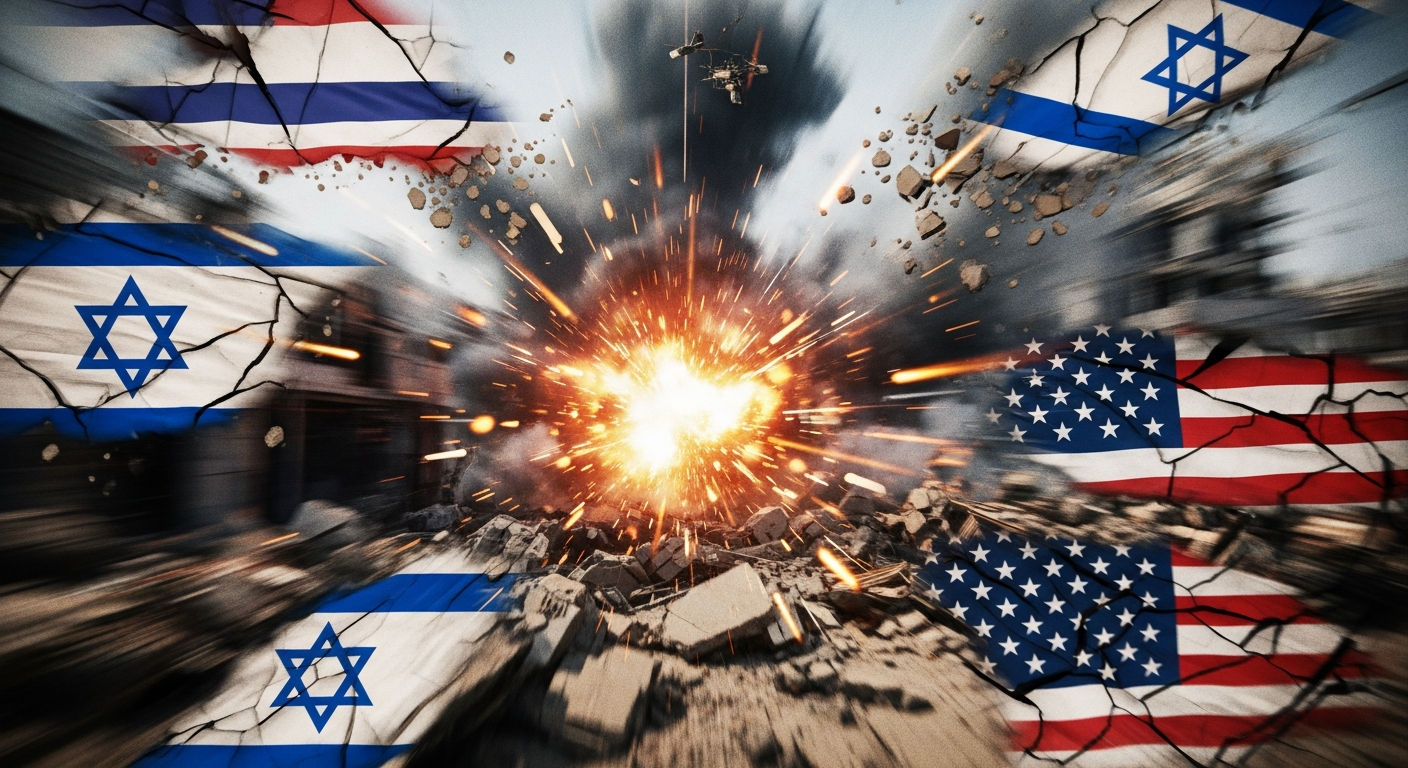
A recent report has shed light on the internal deliberations that preceded President Donald Trump's decision to authorize military strikes against Iran, a move that culminated in Operation Epic Fury. According to insights published by the New York Times, senior members of President Trump's own national security team expressed considerable skepticism regarding a proposal from Israeli officials for a joint military campaign targeting Iran, raising urgent concerns that were reportedly largely set aside.
"Sir, this is, in my experience, standard operating procedure for the Israelis. They oversell, and their plans are not always well-developed. They know they need us, and that’s why they’re hard-selling." — General Dan Caine, Chairman of the Joint Chiefs of Staff.
Israeli officials presented their case during a classified White House meeting, outlining a comprehensive strategy that reportedly included the elimination of Supreme Leader Ayatollah Ali Khamenei, the dismantling of Iran's governmental power structure, and the subsequent installation of a secular leader. The reception within the meeting room was described as far from enthusiastic by sources cited in the report. CIA Director John Ratcliffe reportedly reviewed the Israeli proposal and found it "farcical." Vice President JD Vance also voiced doubts, questioning the realistic feasibility of American and Israeli forces executing a full-scale regime change operation.
Further pushback came from General Dan Caine, Chairman of the Joint Chiefs of Staff, during a Situation Room session on February 12. General Caine reportedly delivered a pointed assessment, stating, "Sir, this is, in my experience, standard operating procedure for the Israelis. They oversell, and their plans are not always well-developed. They know they need us, and that’s why they’re hard-selling." Secretary of State Marco Rubio reportedly echoed the sentiment with fewer words, remarking, "In other words, it’s bullshit."
Despite this chorus of skepticism from his top advisors, President Trump had reportedly already formed his decision. The Times indicated that by the time his team was raising alarms, President Trump had essentially been persuaded, a shift that reportedly occurred after a February 11 Situation Room meeting with Israeli Prime Minister Benjamin Netanyahu. President Trump reportedly pushed back against the notion that the United States would be solely responsible for the outcome of regime change, stating that toppling the Iranian government was not America's problem to solve. His primary focus, as stated, remained on destroying Iran’s military capabilities and eliminating its supreme leader.
Warnings extended beyond the strategic feasibility of the plan, with U.S. officials flagging concerns that an extended campaign against Iran would place significant strain on American weapons stockpiles, particularly missile interceptors that were already in limited supply. In response, Israel offered assurances that it possessed the capability to neutralize Iranian retaliatory actions before the Strait of Hormuz, a critical waterway through which approximately one-fifth of the world’s oil supply passes, could be shut down. General Caine, however, disputed this claim. President Trump, according to the Times, remained confident that any potential conflict would be brief.
On February 28, the United States and Israel launched Operation Epic Fury. Tomahawk missiles and air-launched weapons were deployed, targeting Iranian air defenses and military installations. The strikes resulted in the death of Ayatollah Ali Khamenei. Iran's retaliation, however, reportedly exceeded some initial expectations within the administration. Missiles and drones struck U.S. installations in Iraq and Syria, Israeli population centers absorbed barrages, commercial vessels in the Persian Gulf came under pressure, and proxy militias launched coordinated assaults across the broader region.
Pentagon officials subsequently cited significant military achievements from the operation, reporting that roughly 90% of Iran’s missile capacity had been degraded or destroyed, approximately 70% of its launchers neutralized, and more than 150 naval vessels rendered inoperable. In response to the strikes, Iran moved to disrupt global oil markets by implementing a blockade of the Strait of Hormuz. President Trump responded with escalating rhetoric, issuing a warning that Iran’s "whole civilization will die" if the vital waterway was not reopened. American forces subsequently struck Iran’s Kharg Island on the same day that ultimatum was issued.
Reactions from Capitol Hill included support for President Trump's actions. Senate Majority Leader John Thune expressed his backing, and Senator Lindsey Graham declared the moment "the catalyst for the most historic change in the Middle East in a thousand years." The report concludes by noting that the questions now circulating in Washington are those that were largely unaddressed in the Situation Room weeks prior, centering on the plan’s overall feasibility, the thoroughness of its preparation, and the long-term implications of what comes next.

