

⚡ BREAKING NEWS
Sponsor Advertisement
President Trump Reverses Iran Stance, Vows Continued Pressure
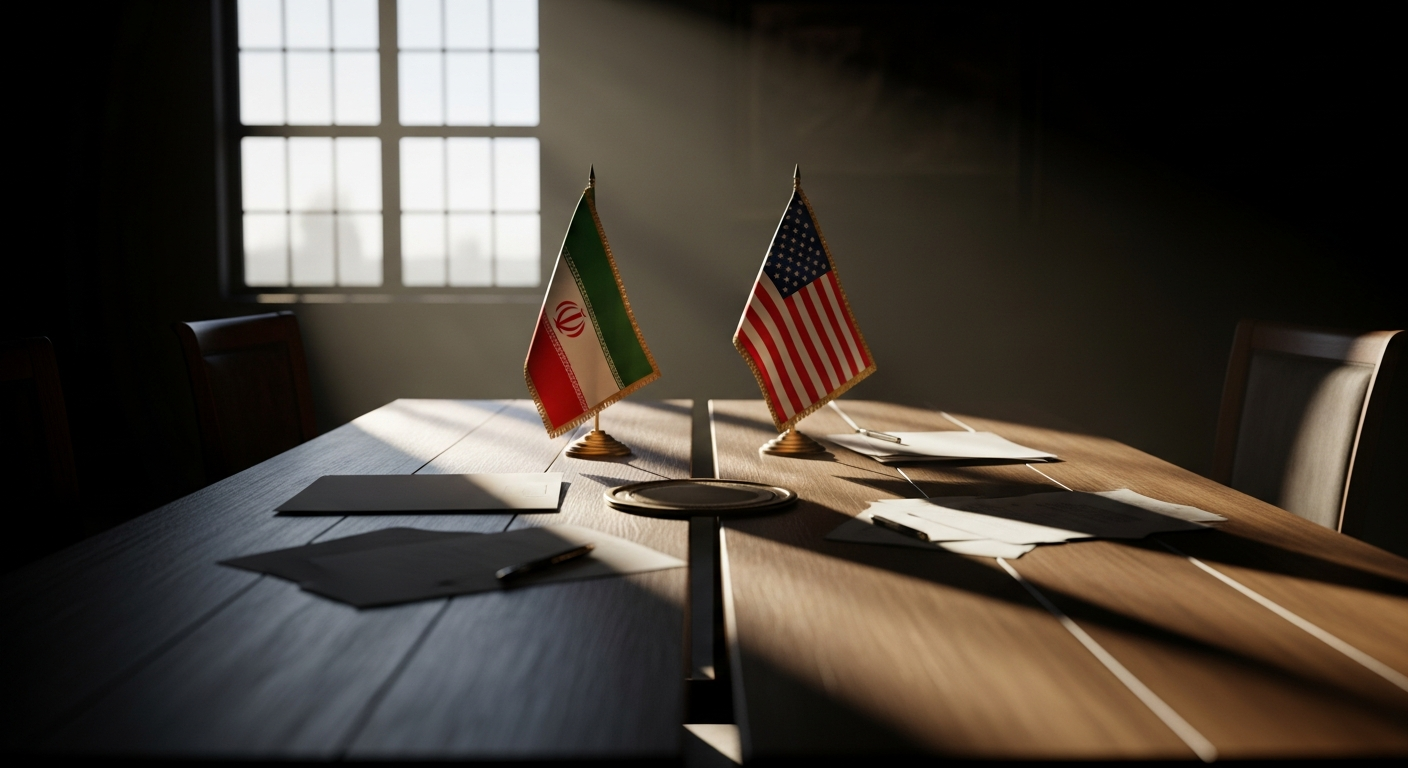
AI Generated: President Trump Reverses Iran Stance, Vows Continued Pressure

President Trump Reverses Iran Stance, Vows Continued Pressure

President Donald Trump stated Monday that the conflict with Iran is not over, signaling a reversal from earlier indications of an imminent conclusion. He affirmed the U.S. will press forward, raising questions about the administration's strategic endgame.

President Donald Trump declared Monday that the conflict with Iran is not yet concluded, signaling a shift from previous statements that suggested the situation was "very complete." Speaking from his Doral golf resort in Florida, President Trump indicated that the United States would continue its efforts, stating, "We will not relent until the enemy is totally and decisively defeated." This declaration followed earlier remarks to CBS News where he had described the war as "very complete, pretty much" and "wrapping up is all in my mind," leading to questions about the administration's current strategic outlook.

"We will not relent until the enemy is totally and decisively defeated." President Donald Trump

The President's remarks on Monday introduced a dual message regarding the conflict's status. When questioned by a reporter about the seemingly contradictory statements, President Trump responded, "You could say both." This approach has led observers to speculate whether the administration is pursuing a swift resolution or preparing for a prolonged engagement. The Daily Mail reported that President Trump ordered more than two dozen new B-2 bombers and stated that U.S. forces have engaged 5,000 targets since the conflict began two weeks prior. He asserted that Iran's military capabilities have been severely diminished, claiming the nation has lost its navy, air force, radar, communications systems, and drone capacity. Specifically, President Trump claimed, "no Navy" and "no Air Force" for Iran, adding that American forces are "very far ahead of schedule" and that 46 Iranian ships have been sunk.

Despite these claims, Iran's Revolutionary Guard issued a defiant statement, asserting, "We are the ones who will determine the end of the war," indicating a lack of capitulation from Tehran. President Trump later intensified his stance through a Truth Social post, issuing a warning to Iran against interfering with oil transit through the Strait of Hormuz. He wrote that any blockage of oil flow would provoke a U.S. response "TWENTY TIMES HARDER" than current actions. Furthermore, he threatened to target infrastructure that would make it "virtually impossible" for Iran to rebuild "as a Nation, again," concluding that "Death, Fire, and Fury will reign upon them" should Tehran cross such a line.

The report also noted President Trump's acknowledgement that Vice President J.D. Vance was "less enthusiastic" about military action. President Trump characterized their difference as "philosophical" but affirmed Vance's overall support for the administration's actions. This admission drew attention given Vice President Vance's publicly known advocacy for a more restrained foreign policy approach. President Trump, however, reiterated his belief in the necessity of the ongoing military intervention.

During his remarks, President Trump was also asked about unconfirmed reports concerning a U.S.-made Tomahawk missile strike on a girls' school in Tehran, which allegedly resulted in at least 170 fatalities. President Trump stated he lacked sufficient information on the claim and indicated the matter was "under investigation."

President Trump also confirmed a conversation with Russian President Vladimir Putin on Monday. He claimed President Putin expressed a desire to be "helpful" regarding the situation with Iran. President Trump also mentioned that animosity persists between President Putin and Ukrainian President Volodymyr Zelensky.

The financial markets showed an immediate reaction to the day's fluctuating geopolitical messages. The Daily Mail reported that crude oil prices dropped from $91 to $86 a barrel following President Trump's statements concerning the Strait of Hormuz. Conversely, the Dow Jones Industrial Average closed up 200 points. The evolving narrative from the administration continues to shape global perceptions and market stability amidst ongoing military operations.

Advertisement

The Flipside: Different Perspectives

Progressive View

From a progressive standpoint, the President's shifting rhetoric and escalating threats regarding Iran raise significant concerns about the potential for humanitarian crises and regional destabilization. The declaration of an ongoing conflict, coupled with threats of "Death, Fire, and Fury," risks civilian casualties and could lead to widespread displacement, echoing historical patterns of military intervention with devastating human costs. The alleged strike on a girls' school, though unconfirmed and under investigation, highlights the inherent dangers to non-combatants in any military engagement and underscores the need for extreme caution and accountability.

A progressive approach would prioritize diplomatic solutions, de-escalation, and international cooperation over unilateral military action. The mention of Vice President Vance's "less enthusiastic" stance on war suggests an internal recognition of the need for restraint, which progressives would argue should be amplified. The focus should be on addressing the root causes of conflict, such as economic inequality and political grievances, rather than relying solely on military force. Such an approach would seek to engage with Iran through multilateral channels, working towards a comprehensive agreement that ensures regional stability and protects human rights, rather than risking further isolation and conflict. The economic impact, such as fluctuating oil prices, also demonstrates how military escalations can disproportionately affect vulnerable populations and global economic stability.

Conservative View

The President's firm stance on Iran reflects a commitment to protecting American interests and projecting strength on the global stage. From a conservative perspective, a robust military response is often seen as a necessary tool to deter aggression and ensure national security. The emphasis on decisively defeating an "enemy" aligns with the principle of peace through strength, advocating for a military capable of overwhelming any threat. The threat against blocking the Strait of Hormuz underscores the importance of safeguarding free markets and global trade routes, which are vital for economic stability and energy supply. This approach prioritizes American sovereignty and the right to defend economic lifelines without international impediment, aligning with the idea that limited government abroad means decisive action when necessary, rather than perpetual intervention.

Furthermore, the administration's readiness to "go further" in military action, despite the significant claimed successes, demonstrates a resolve to achieve complete victory rather than a partial or temporary cessation of hostilities. This aligns with a conservative belief in clear objectives and the thorough execution of policy, avoiding prolonged, indecisive conflicts that can drain national resources and commitment. The philosophical difference noted with Vice President Vance, while acknowledged, does not overshadow the perceived necessity of military action to address what is viewed as a clear and present danger posed by the Iranian regime. Ultimately, this viewpoint prioritizes national security, economic stability through free trade, and a strong defense, all underpinned by decisive leadership that aims to conclude conflicts efficiently and effectively.

Common Ground

Despite differing approaches to foreign policy, there are several areas of common ground regarding the situation with Iran. Both conservative and progressive viewpoints generally agree on the importance of regional stability in the Middle East and preventing the proliferation of weapons of mass destruction. There is a shared interest in ensuring the free flow of global commerce, particularly through critical waterways like the Strait of Hormuz, to maintain economic predictability and avoid disruptions that could harm global economies.

Furthermore, both sides can find agreement on the need for effective intelligence and a clear understanding of threats. The acknowledged internal discussion between President Trump and Vice President Vance, even with philosophical differences, suggests a recognition of the complexity of military decisions and the need for careful consideration. While one side may advocate for diplomacy and the other for military strength, both ultimately seek an outcome that safeguards American interests and personnel. Ensuring the safety of civilians in any conflict zone, while challenging, is also a universally accepted humanitarian principle that both perspectives can endorse, leading to a shared desire for minimizing collateral damage and investigating any claims of civilian harm.