

⚡ BREAKING NEWS
Sponsor Advertisement
President Trump Hints at Possibility of Ground Forces in Iran to Secure Nuclear Materials
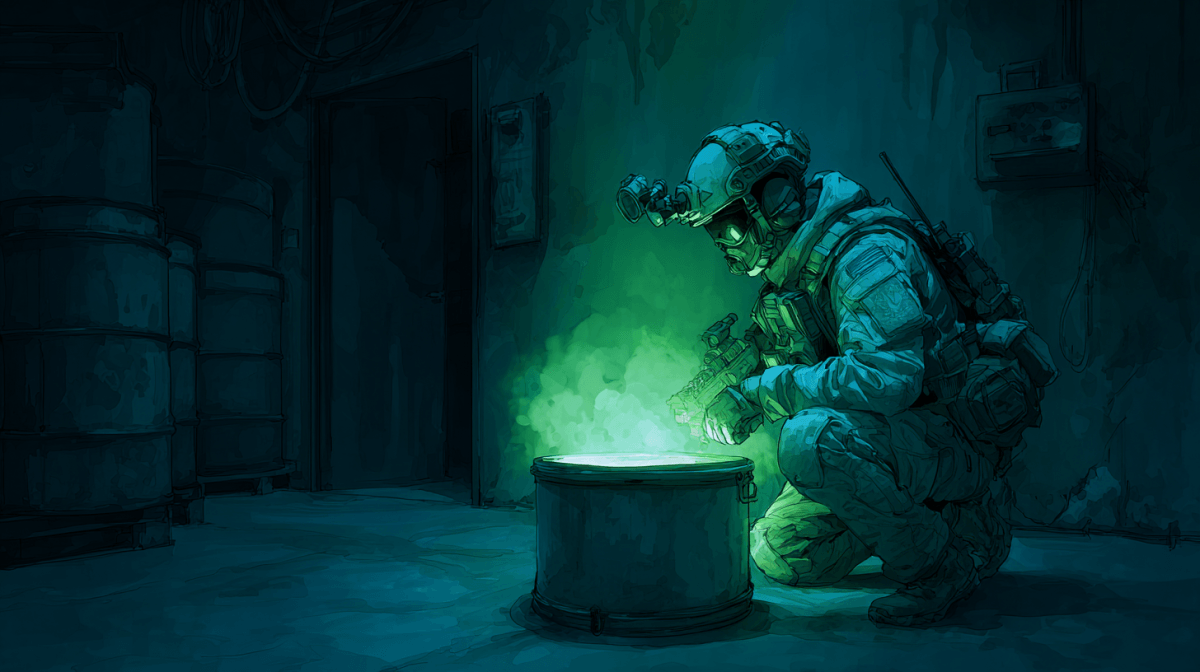
a political illustration of a U.S. Special Forces soldier covertly examining a glowing container of enriched uranium in a darkened Iranian facility

President Trump Hints at Possibility of Ground Forces in Iran to Secure Nuclear Materials

President Donald Trump has indicated that deploying ground forces into Iran to prevent nuclear armament is not off the table, with discussions of potential special operations to control enriched uranium underway. This move could come after further military weakening of Iranian defenses.

Amidst escalating tensions and a rigorous military campaign to thwart Iran's nuclear ambitions, President Donald Trump confirmed on Saturday the potential deployment of U.S. ground forces into Iran. Speaking to reporters aboard Air Force One, Trump revealed that while the current focus is on decimating Iranian military capabilities, a ground operation to secure highly enriched uranium could be considered in the future.

This development comes as American and Israeli officials deliberate on strategies to dismantle Iran's nuclear threat. According to Axios, these discussions have contemplated either the extraction of uranium from Iranian soil or its onsite dilution, possibly with the assistance of International Atomic Energy Agency scientists. Iran reportedly possesses around 450 kilograms of uranium enriched to 60 percent purity, a quantity that could be rapidly converted to weapons-grade material.

The logistical complexities of such an operation are substantial, with the precise location of the uranium and the method of securing it forming the crux of the challenge. Secretary of State Marco Rubio, during a congressional briefing, underscored the necessity of retrieving the stockpile without specifying which nation's forces would execute the task.

The concept of a special operations raid on Iranian nuclear facilities is not new; it has been a subject of U.S. military and Israeli study for years. Elite units, including the Army's Delta Force, are trained for counter-WMD missions, which involve securing nuclear materials from hostile territories. Jonathan Hackett, a former Marine Corps interrogator and special operations specialist, confirmed to Semafor the proficiency of these units in such operations.

Despite the recent U.S.-Israeli air campaign targeting Iran's nuclear infrastructure, intelligence agencies warn that Iran might still access its highly enriched uranium. The New York Times cited concerns that uranium buried beneath the Isfahan nuclear complex could be retrieved through a narrow opening, despite continuous surveillance by U.S. intelligence.

Trump's remarks on Saturday align with the White House's stance of keeping all military options on the table. White House press secretary Karoline Leavitt reiterated the president's approach, emphasizing the overarching goal of preventing Iran from obtaining a nuclear weapon, by any means necessary.

The prospect of ground forces entering Iran is contingent upon the further weakening of Iranian defenses, a condition Trump acknowledged. A successful ground operation would follow a significant diminishment of Iran's ability to engage in ground-level combat, he stated.

As the international community watches closely, the U.S. remains vigilant in its surveillance and prepared to take decisive action to ensure regional stability and prevent the proliferation of nuclear weapons.

Advertisement

The Flipside: Different Perspectives

Progressive View

While the prevention of nuclear proliferation is a shared objective across the political spectrum, the progressive viewpoint urges caution and diplomacy over military intervention. The potential deployment of ground forces into Iran raises concerns about the risks of escalation and the long-term consequences of such actions. Progressives advocate for a foreign policy that prioritizes diplomatic engagement and multilateral agreements to address nuclear threats.

The progressive stance emphasizes the importance of international cooperation and the role of organizations like the International Atomic Energy Agency in promoting non-proliferation. Progressives would argue for exhausting all diplomatic channels and working closely with allies to apply pressure on Iran through economic sanctions and diplomatic isolation before resorting to military action.

Moreover, the progressive view stresses the need for a comprehensive strategy that addresses the root causes of conflict and instability in the Middle East. This includes supporting democratic movements, addressing human rights abuses, and fostering economic development to reduce the appeal of extremist ideologies.

Conservative View

The notion of deploying ground forces in Iran is a testament to the Trump administration's unwavering commitment to national and global security. The preservation of peace through strength is a cornerstone of conservative policy, and in this case, it necessitates proactive measures to ensure that Iran does not develop nuclear weapons. By considering all options, including ground operations, the U.S. demonstrates its resolve and deters adversaries from pursuing destabilizing actions.

The conservative viewpoint emphasizes the importance of decisive leadership and military readiness. It is essential to support our armed forces and special operations units, ensuring they are equipped to handle the high-stakes missions that protect American interests and our allies. The potential involvement of the International Atomic Energy Agency also aligns with conservative values of collaboration with international bodies to achieve security objectives.

Furthermore, the conservative perspective acknowledges the need for a strong foreign policy that confronts rogue states like Iran. By maintaining pressure and keeping military options open, the U.S. sends a clear message that it will not tolerate the threat of nuclear proliferation. Inaction or appeasement is not an option when dealing with regimes that have consistently demonstrated hostility towards the U.S. and its allies.

Common Ground

Both conservative and progressive viewpoints converge on the imperative to prevent Iran from acquiring nuclear weapons. There is a mutual understanding that a nuclear-armed Iran poses a significant threat to regional stability and global security. Both sides also recognize the value of international cooperation in addressing such complex security challenges, even if the approach and emphasis differ.