


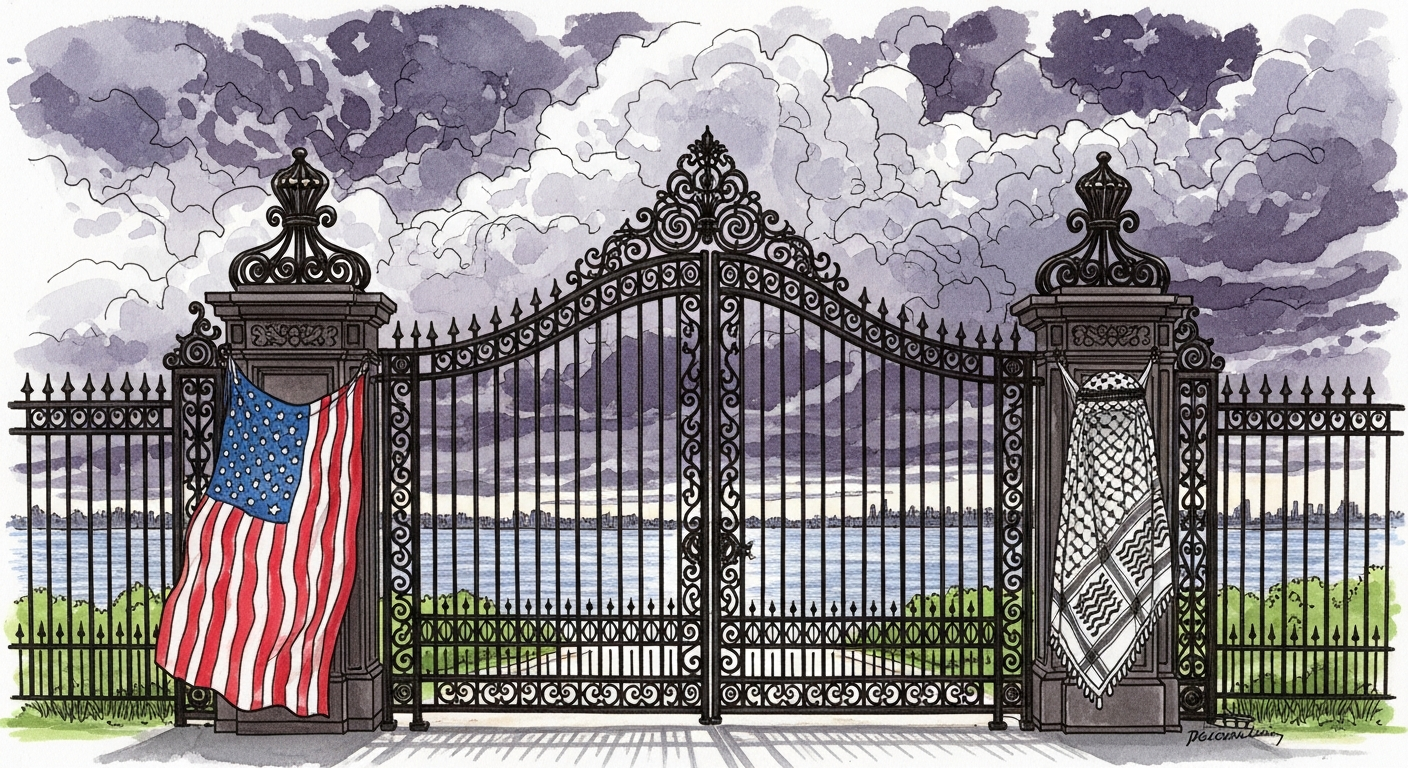
New York City Mayor Zohran Mamdani has drawn significant criticism after hosting Palestinian activist Mahmoud Khalil at Gracie Mansion for an Iftar dinner during Ramadan in March 2026. The event, shared by Mayor Mamdani on social media, has ignited a debate concerning national security, U.S. foreign policy, and civil liberties, particularly given Khalil's past detention by federal authorities.
"This is not only about Mahmoud. It reflects a pattern where speaking out on human rights can lead to punitive measures."
Mahmoud Khalil, accompanied by his wife and infant son, attended the dinner, which Mayor Mamdani described on Instagram as a moment of reunion and solidarity. "As we observed the one-year anniversary of his detention, Rama and I were honored to host Mahmoud, Noor, and their son Deen for Iftar," Mamdani wrote, referring to his wife, Rama Duwaji. A photograph accompanying the post depicted Khalil smiling while seated, with Duwaji nearby.
Khalil's history with federal authorities forms the crux of the controversy. He was arrested by Immigration and Customs Enforcement (ICE) in March 2025 following allegations of fraud on his green card application. The administration of President Donald Trump subsequently flagged Khalil as a foreign policy risk under a rarely invoked statute, which permits the deportation of noncitizens whose beliefs could potentially threaten U.S. interests. Federal officials have also asserted that Khalil has expressed support for Hamas, including statements related to the October 7, 2023, attack on Israeli civilians.
Mayor Mamdani has consistently framed Khalil’s case as an issue of civil liberties and free speech. In January, he publicly described the efforts to detain Khalil as part of a broader pattern of suppressing dissent. "This is not only about Mahmoud," Mayor Mamdani stated, as reported by the New York Post. "It reflects a pattern where speaking out on human rights can lead to punitive measures."
Khalil himself has echoed this sentiment, maintaining that his activism is focused on advocating for Palestinian rights through peaceful means, rather than promoting violence. "What happened to me has only strengthened my commitment," he told reporters. "I want to continue the work I began, raising awareness and advocating peacefully."
During his 104-day detention at a Louisiana ICE facility, Khalil reportedly endured harsh conditions, including constant lighting and low temperatures, which led to significant weight loss. He missed both his Columbia University graduation and the birth of his son during this period. A federal judge eventually ruled his detention unconstitutional, leading to his release and reunification with his family. Since his release, Khalil has remained active in public advocacy, appearing at rallies and citing Palestinian journalists to support his cause. His legal team has filed a $20 million claim under the Federal Tort Claims Act, alleging political retaliation and mistreatment by federal authorities. Khalil affirmed, "Accountability is necessary for actions that abuse power." Attorneys involved in the case have claimed that Khalil's rights were violated and his personal life severely disrupted, according to the Daily Mail.
Critics of Mayor Mamdani's decision to host Khalil at the official mayoral residence argue that the gesture sends a concerning message. They question whether welcoming an individual accused of supporting an organization designated by the U.S. as a terrorist group undermines national security interests and potentially condones activities that could pose a threat to Americans, as noted by Townhall. National security experts have also voiced concerns that such high-profile political gestures could create confusion regarding the priorities of city and federal governments. One social media post highlighted a prior statement attributed to Mahmoud Khalil, "We are fighting for the total eradication of Western civilization," raising further questions about the activist's views and the perception of the mayor's judgment.
Conversely, supporters of Khalil and Mayor Mamdani's actions defend the mayor’s stance as an affirmation of civil liberties and an effort to highlight systemic issues within immigration enforcement. They argue that the unconstitutional nature of Khalil's detention underscores the importance of public officials speaking out against perceived abuses of power and defending the rights of individuals.
The incident at Gracie Mansion underscores the ongoing tension between vigorous civil rights advocacy and public concerns over terrorism. It has left many New Yorkers divided, prompting broader discussions about how such events reflect on their city’s leadership and its alignment with national security objectives.

