

⚡ BREAKING NEWS
● BREAKING Accused Charlotte Killer Ruled Mentally Incompetent for Trial Gilgo Beach Suspect Pleads Guilty to Eight Murders Fuller Wins Georgia Special Election, Boosts GOP Majority American Journalist Freed in Iraq After Week-Long Captivity <p><strong>Fairside News is evolving.</strong> As we approach our one-year anniversary, we’re expanding into real-time breaking news powered by global RSS feeds, while enhancing our platform with richer visuals—now featured in nearly 80% of articles—and improved AI-driven workflows.</p> <p>What began as timely reporting has grown into a faster, more dynamic news source, with readership approaching 700,000 article views. Stay informed with clear, fact-based coverage and perspectives from both sides of the aisle.</p>
Sponsor Advertisement
NPR CEO Faces Congress on Accusations of Media Bias in Hunter Biden Coverage
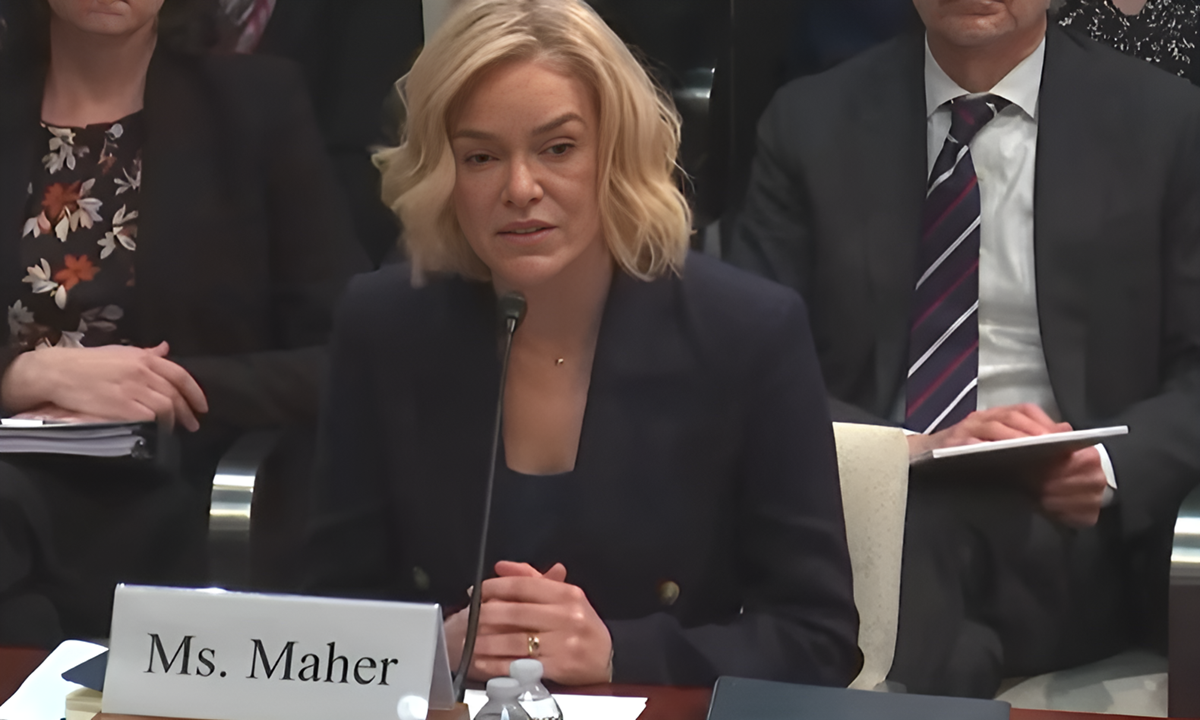
Screen capteure from Youtube video presented by PBS (Katherine Maher, president and CEO of NPR, testifies on federal money for public broadcasting)

NPR CEO Faces Congress on Accusations of Media Bias in Hunter Biden Coverage

A recent House committee hearing witnessed escalating tensions as NPR CEO Katherine Maher was grilled by Rep. Michael Cloud over the network's perceived bias in covering the Hunter Biden laptop story.

In what has become a hot-button issue amongst conservative circles, a recent U.S. House committee hearing saw National Public Radio's (NPR) CEO, Katherine Maher, under rigorous questioning due to the network's handling of the Hunter Biden laptop story.

The hearing, initially convened to discuss NPR's federal funding, took an unexpected turn as Republicans, led by Rep. Michael Cloud (R-TX), posed pointed questions to Maher. The crux of the matter was the network's "All Things Considered" slogan, which critics argued did not seem to apply when covering the controversial Hunter Biden laptop story.

During a tense six-minute exchange, Maher was challenged to justify NPR’s approach to the story, which has been perceived by some as biased reporting. The Hunter Biden laptop saga, which arose during the 2020 election, carried implications for national security and was a significant point of contention.

The Hunter Biden laptop story, which emerged in the lead-up to the 2020 U.S. Presidential election, involved potentially damaging emails allegedly sourced from a laptop believed to belong to Hunter Biden, son of then-presidential candidate Joe Biden. The story was seen as a potential game-changer in the fiercely contested election, and the way media outlets chose to handle the story was scrutinized for potential bias.

The recent hearing is now seen as a testament to the ongoing debate over media bias, with conservatives arguing that NPR, which is partially funded by federal tax dollars, should maintain a neutral stance in its news coverage.

Advertisement

The Flipside: Different Perspectives

Progressive View

Progressives may argue that the media has a responsibility to verify information before disseminating it. They may see the Hunter Biden laptop story as an unverified narrative pushed by conservatives during an election year. They emphasize the value of responsible journalism over an obligation to cover every story, particularly those shrouded in uncertainty.

Conservative View

For conservatives, the NPR's handling of the Hunter Biden laptop story is indicative of a larger issue of media bias. They argue that as a recipient of federal funds, NPR has an obligation to its listeners to present unbiased news coverage. Their focus is on policy and principles of fair journalism, pushing for rigorous scrutiny of all stories, regardless of political implications.

Common Ground

Both conservatives and progressives can agree on the fundamental importance of unbiased, accurate news reporting. While their interpretations of what constitutes bias may differ, both sides recognize the need for media outlets, especially those receiving federal funding, to uphold the principles of fair and balanced journalism.