


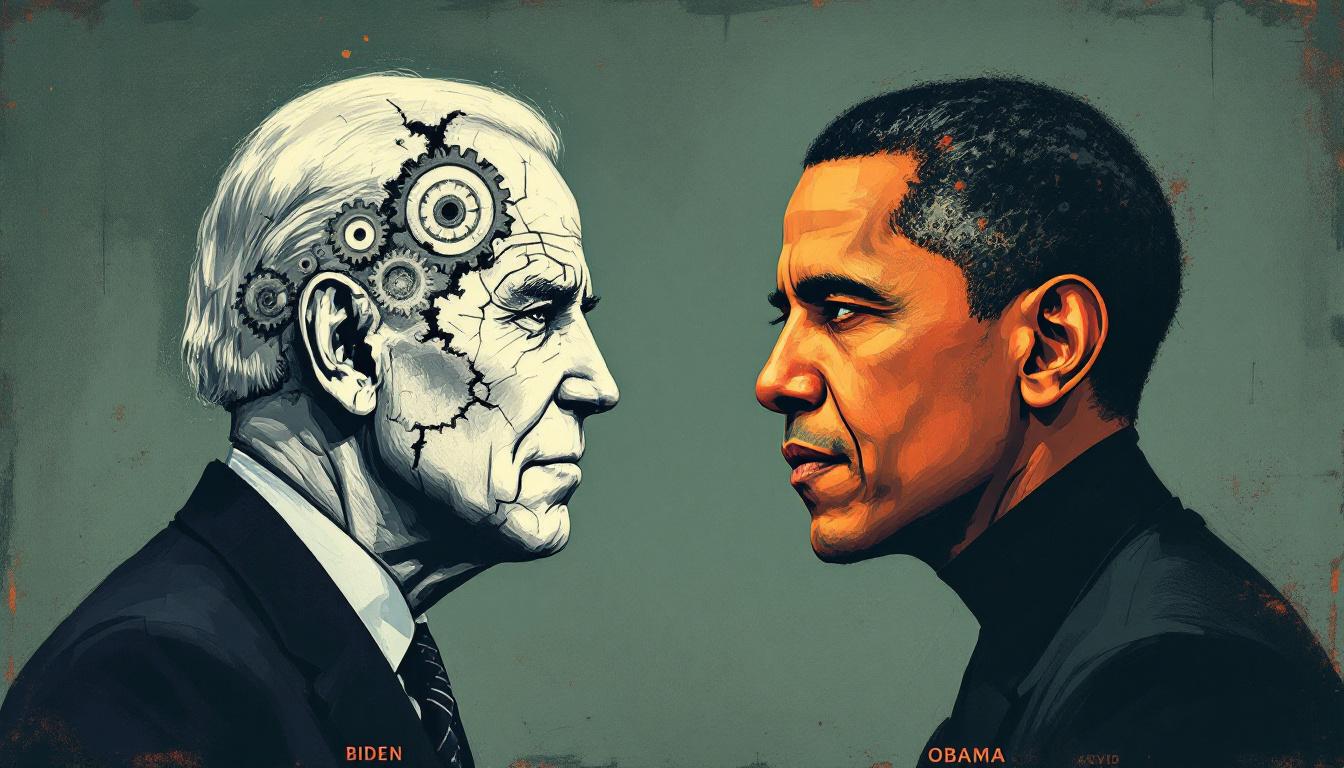
California Governor Gavin Newsom's office has drawn significant criticism following a social media post that some observers contend inadvertently highlighted long-standing concerns about President Joe Biden's cognitive health. The controversy erupted after a series of images featuring prominent Democratic figures, including President Biden, President Barack Obama, and Vice President Kamala Harris, were shared from Newsom's press office social media account. Each image was accompanied by a brief caption praising a specific quality of the individual.
The particular phrasing used for President Biden and President Obama quickly became the focal point of the backlash. While President Biden was lauded for his "empathy," President Obama's caption specifically noted his "functioning brain." This juxtaposition immediately caught the attention of online critics, who interpreted the contrasting descriptions as an implicit negative comparison regarding President Biden's mental acuity. Social media users questioned whether the wording was intentional, suggesting it could be seen as an acknowledgment of ongoing public and private concerns about President Biden's mental sharpness during his time in office.
The post itself did not contain any direct criticism of President Biden. However, the choice of descriptors fueled extensive speculation, with some users arguing the message was poorly constructed, while others claimed it inadvertently revealed internal beliefs within the Democratic Party about President Biden's cognitive state. The reaction spread rapidly across online platforms, transforming what appeared to be a routine political communication into a broader, unexpected controversy.
The sensitivity surrounding this issue is heightened by Governor Newsom's prominent position within the Democratic Party and his political relationship with President Biden. Newsom has been a vocal ally of President Biden and is frequently considered a potential future national candidate. This connection lends additional weight to any perceived misstep or implied message originating from his office, particularly on such a delicate subject.
Questions about President Biden's cognitive health have been a recurring theme throughout his presidency. Public appearances, including instances where he has appeared to lose his train of thought or stumbled during speeches, have frequently been highlighted by critics and media outlets. These concerns intensified during the 2024 election cycle, particularly following a widely scrutinized debate performance that further amplified questions about his ability to continue effectively in office. Adding to the political contention, reports indicated that President Biden's physician declined to administer a formal cognitive test, a decision that became a point of debate among political commentators. Moreover, President Biden has also been managing significant health challenges, including a diagnosis of metastatic prostate cancer in 2025.
Despite the widespread backlash and speculation, Governor Newsom's office did not issue an official clarification or retraction regarding the social media post. Instead, reports suggest that the office responded to some online reactions in a manner that appeared to "lean into" the original posts, further intensifying the controversy. This lack of clarification contributed to the ongoing public discourse and speculation about the intent behind the original message.
The incident underscores the profound impact that seemingly minor wording choices can have within the highly scrutinized political landscape. In an environment where political communication is meticulously dissected, even subtle phrasing can be interpreted as conveying deeper meanings or signals. It also reflects the persistent scrutiny faced by political leaders regarding their physical and cognitive fitness for office. Both President Biden and President Donald Trump have encountered public questions and debates concerning their health and cognitive conditions, making this a consistent and sensitive topic in national politics.
At present, there is no official confirmation or statement from Governor Newsom or his office indicating an intentional suggestion about President Biden's mental state. Nevertheless, the public reaction to the post demonstrates the enduring sensitivity of the topic and the ease with which it can dominate public discourse. What may have been intended as a straightforward political message has instead raised broader questions not only about messaging and perception but also about the perceived intent behind political communications and what voters believe is being communicated "behind the scenes." The episode serves as a clear example of how quickly and unexpectedly controlled messaging can lead to unintended implications and widespread public debate.

