


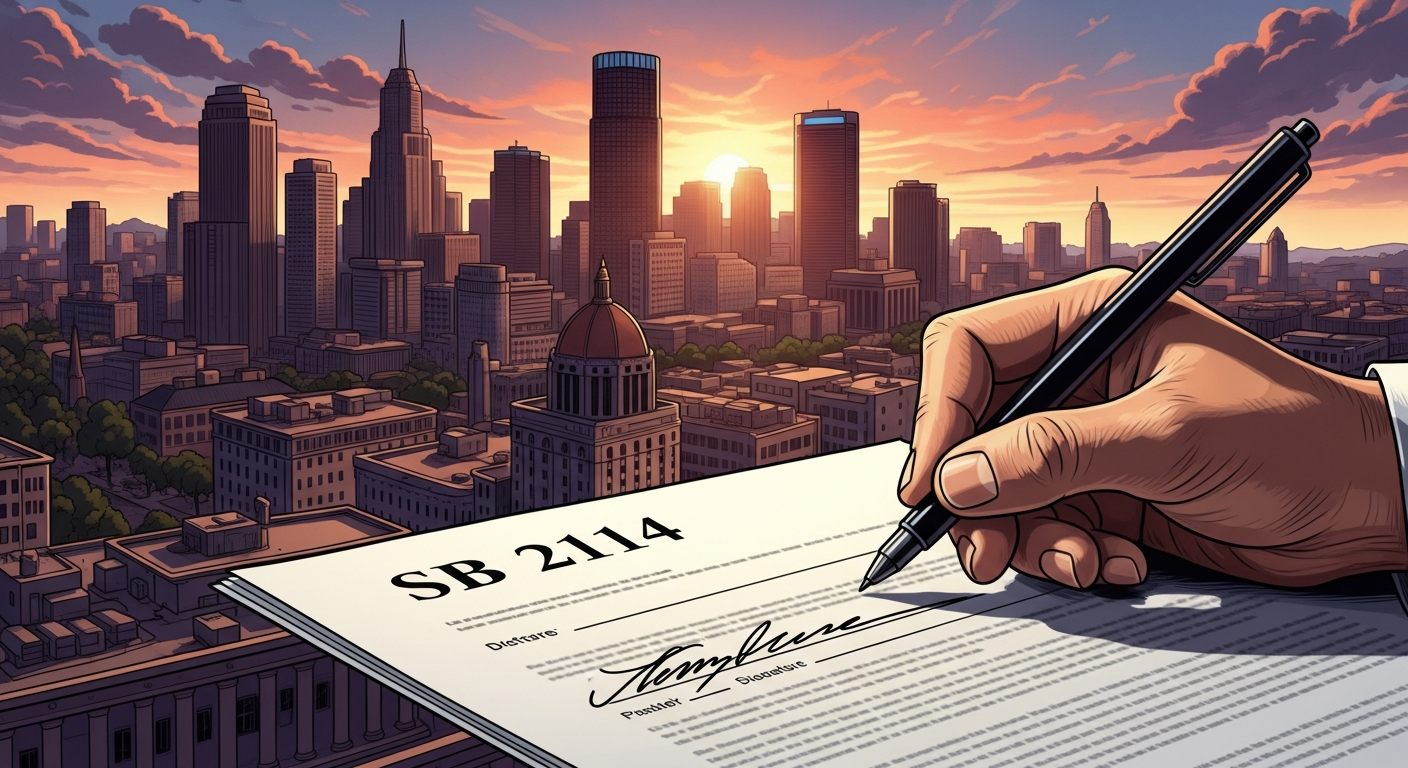
Mississippi Governor Tate Reeves is preparing to sign Senate Bill 2114 (SB 2114), a legislative measure that has successfully passed both chambers of the state legislature. The bill aims to criminalize illegal entry into Mississippi at the state level, a move that reflects a broader trend among several U.S. states to assert greater authority in immigration enforcement amid ongoing national discussions about border security.
Under the provisions of SB 2114, any individual who enters Mississippi directly from a foreign country without passing through a lawful port of entry will be deemed to have committed a state crime. For first-time offenders, the law mandates a minimum prison sentence of six months. Should additional criminal activity be involved, charges could escalate to a felony, carrying potential prison terms of two years or longer. The legislation further stipulates that individuals convicted under this law will not be eligible for early release or parole, signaling a stringent approach to unlawful entry and emphasizing accountability within the state's justice system.
Beyond establishing state-level criminal penalties, SB 2114 also seeks to enhance cooperation between state and federal immigration authorities. It mandates that local law enforcement agencies participate in the 287(g) program. This program deputizes local officers to work alongside U.S. Immigration and Customs Enforcement (ICE) in identifying, processing, and detaining individuals suspected of being in the country illegally. Additionally, state courts would gain the authority to issue deportation orders and coordinate repatriation efforts following convictions, thereby strengthening the partnership between state and federal systems in immigration matters.
Governor Reeves has consistently advocated for robust immigration policies throughout his tenure, including measures to tighten voter citizenship verification and classify illegal entry as a state-level offense. Supporters of SB 2114 contend that the legislation provides Mississippi with essential tools to enforce immigration laws effectively and supports national security objectives. They argue that states cannot afford to wait for federal action while illegal entry continues to impact communities, local economies, and public safety. Proponents also assert that the bill fortifies the rule of law by holding unlawful entrants accountable and ensuring that state and local officials possess the necessary resources and authority to bolster federal enforcement efforts. They maintain that inaction at the state level risks eroding public safety, undermining law enforcement, and weakening communities already affected by illegal immigration.
However, the proposed law has drawn immediate objections from various organizations, including the American Civil Liberties Union (ACLU) of Mississippi. Critics caution that SB 2114 is likely to face constitutional challenges, as immigration enforcement has traditionally been considered a federal responsibility. They express concerns that the law's language may be vague, potentially leading to inconsistent application and increasing the risk of racial profiling or the erroneous detention of U.S. citizens and legal residents. Opponents further warn that requiring local authorities to assume roles typically performed by federal enforcers could strain local resources, potentially diverting attention and personnel from other critical law enforcement priorities within communities.
Concerns also extend to the potential impact on community relations. Critics argue that fear of deportation could deter residents, including those who are victims of crime or witnesses, from reporting incidents or cooperating with police, thereby eroding trust between communities and law enforcement agencies. Studies cited by opponents suggest that communities are generally safer when residents feel secure enough to interact openly with police, and punitive state-level immigration measures may disrupt this vital relationship. Furthermore, they caution that potential litigation arising from enforcement errors or constitutional challenges could impose significant financial burdens on taxpayers and strain already tight state budgets.
Despite these criticisms, supporters of the bill reiterate that strict enforcement is a necessary deterrent against unlawful entry and is crucial for upholding legal accountability. They believe SB 2114 empowers Mississippi to proactively address illegal immigration, protect its communities, and ensure that federal immigration efforts are effectively reinforced at the state level. With Governor Reeves poised to sign the bill, Mississippi's actions could establish a precedent for other states considering similar measures, intensifying the national debate over illegal immigration and the appropriate scope of state-level enforcement. Observers note that this approach highlights the ongoing tension between maintaining public safety and safeguarding civil liberties, a discussion that remains central to immigration policy in the United States.

