


Washington D.C. was rocked this week by the abrupt resignation of Joe Kent, Director of the National Counterterrorism Center, a move that has intensified scrutiny on the future of Director of National Intelligence Tulsi Gabbard within the Trump administration. Kent, a close associate of Gabbard, publicly cited his opposition to the ongoing conflict with Iran, claiming it was initiated "due to pressure from Israel and its powerful American lobby." His departure on March 17, 2026, has sent ripples through the capital, leading to a significant increase in prediction market odds for Gabbard's own exit.
Kent's resignation letter expressed a strong moral stance against the conflict, stating, "I cannot in good conscience support the ongoing war." This public dissent from a high-ranking intelligence official immediately drew attention to his superior, Director Gabbard, under whom he directly served. Prediction market Kalshi reflected the heightened uncertainty, showing Gabbard’s odds of leaving the administration surging to 59%, a 20-point jump following Kent’s announcement.
Both Kent and Gabbard have historically voiced skepticism regarding extensive U.S. involvement in foreign conflicts, aligning with elements of the "America First" faction within the Republican Party, which includes Vice President JD Vance. This shared perspective made Kent's resignation particularly noteworthy, suggesting a potential rift within this segment of the administration.
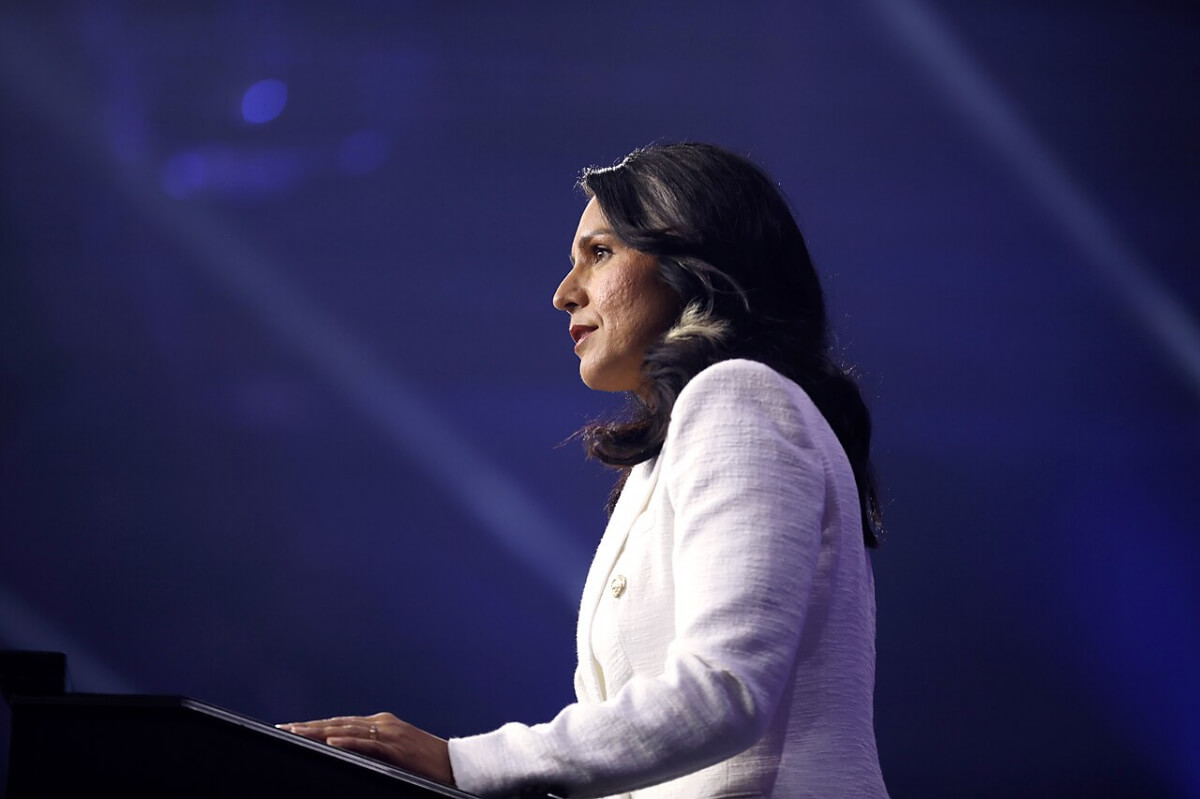
Director Gabbard broke her silence shortly after Kent's departure, issuing her first public statement since the Iran conflict commenced. Her remarks focused on defending presidential authority and the administration's decision-making process. "Donald Trump was overwhelmingly elected by the American people to be our President and Commander in Chief," Gabbard stated. "He is responsible for determining what is and is not an imminent threat." She further elaborated on the basis for the military action, adding, "After carefully reviewing all the information before him, President Trump concluded that the terrorist Islamist regime in Iran posed an imminent threat." Notably, her statement made no direct mention of Joe Kent or his specific allegations concerning external pressure influencing the war.
President Donald Trump also weighed in on the matter, offering his perspective on Kent’s resignation. "I always thought he was a nice guy, but I thought he was very weak on security," President Trump remarked. He reiterated his assessment, adding, "Very weak on security." President Trump further indicated that Kent’s public stance on Iran confirmed his unsuitability for the role. "When I read his statement, I realized that it’s a good thing that he’s out," President Trump said. "He said Iran was not a threat."
Behind the scenes, reports suggest that tensions involving Kent may have been brewing for some time. Unnamed officials cited in various media outlets offered conflicting accounts. The Daily Mail reported that Gabbard had previously lodged internal complaints about Kent. Separately, an official told Fox News that Kent was perceived as a "known leaker." Other claims suggested he was not directly involved in critical Iran briefings, raising questions about his access to sensitive information. There are also unconfirmed reports regarding whether Director Gabbard was asked to remove Kent from his position, claims which the Office of the Director of National Intelligence has yet to publicly address.
The unfolding situation places Director Gabbard in a delicate position. She is now navigating the complexities of publicly defending the administration’s foreign policy decisions while being closely associated with a high-profile resignation rooted in internal dissent. The significant increase in prediction market odds underscores the growing uncertainty surrounding her continued tenure in the administration. Concurrently, divisions within President Trump’s national security team are becoming increasingly apparent. While some officials steadfastly support the Iran campaign as essential for U.S. security interests, others express reservations about the potential for deeper involvement and the associated risks.
For the moment, Director Gabbard remains in her post. However, following Joe Kent's sudden and controversial exit, attention across Washington has firmly shifted to whether she might become the next prominent figure to depart President Trump’s inner circle, signaling potential further shifts in the administration's national security apparatus.

