

⚡ BREAKING NEWS
Swalwell Faces New Allegations Over Nanny's Immigration Status Appeals Court Allows Trump Administration Access to Social Security Data US Arrests Iranian Nationals Linked to Regime Officials FBI Documents Reveal Pre-Jan. 6 Violence Warnings <p><strong>Fairside News is evolving.</strong> As we approach our one-year anniversary, we’re expanding into real-time breaking news powered by global RSS feeds, while enhancing our platform with richer visuals—now featured in nearly 80% of articles—and improved AI-driven workflows.</p> <p>What began as timely reporting has grown into a faster, more dynamic news source, with readership approaching 700,000 article views. Stay informed with clear, fact-based coverage and perspectives from both sides of the aisle.</p>
Sponsor Advertisement
Early Release of Convicted Child Killer Prompts Public Concern
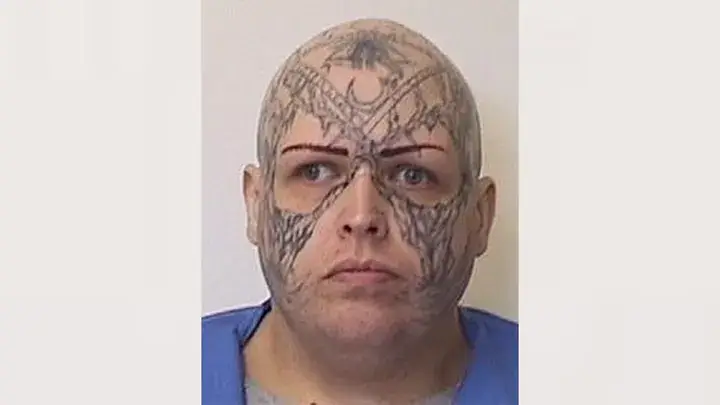
Jonathon C Richardson incarcerated for strangling an 11-month-old child. (Indiana Department of Corrections)

Early Release of Convicted Child Killer Prompts Public Concern

Jonathan Richardson, convicted of strangling his infant stepdaughter, was released from prison in December 2025 after serving less than half of his 55-year sentence.

VANDERBURGH COUNTY, INDIANA – Jonathan Richardson, a man convicted of the manual strangulation murder of his 11-month-old stepdaughter, was released from an Indiana prison in late December 2025, having served fewer than half of his 55-year sentence. The release, which occurred without prior notification to local law enforcement or the Vanderburgh County Prosecutor's Office, has ignited public safety concerns and calls for legislative action.

"On the day he murdered my child, I personally observed Plaintiff with a fresh bleeding tattoo of my child’s name on his arm while I was at the hospital that evening. I live in fear for myself and my children of the day [Richardson] is released from prison, which largely increases at the thought that [his] identity may be concealed upon release." — Mother of the Victim

Richardson, who uses the name Autumn Cordellione, was sentenced following the death of his infant stepdaughter. According to reports, the child was left in Richardson's care when the incident occurred. Friends who visited that day noted something appeared amiss, as Richardson turned them away at the door. He later sought assistance from a neighbor to call 911. The child was pronounced dead at the hospital, with the cause of death determined to be manual strangulation. During the investigation, Richardson reportedly referred to the infant as a "little fcking btch."

The Vanderburgh County Prosecutor’s Office became aware of Richardson's release only after he was spotted publicly. Prosecutor Diana Moers confirmed on March 26 that her office received no advance notice from the Indiana Department of Corrections (IDOC) regarding the release. Moers has publicly supported House Bill 1250, a pending legislative measure that would mandate the IDOC to alert local prosecutors before serious violent felons are released from custody.

Richardson's early exit from prison may be linked to a legal battle he pursued while incarcerated, which culminated in a federal court order concerning gender affirmation surgery. In the fall of 2024, U.S. District Judge Richard Young of the Southern District of Indiana ruled in Richardson's favor, determining that the state's refusal to provide him with a sex-change operation constituted "cruel and unusual punishment." Judge Young ordered the IDOC to proceed with the procedure without delay. Richardson's initial request for surgeries included breast implants, a brow lift and reduction, a uterus transplant, gluteal implants, and hair removal. He ultimately underwent penile inversion surgery and an orchiectomy, which is the removal of the testicles. Taxpayers were reportedly responsible for the costs associated with these procedures.

Separately, in 2024, Richardson also filed a lawsuit against the state, alleging that his religious rights as a Muslim were violated because he was not permitted to wear a hijab while incarcerated.

During the court proceedings related to Richardson’s request for gender affirmation surgery, the mother of the murdered child submitted a written statement expressing her opposition and fears. She articulated concerns about Richardson's potential to conceal his identity upon release, stating, "On the day he murdered my child, I personally observed Plaintiff with a fresh bleeding tattoo of my child’s name on his arm while I was at the hospital that evening. I live in fear for myself and my children of the day [Richardson] is released from prison, which largely increases at the thought that [his] identity may be concealed upon release." Her warnings regarding identity concealment were not acted upon.

Following his release, Richardson established a presence across several social media platforms and began posting explicit content through the subscription site OnlyFans. Authorities have stated they do not know Richardson's exact current residence within Vanderburgh County. A source cited by the outlet Reduxx, which first reported the story of his release, indicated that Richardson has been staying at a women’s shelter.

Public information shared by Richardson on social media also indicates a relationship with another trans-identified male, Cory Wallace, who was also convicted of killing an infant. Wallace was sentenced to 72 years in 2016 for setting fire to his home to obscure the fact that he had beaten his four-month-old son to death. The convergence of Richardson's early release, the lack of official notification, and his subsequent public activities has intensified community discussion regarding the balance between prisoner rights, victim advocacy, and public safety. The ongoing situation continues to draw attention to judicial processes and correctional policies in Indiana.

Advertisement

The Flipside: Different Perspectives

Progressive View

The case of Jonathan Richardson highlights the complex challenges within the carceral system, balancing punitive measures with legal obligations and the potential for rehabilitation. While the early release of a convicted individual, particularly one with a history of violence, understandably raises public safety concerns, it is crucial to examine the legal frameworks governing such decisions. The federal court's ruling that denying gender affirmation surgery constituted "cruel and unusual punishment" underscores the legal precedent for providing medically necessary care to incarcerated individuals, regardless of their past crimes. This is not about condoning violent actions but upholding constitutional rights to humane treatment and healthcare, which apply to all inmates. The lack of communication between the Department of Corrections and local prosecutors points to systemic procedural flaws that need addressing to ensure transparency and public trust, as effective inter-agency coordination is vital for community safety. However, the focus should remain on improving these systemic issues rather than demonizing individuals or specific medical needs. A progressive approach emphasizes that even within a correctional setting, individuals have rights, and the justice system should strive for both accountability and the potential for rehabilitation. Ensuring robust rehabilitation programs and thoughtful reintegration strategies are vital for reducing recidivism and fostering a more just and effective criminal justice system, even as we acknowledge the profound pain experienced by victims and their families.

Conservative View

The early release of Jonathan Richardson, a convicted murderer, after serving less than half of his sentence, exemplifies a profound failure of the justice system to prioritize public safety and victim's rights. The fact that the Indiana Department of Corrections released such an individual without notifying local prosecutors or law enforcement is an egregious oversight, demonstrating a dangerous lack of accountability and transparency within government agencies. This situation underscores the critical need for legislative reforms like House Bill 1250, which would ensure that communities are adequately protected and informed about the presence of serious violent felons re-entering society. From a conservative perspective, sentences for violent crimes are meant to serve as both punishment and a deterrent, reflecting a commitment to justice for victims. Undermining these sentences through early release, particularly without proper oversight, erodes public trust in the rule of law. Furthermore, the expenditure of taxpayer dollars on gender affirmation surgeries for incarcerated individuals, especially those convicted of heinous crimes, raises serious questions about fiscal responsibility and the appropriate allocation of public resources. While basic medical care for inmates is necessary, elective procedures should not supersede the fundamental duty to punish violent criminals and protect law-abiding citizens from known threats. This case highlights a system that appears to prioritize individual demands over the collective well-being and security of the community. It calls for a re-evaluation of judicial discretion and correctional policies to uphold principles of personal responsibility and limited government.

Common Ground

Despite differing perspectives on the specifics of the Jonathan Richardson case, there are clear areas of common ground that can foster constructive dialogue and policy reform. All sides can agree on the fundamental importance of public safety and the need for robust mechanisms to protect communities from violent offenders. There is a shared interest in ensuring that victims' families are treated with dignity, their voices heard, and their safety concerns addressed within the justice system, including adequate notification about the status of those who harmed them. Improving communication and coordination between state correctional facilities and local law enforcement agencies is a bipartisan goal, as demonstrated by the support for measures like Indiana's House Bill 1250, which aims to mandate notification protocols for the release of serious violent felons. Furthermore, a broad consensus exists around the need for transparency and accountability within government agencies, ensuring that decisions impacting public safety are made responsibly and communicated effectively to all relevant stakeholders. While debates may persist regarding the extent of medical care provided to inmates, there is common ground in seeking fiscally responsible approaches that uphold constitutional rights without placing undue burden on taxpayers, while also prioritizing the core mission of justice and public protection.