


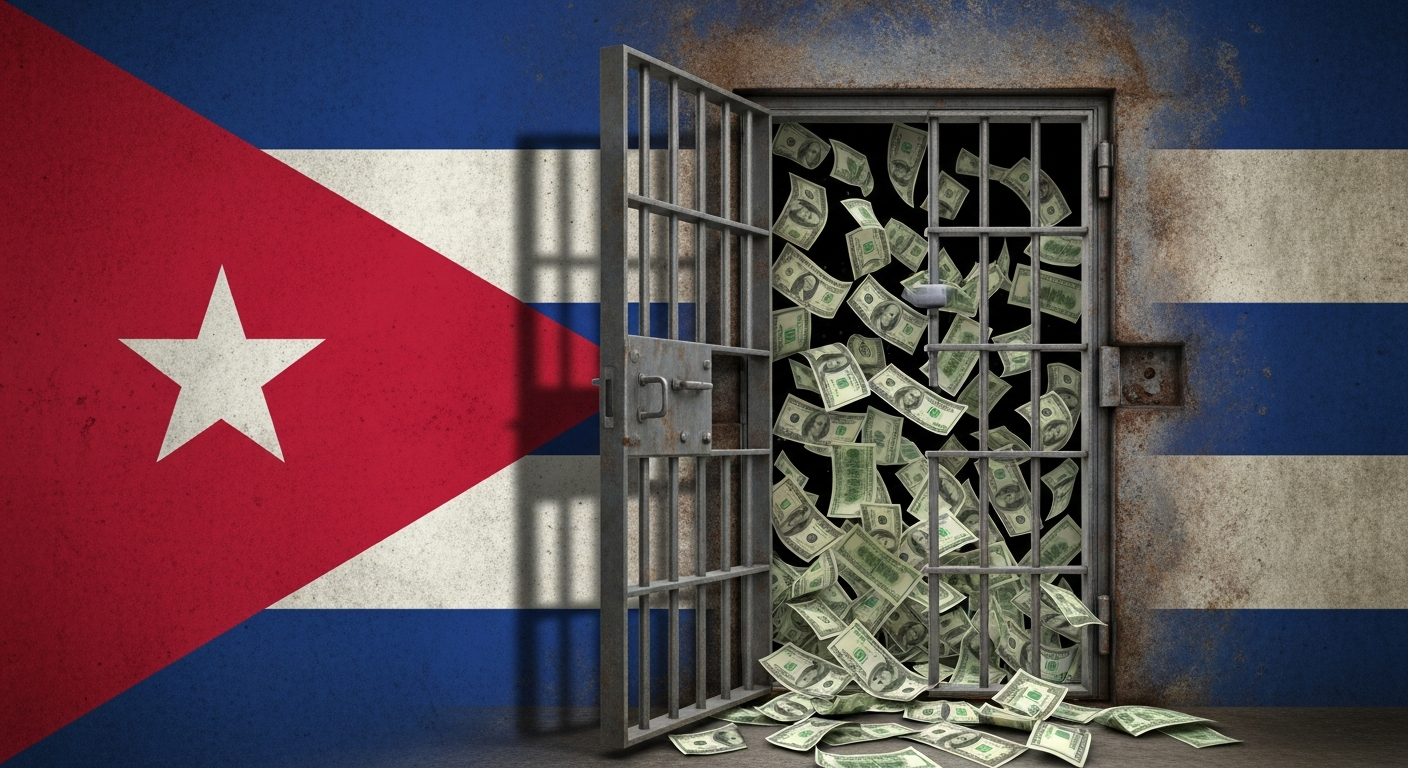
The Cuban government has announced the pardon and release of 2,010 inmates, a move that comes as the island nation grapples with severe economic difficulties, including widespread fuel shortages and blackouts, exacerbated by intensified pressure from the United States. Cuban officials stated that the pardons were granted under constitutional provisions, considering factors such as good behavior, time already served, and health conditions of the prisoners.
The released individuals represent a diverse group, including young people, women, older adults, and some foreign nationals. Authorities emphasized that the decision was selective, with prisoners convicted of serious crimes such as murder, sexual assault, violent robbery, drug trafficking, and offenses involving minors explicitly excluded from the release. The government framed the action as a humanitarian gesture coinciding with Holy Week, a period during which such pardons have historically been issued in Cuba.
However, the timing of these releases has drawn considerable attention, as it aligns with a deepening crisis across the island. Cuba is currently experiencing significant disruptions to daily life due to a severe lack of fuel, which has led to rolling blackouts and increasing public unrest. These challenges are linked, in part, to a more aggressive stance adopted by President Donald Trump's administration toward Cuba.
President Trump's administration has escalated its economic pressure on Cuba, primarily focusing on disrupting the island's access to foreign oil supplies. This strategy includes threatening tariffs on countries that provide fuel to Cuba and actively lobbying allies to cease such shipments. The stated objective of these measures is to tighten economic conditions on the island sufficiently to compel changes within the Cuban government.
The impact of these U.S. actions has been noticeable. Fuel shortages have crippled transportation networks and significantly hampered electricity generation, resulting in frequent and widespread power outages across the country. In some regions, entire communities have experienced prolonged blackouts, fueling frustration among residents and contributing to scattered protests.
Despite the heightened pressure, the United States has allowed for limited exceptions to its stringent policies. A recent fuel shipment to Cuba was permitted under what U.S. officials described as a humanitarian allowance. This suggests that while the broader strategy of economic pressure remains in place, there are boundaries intended to prevent a complete collapse of essential services and to mitigate extreme humanitarian consequences.
This recent prisoner release marks the second such action by the Cuban government this year, indicating a potential pattern of using such measures as part of a broader response to both internal and external pressures. While officials continue to present these releases as humanitarian acts, critics suggest they may also serve the dual purpose of easing domestic tensions and improving the Cuban government's international image, as reported by Fox News.
Cuba, which has been under communist rule since the 1959 revolution led by Fidel Castro, is presently governed by President Miguel Díaz-Canel. The country's economic struggles have intensified in recent years, a confluence of factors including long-standing internal inefficiencies, adverse global economic conditions, and the renewed U.S. pressure.
President Trump has also contributed to the uncertainty surrounding U.S.-Cuba relations through his rhetoric. He recently suggested that Cuba could be the "next focus" of U.S. action, though he later downplayed the remark. This statement has added to speculation regarding the administration's future steps concerning the island.
The current situation reflects a broader standoff: the U.S. is applying increasing economic pressure in an effort to force political and economic changes, while Cuba is attempting to manage internal strain through a combination of policy adjustments and gestures such as prisoner releases.

