


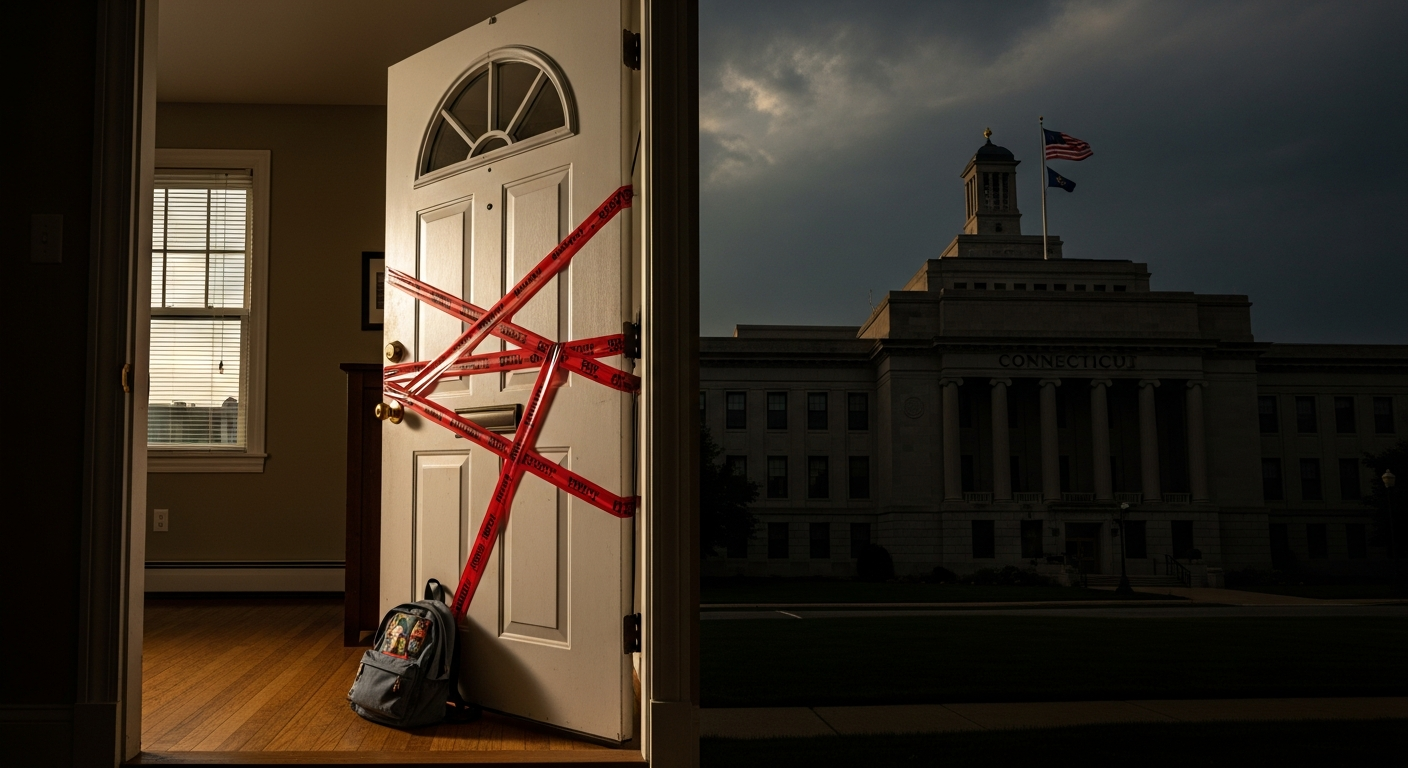
A legislative proposal in Connecticut, Senate Bill 6, is generating significant debate among state lawmakers, homeschool families, and legal experts. The measure seeks to establish a notification process when students are withdrawn from public schools, requiring local districts to inform the state Department of Education within two business days. This information would then be shared with the Department of Children and Families (DCF), enabling the agency to check if the family already has an open case.
"an unconstitutional outrage, removing the presumption of innocence of every parent in this State."
Proponents of Senate Bill 6 argue that the legislation is a targeted effort to prevent vulnerable children from "falling through the cracks" and to ensure oversight in situations where families may already be known to child welfare authorities. State Sen. Ceci Maher, a Democrat and co-chair of the Children’s Committee, articulated the bill's intent, stating, "This would make certain that we know that a child who has a case in front of DCF that’s been removed from school—there is oversight, that we know that that child will have eyes on that child." The push for the bill gained momentum following two high-profile cases in Connecticut that raised questions about the welfare of children removed from traditional schooling environments. One case involved a Waterbury man who police reported claimed to have been held captive for over two decades after being pulled out of school as a child. Another tragic incident saw the discovery of 11-year-old Jacqueline “Mimi” Torres Garcia's body in New Britain after she had also been removed from school.
However, the proposal has encountered robust opposition from homeschool advocates and parental rights groups who view it as an overreach of government authority and a potential infringement on constitutional rights. Critics contend that the bill unfairly targets families who choose alternative educational paths, treating them as potential suspects without cause. During a public hearing before the Children’s Committee, numerous homeschool parents voiced their concerns. C. Marcella Kurowsky, a homeschool parent, expressed apprehension about government monitoring, stating, "I don’t agree we should be put into a database, be subject to DCF investigation, just because someone withdraws their child from school." Republican lawmakers have echoed these sentiments, with State Rep. Gale Mastrofrancesco characterizing the policy as a possible "witch hunt" against parents opting for alternative education.
Legal experts representing homeschool families have also urged lawmakers to remove the notification provision entirely. Attorney Deborah Stevenson of the National Home Education Legal Defense argued that the requirement could undermine the fundamental presumption that parents act in the best interests of their children. Stevenson labeled the proposal "an unconstitutional outrage, removing the presumption of innocence of every parent in this State."
Furthermore, state officials have raised concerns regarding the bill's potential conflict with federal law. Connecticut Education Commissioner Charlene Russell-Tucker submitted written testimony warning that the plan may violate federal privacy protections, specifically the Family Educational Rights and Privacy Act (FERPA). FERPA generally prohibits sharing student information without parental consent, except for specific purposes. Russell-Tucker underscored the financial implications, noting, "Any violation of federal law places millions of federal educational dollars in jeopardy. As such, the Department will be unable to comply with this proposal should it become law."
Even within the Department of Children and Families, officials have clarified their position. Interim Commissioner Susan Hamilton stated that DCF did not originally request the reporting provision included in the bill. Hamilton clarified that the requirement would merely allow the department to check for existing open cases, rather than initiating new investigations based solely on a child's withdrawal from school. "It’s not a report of alleged mental abuse," Hamilton explained. "It’s a notification. What the bill would call for is for us to look to see whether or not we have an open case, and if we do, it would just get noted in the record that the child is withdrawn from school."
The legislation remains under consideration by Connecticut lawmakers, with further hearings anticipated. The debate continues to balance the state's interest in child safety and welfare against concerns over parental rights, educational freedom, and federal privacy mandates.

