


⚡ BREAKING NEWS
● BREAKING Swalwell Suspends Gubernatorial Bid Amid Allegations, Donor Exit Swalwell Faces New Allegations Over Nanny's Immigration Status Appeals Court Allows Trump Administration Access to Social Security Data US Arrests Iranian Nationals Linked to Regime Officials <p><strong>Fairside News is evolving.</strong> As we approach our one-year anniversary, we’re expanding into real-time breaking news powered by global RSS feeds, while enhancing our platform with richer visuals—now featured in nearly 80% of articles—and improved AI-driven workflows.</p> <p>What began as timely reporting has grown into a faster, more dynamic news source, with readership approaching 700,000 article views. Stay informed with clear, fact-based coverage and perspectives from both sides of the aisle.</p>
Sponsor Advertisement
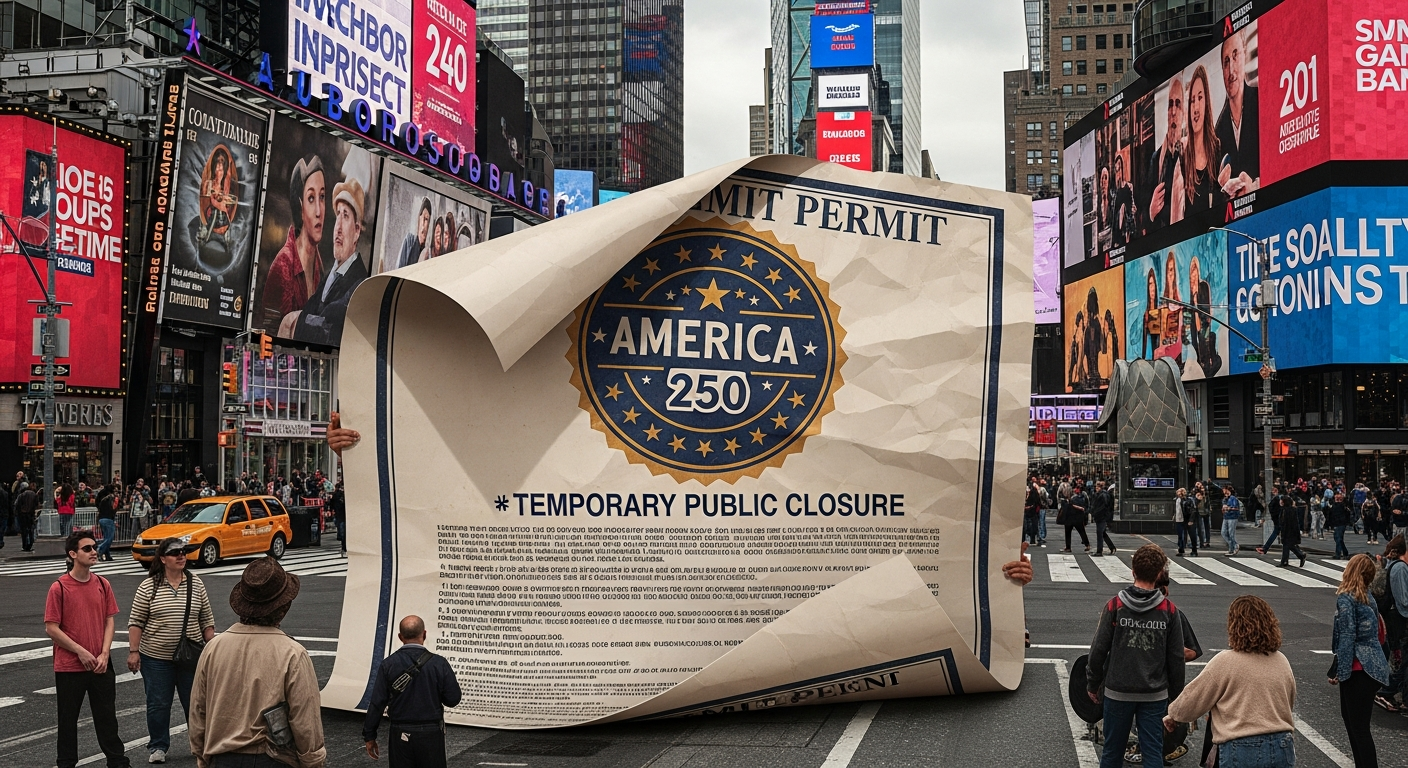
NYC America 250 Celebration Faces Public Access Restrictions
AI-generated image for: NYC America 250 Celebration Faces Public Access Restrictions

NYC America 250 Celebration Faces Public Access Restrictions

New York City's planned America 250 celebration in Times Square on July 3 will proceed without a live public crowd, organizers announced. This change is attributed to city permit restrictions during the FIFA World Cup period, sparking criticism from public safety advocates.

New York City's highly anticipated America 250 celebration, scheduled for July 3 in Times Square, will not include a live public audience in the plazas, organizers confirmed. The decision has drawn immediate backlash, particularly given expectations for a large public gathering to mark the nation's 250th anniversary. While the iconic ball drop at One Times Square will still take place and be broadcast live, the absence of a crowd fundamentally alters the nature of the patriotic event.

"the city is still '6,000 cops short of peak staffing,' while hundreds more officers continue leaving the force every month." — Patrick Hendry, President, NYPD Police Benevolent Association

America250 and One Times Square issued a joint statement confirming, "there will not be a public event in the Times Square plazas." This means a centerpiece celebration of America’s 250th birthday, envisioned as a vibrant public spectacle, will unfold without the thousands of attendees typically associated with major Times Square events. The abrupt change has led to questions regarding the rationale behind excluding New Yorkers from a significant civic occasion.

The restrictions appear to stem from an emergency order issued by the city, linked to the upcoming FIFA World Cup, which New York City is co-hosting this summer. The city’s Parks Department, acting at the request of the New York Police Department (NYPD), adopted a rule blocking new permits for special events on park property during a specific window from June 11 through July 19. This period directly overlaps with the July 3 celebration, preventing organizers from securing the necessary permits for a normal public gathering.

The New York Post reported that it remains uncertain whether these approvals will ultimately be granted. Sources familiar with the situation informed the outlet that the America 250 event could be among several celebrations denied permits under the city’s current policy framework. City Hall did not respond to multiple requests for comment from The Post regarding the matter, and the NYPD redirected all inquiries to the mayor’s office, avoiding direct answers.

Critics contend that the city's policy reflects deeper systemic issues within municipal government, particularly concerning public safety and resource management. Rather than addressing potential manpower shortages, they argue, city officials are opting to restrict public events. The NYPD’s Police Benevolent Association (PBA) has been particularly vocal in its criticism. Union president Patrick Hendry stated that the city is "6,000 cops short of peak staffing," with hundreds more officers continuing to leave the force each month. Hendry warned that officers are already experiencing burnout, and the increased summer workload would exacerbate the existing staffing crisis. He suggested that the city is limiting events because it lacks the capacity to adequately police them, a sentiment echoed by Trending Politics.

This criticism has escalated the political ramifications for Mayor Zohran Mamdani. What was intended to be a major patriotic public celebration has now become a focal point for debates over city management, public safety priorities, and the allocation of resources.

Rosie Rios, chair of America250, had previously outlined plans for a flashy spectacle. The famous Times Square ball was slated to be lit in red, white, and blue, followed by 2,000 pounds of patriotic confetti during a broadcast titled “America Turns 250.” Such an elaborate setup appeared designed to engage a massive live audience. Without a public crowd, concerns have been raised that the event might feel controlled and somewhat hollow, rather than embodying a truly national and memorable celebration.

As the nation prepares to mark a historic milestone, many New Yorkers are now facing the prospect of watching this significant local celebration from home. For various critics, this outcome is not merely disappointing but represents a potential political embarrassment for the city administration. The situation underscores ongoing tensions between civic aspirations, public safety concerns, and the practical challenges of managing large-scale events in a densely populated urban environment.


Advertisement

The Flipside: Different Perspectives

Progressive View

The decision to restrict public access to the America 250 celebration in Times Square, while disappointing for many, highlights the complex challenges of urban event management and public safety in a densely populated city. The city's emergency order, linked to the FIFA World Cup, underscores the necessity of prioritizing collective well-being and security, especially during periods when city resources are stretched thin. The reported police staffing shortages, as noted by the NYPD's Police Benevolent Association, point to systemic issues that require comprehensive solutions beyond simply granting permits for all events. It is crucial to ensure that any public gathering, especially one of this magnitude, can be safely managed for all attendees and city workers. While celebrating national milestones is important, it must be balanced with the practical realities of maintaining order and preventing potential hazards. Rather than viewing this as a 'ban,' it can be seen as a difficult but necessary measure to ensure public safety given existing resource constraints. This situation should prompt a deeper discussion about sustainable urban planning, equitable resource allocation, and addressing the root causes of staffing issues in critical public services.

Conservative View

The decision to block public access to the America 250 celebration in Times Square represents a concerning overreach of government authority and a failure in city management. Restricting citizens from participating in a patriotic event celebrating a historic national anniversary undermines individual liberty and the spirit of public engagement. This move by Mayor Mamdani’s administration, ostensibly due to permit issues tied to the FIFA World Cup, reflects a deeper problem: the city's inability to maintain adequate public safety resources. The NYPD's Police Benevolent Association has highlighted a severe shortage of police officers, suggesting the city is limiting events not for public safety in general, but because it cannot properly staff them. This is a symptom of fiscal mismanagement and a lack of prioritization for essential services. Furthermore, denying public access to such a significant event stifles economic activity that would typically accompany a large gathering, impacting local businesses in Times Square. Citizens should not be penalized for the city's failures to secure its streets or manage its police force. A robust celebration of America's founding principles should be encouraged, not curtailed by bureaucratic hurdles or staffing deficits.

Common Ground

Despite differing perspectives on the Times Square America 250 celebration, there are shared values and practical areas of agreement. All parties can agree on the paramount importance of public safety for any large-scale event in New York City. Ensuring the well-being of residents and visitors is a fundamental responsibility of city government. There is also a shared desire for successful and meaningful civic celebrations that honor national milestones, like the 250th anniversary of America. Both sides would likely agree that transparency in government decision-making is crucial, particularly when public access to events is restricted. Furthermore, addressing the underlying issue of police staffing shortages, as highlighted by the NYPD PBA, represents a bipartisan concern. A fully staffed and well-supported police force is vital for maintaining public order and enabling safe public gatherings. Exploring long-term solutions for police recruitment, retention, and comprehensive urban event planning could lead to more predictable and inclusive public events in the future.