
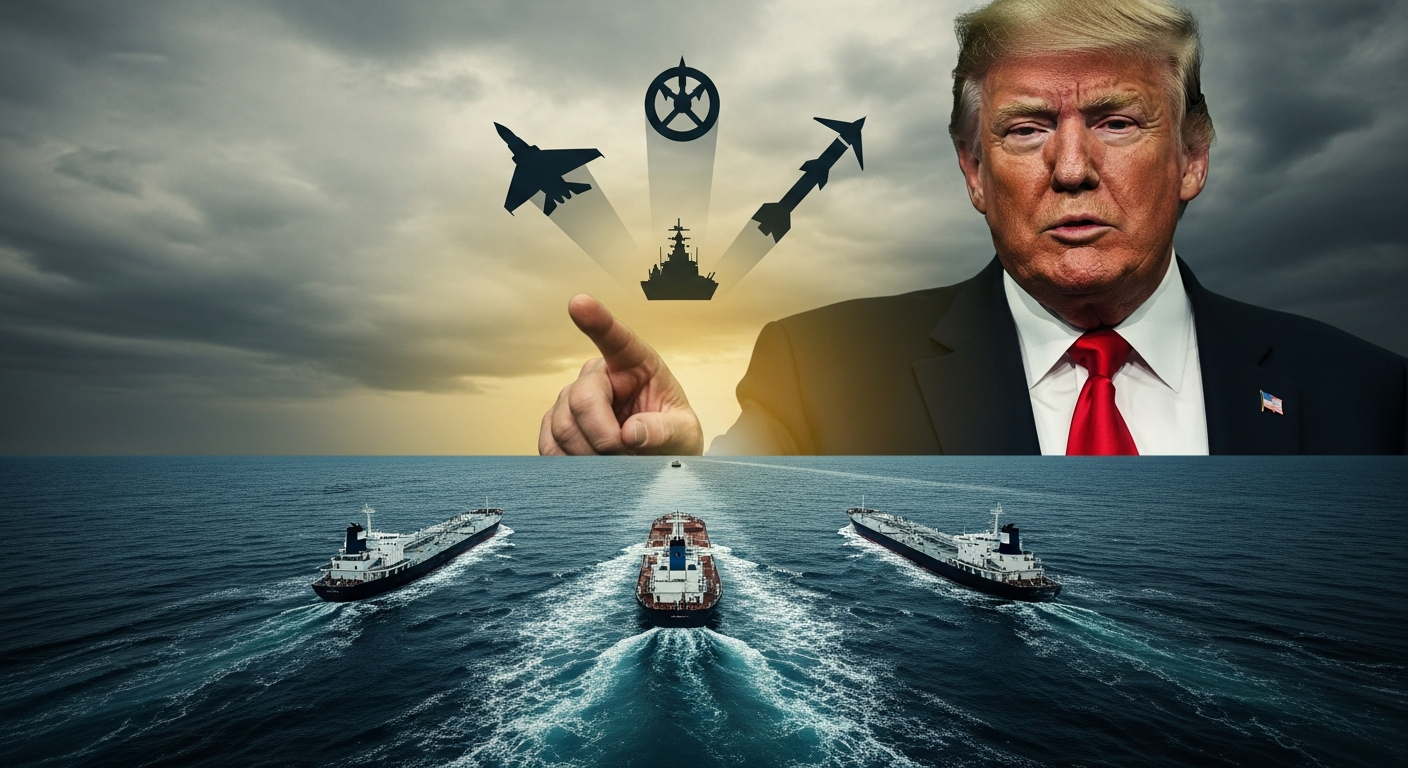
President Donald Trump has escalated pressure on Iran, issuing a stern ultimatum regarding the ongoing closure of the Strait of Hormuz, a critical global energy corridor. The President confirmed a rapidly approaching deadline for Tehran to comply, warning of severe military consequences, including the targeting of key infrastructure, should Iran fail to reopen the vital waterway. The standoff has heightened global concerns, affecting energy markets and raising fears of broader regional instability.
"If they don’t do something by Tuesday evening, they won’t have any power plants, and they won’t have any bridges standing." — President Donald Trump
The Strait of Hormuz, a narrow passage connecting the Persian Gulf with the Arabian Sea, is strategically paramount, responsible for the transit of roughly one-fifth of the world’s oil and liquefied natural gas. Its continued closure has already contributed to rising energy prices globally and fueled anxieties about potential economic fallout if the situation is not resolved swiftly. International shipping through the strait has been significantly disrupted, impacting supply chains and commodity markets worldwide.
President Trump explicitly stated the consequences of non-compliance, setting a firm deadline for Iran. "If they don’t do something by Tuesday evening, they won’t have any power plants, and they won’t have any bridges standing," President Trump said, underscoring the administration’s position on the matter. He further indicated that broader military action remains a possibility if tensions continue to escalate, stating, "If it happens, it happens. And if it doesn’t, we’re blowing up the whole country."
Earlier, President Trump delivered a direct and blunt warning to Iranian leadership via social media, demanding the immediate reopening of the waterway. In a post, he wrote, “Tuesday will be Power Plant Day, and Bridge Day, all wrapped up in one, in Iran. There will be nothing like it!!! Open the F*ckin’ Strait, you crazy b*stards, or you’ll be living in Hell – JUST WATCH! Praise be to Allah.” This social media message reinforced the administration’s uncompromising stance and the severity of the impending deadline.
The administration’s tougher approach follows a high-risk U.S. military operation conducted inside Iran. This mission successfully recovered a downed American airman who, according to President Trump, had been seriously wounded while evading enemy forces. President Trump described the rescue as one of the most dangerous missions in recent history, as reported by The Mirror. This operation reportedly contributed to the heightened tensions preceding the current ultimatum.
Iran has responded defiantly to the ultimatum, rejecting the demands and issuing its own warnings of significant escalation should any attack on its infrastructure occur. Military spokesman Ebrahim Zolfaghari cautioned that future Iranian responses would be "much more crushingly and extensively" carried out if U.S. strikes were to take place, as reported by The Washington Examiner. Political leaders in Tehran have also criticized the U.S. position, accusing Washington of inflaming tensions and risking wider regional instability. Parliamentary Speaker Mohammad Bagher Ghalibaf warned that sustained pressure could lead to far-reaching consequences beyond the immediate conflict, impacting the security of the entire region.
The escalating confrontation has triggered widespread global concern, with energy markets reacting nervously to the ongoing disruption. Despite the rising tensions and aggressive rhetoric, diplomatic efforts to de-escalate the situation are reportedly continuing. Mediators from Egypt, Pakistan, and Turkey have reportedly proposed a temporary ceasefire and the reopening of the Strait of Hormuz, though neither the United States nor Iran has publicly accepted these terms.
Domestically, the confrontation has also drawn varied reactions within the United States. Some lawmakers have expressed concerns about the potential consequences of targeting Iranian infrastructure, citing humanitarian risks and the possibility of getting embroiled in a prolonged conflict. Conversely, other lawmakers and political figures argue that the administration is taking necessary steps to protect global commerce, deter further Iranian aggression, and safeguard U.S. strategic interests in the region.
With the Tuesday evening deadline rapidly approaching, the situation remains highly fluid and unpredictable. Global markets, foreign governments, and military leaders are closely monitoring developments, awaiting whether Iran will comply with President Trump’s demands or risk a significant and potentially devastating escalation in the conflict. The coming hours are expected to be critical in determining the immediate trajectory of U.S.-Iran relations and regional stability.