
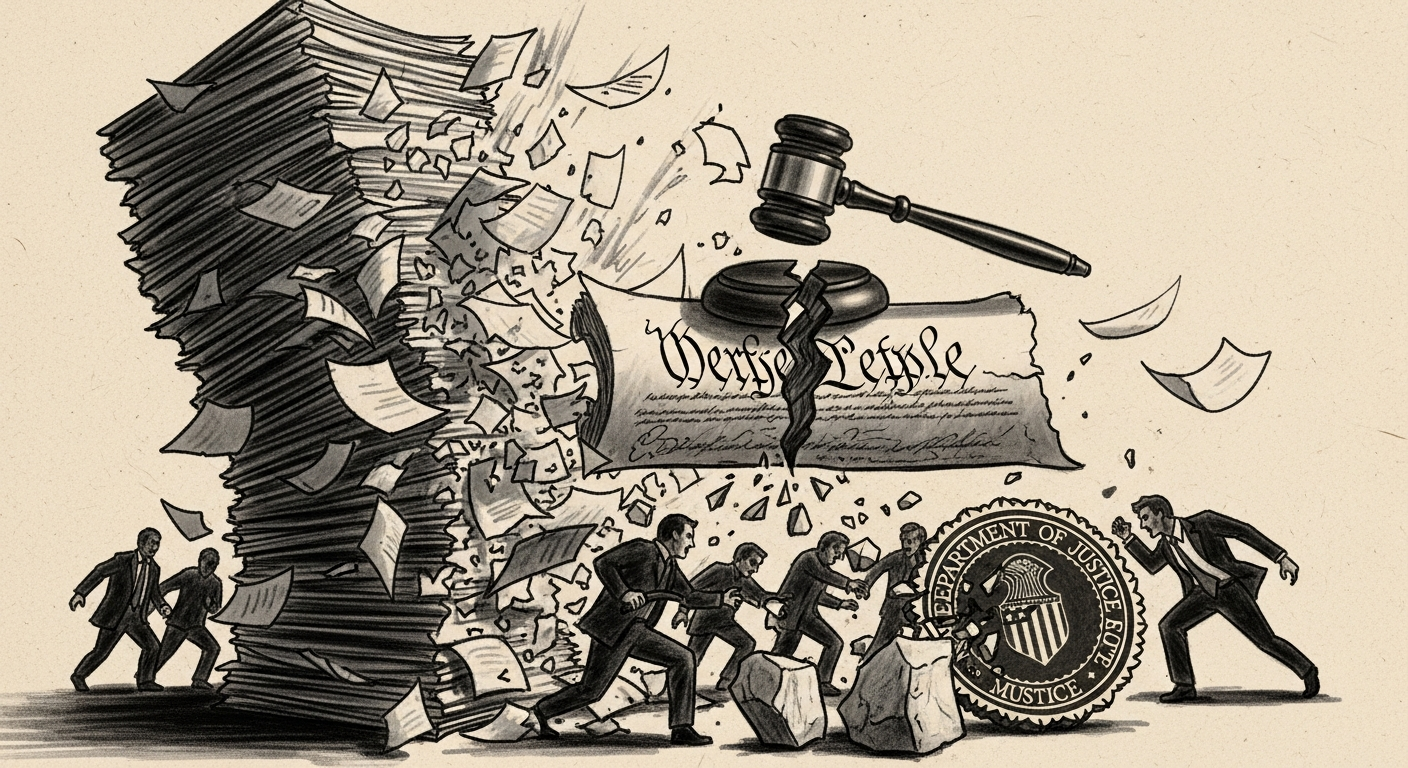
A federal judge has once again ruled against the leadership structure of the U.S. Attorney’s Office for the District of New Jersey, declaring the appointment of a three-person team by Attorney General Pam Bondi to be unconstitutional. U.S. District Judge Matthew Brann, an Obama appointee, issued a 130-page decision stating that Philip Lamparello, Jordan Fox, and Ari Fontecchio were unlawfully appointed, creating significant uncertainty for ongoing criminal and civil cases in the state.
"The unconstitutionality of this complete overreach into the Executive Branch, time and time again, will not succeed… They would rather have no U.S. Attorney than safety for the people of NJ."
The ruling, released on March 9, 2026, marks the second major legal challenge in under a year to President Trump’s administration’s efforts to staff the New Jersey office. Judge Brann's decision directly addresses the Appointments Clause of the U.S. Constitution, which outlines the process for appointing high-ranking government officials. "I conclude that the current leadership structure… constitutes a unilateral appointment in violation of the Appointments Clause," Brann wrote, emphasizing that the continued use of unlawfully appointed officials could jeopardize thousands of ongoing prosecutions.
This decision follows the earlier disqualification of Alina Habba, President Trump’s former personal lawyer, who had served as acting U.S. Attorney for New Jersey. After Judge Brann deemed her previous appointment unlawful, Attorney General Bondi appointed Lamparello, Fox, and Fontecchio to collectively share leadership responsibilities within the office. Judge Brann sharply criticized this move, describing it as an attempt by the administration to bypass the Senate confirmation process and undermine established legal procedures. He stated, “One year into this administration, it is plain that President Trump and his top aides have chafed at the limits on their power set forth by law and the Constitution,” framing the appointments as an overreach by the executive branch.
The potential ramifications of this ruling are substantial. Judge Brann warned that bypassing legally sanctioned methods for appointing officials threatens the legitimacy of the office, potentially leading to dismissed indictments or reversed convictions. This could have real-world consequences for public safety, as "scores of dangerous criminals could have their cases dismissed or convictions eventually reversed." The ruling also highlighted the operational challenges faced by the Justice Department (DOJ) in maintaining continuity in its prosecutorial functions amidst such legal disputes.
Alina Habba, now a senior advisor to Attorney General Bondi, condemned the ruling as judicial overreach and a violation of executive authority. In a social media post, she stated, "The unconstitutionality of this complete overreach into the Executive Branch, time and time again, will not succeed… They would rather have no U.S. Attorney than safety for the people of NJ." Her comments underscore the administration's view that such judicial interventions impede the effective functioning of law enforcement and compromise public safety.
This judicial scrutiny of executive branch appointments is not isolated to New Jersey. Similar rulings have affected U.S. Attorney offices in New York, Virginia, California, and Nevada, where judges have challenged attempts to retain interim appointees beyond the 120-day statutory limit. These nationwide challenges reflect an ongoing tension between the executive and judicial branches regarding the scope of presidential appointment powers and constitutional checks and balances.
Judge Brann has temporarily stayed his order to allow the Department of Justice to appeal the decision, but he stressed that procedural technicalities cannot justify improper appointments. The DOJ now faces renewed pressure to ensure that leadership appointments comply with constitutional requirements while simultaneously ensuring the continuity of critical prosecutorial operations. Observers warn that continued conflicts between federal courts and the executive branch could create significant operational challenges and public safety concerns across multiple jurisdictions, highlighting the complex balance between legal procedure and the imperative for effective law enforcement. The outcome of any appeal will have broad implications for how U.S. Attorney offices are led across the country, particularly in states facing similar vacancies and appointment disputes.